How Luxury Architects in the Hamptons are Preparing Homes for a Changing Climate
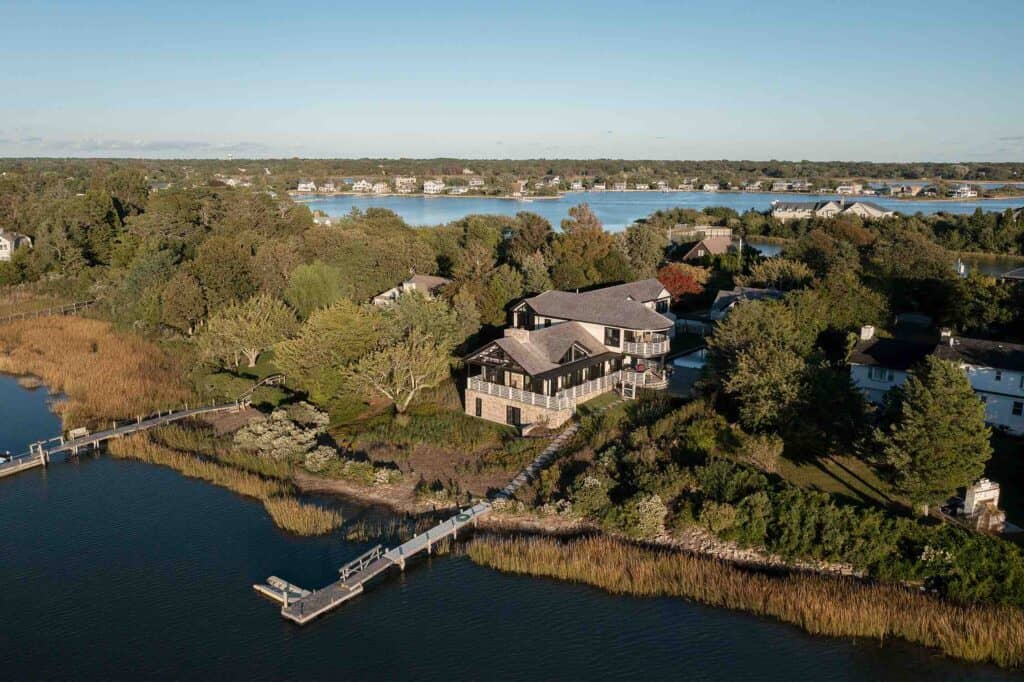
Salt air wafting through open windows, sunlight pouring across a gleaming deck—the image of a waterfront estate still holds timeless appeal. But behind that tranquil scene, a quiet revolution is taking place. In the Hamptons and surrounding areas, where some of the country’s most sought-after properties perch near the ocean’s edge, architects are increasingly designing for a less idyllic reality: rising sea levels, stronger storms, and rapidly shifting regulations.
Luxury design in the Hamptons isn’t retreating from the coast. It’s evolving.
Elevated from the Ground Up
Coastal construction has always presented challenges. Now, with more aggressive storm surges and higher FEMA flood zone standards, architects are engineering new ways to meet the moment. Sometimes that means raising homes up. Sometimes it means preparing a basement for intrusion.
“New houses are being built to comply with these established heights above sea level,” says Pamela Glazer, a Southampton-based architect. “Some existing houses are being raised to these new heights. Basements are being designed with flood vents or collapsible walls so that water can pass through without compromising the structure.”
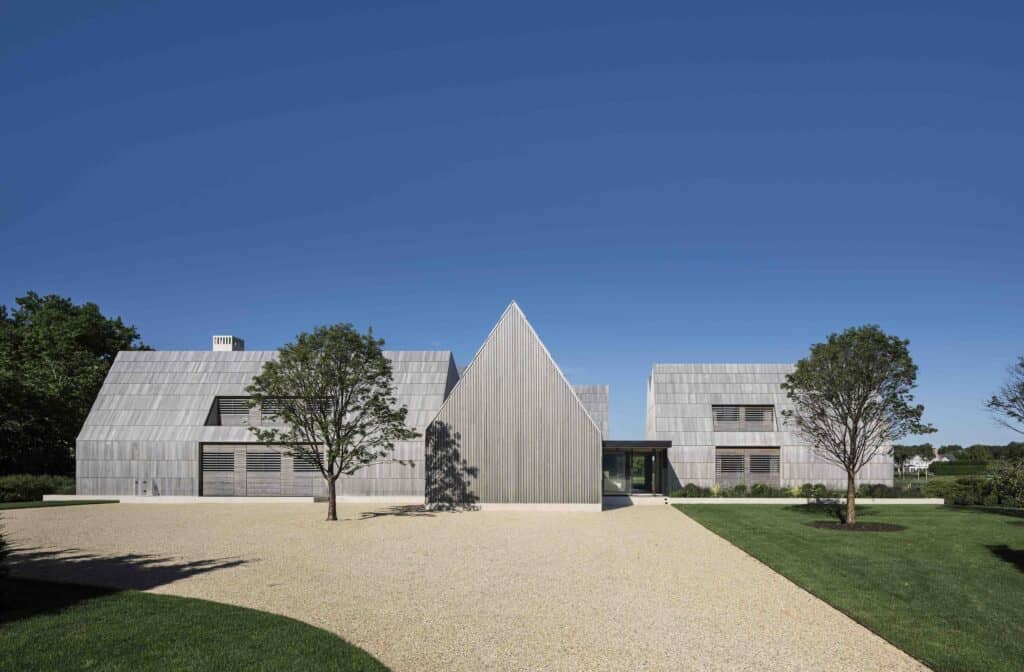
At Martin Architects in Bridgehampton, principal Nick Martin emphasizes the importance of a comprehensive, layered approach. “Each design includes soil analysis with helical pile foundations for maximum stability,” he says. These deep, screw-like supports are ideal for the unstable soils often found near shorelines. The firm has also adopted triple-glazed, impact-resistant glass and green roofs that help manage water runoff and temperature.
Paul Masi of Bates Masi Architects in East Hampton notes the dramatic improvement in materials available. “Where the focus is primarily on the view, large expanses of glass have always been an issue,” he explains. “Now it’s possible to achieve larger spans of hurricane-rated glass with thinner frames to optimize the view.” It’s a marriage of safety and luxury that would’ve been out of reach just a decade ago.
What Resilience Means Today
Resilience has become a key watchword in climate-aware design, but what exactly does it mean in practice?
“To me, resilience means creating structures that are timeless in design, adaptable in function, and deeply responsive to the changing world around them,” Martin says. “It’s about designing buildings that can endure, adapt, and thrive through climate change, resource scarcity, and natural disasters without sacrificing comfort, safety, or performance.”
Masi echoes the sentiment. “Timeless architecture… is a combination of quality design, methods of construction and appropriate materials for the environment,” he says.
Glazer adds a more pragmatic layer to the discussion. “Resilient is a good word to describe what most clients would like to call ‘maintenance free,’” she explains. “Clients prefer not to have to paint or stain the exteriors year after year.” Today’s luxury buyers are drawn to materials, such as thermally modified wood or corrosion-resistant siding, that can endure the harsh saltwater air without constant upkeep.
Are Clients Worried?
Despite ominous headlines and real climate threats, architects say that clients aren’t shying away from the coast.
“To be honest, people still want to be on or close to the water,” says Glazer. Many of her clients use their coastal homes as vacation properties, which may make them more willing to accept potential disruptions.
Still, some architects report a shift in awareness. “Yes, clients today—especially those near the water—are much more aware of the risks posed by climate change and extreme weather,” Martin says. He’s seeing more inquiries about net-zero systems, flood protection, and wildfire-resistant materials. “Features like helical foundations, impact-resistant glazing, green roofs, and energy independence have become standard practice rather than optional upgrades.”
At Bates Masi, homeowners are showing a growing willingness to engage experts to inform long-term planning. “We’ve worked with geologists to study the potential weaknesses of coastal bluffs and used this information to design the home,” Masi says—proof that curiosity and caution can coexist with aspiration.
From Theory to Shoreline
These design principles are being built into real homes across the East End.
One of Glazer’s recent projects revisited a property damaged during Superstorm Sandy. “The entire basement was about four feet high with water,” she recalls. Instead of demolishing the existing structure, the client chose to preserve and expand it strategically. “We removed all impervious surfaces on the water side… and revegetated the entire area with natural vegetation, allowing for more soil absorption and less storm runoff.” Mechanical systems were relocated above the flood line, and the vulnerable basement was repurposed for storage with new flood vents.

It’s a striking example of how resilience doesn’t require sacrificing charm. In fact, for these architects, thoughtful adaptation enhances luxury—it future-proofs it.
Building for the Next Generation
There’s no single blueprint for climate resilience. Still, on Long Island’s coast, the most forward-thinking architects share a mindset: thoughtful, deliberate, flexible. They are designing homes that respond to local geography, environmental pressures, and lifestyle needs all at once.
“This is about making buildings that remain relevant over time—functionally, culturally, and aesthetically,” Martin says.
For now, the view from the deck remains serene. But beneath the surface, an architectural transformation may be well underway.



![Festive flavors, candlelit corners, and winter menus worth the splurge 🍷 This season’s dining scene brings elegant French favorites, seasonal seafood, and cozy classics to the East End table. Whether it’s brunch, dinner, or something in between, these spots are celebrating the holidays in style. [link in bio]](https://hamptonsrealestateshowcase.com/wp-content/uploads/sb-instagram-feed-images/589526657_18551254843030135_4235854489711269175_nfull.webp)
![Space reservations are closing soon for the Holiday / New Year Issue of Hamptons Real Estate Showcase 🎁 This double issue comes with expanded reach, now landing in South Florida as well. Start the new year with premium visibility among luxury homeowners from the Hamptons to Miami. [link in bio]](https://hamptonsrealestateshowcase.com/wp-content/uploads/sb-instagram-feed-images/588642217_18550541596030135_1974828802096238970_nfull.webp)
![Holiday hosting is all about the details 🕯️ This season’s tabletops mix nostalgic charm with fresh touches. Think layered textures, seasonal greens, and flickering candlelight. Whether it’s a quiet dinner or a festive feast, there’s beauty in every setting. [link in bio]](https://hamptonsrealestateshowcase.com/wp-content/uploads/sb-instagram-feed-images/587562593_18550195297030135_5307983913708101790_nfull.webp)
![There’s no shortage of thoughtful, design-forward gifts to discover across the East End this season 🎁 Whether you're shopping for a hostess, a homebody, or someone who simply loves beautiful things, we’ve rounded up a few local finds that are sure to surprise and delight. [link in bio]](https://hamptonsrealestateshowcase.com/wp-content/uploads/sb-instagram-feed-images/587623967_18550040371030135_5392968951052147490_nfull.webp)