In Calabria, getting to know a place through smaller circles
For my third-consecutive August in Europe, all I wanted to do was slow down. For the past two years, I had chased experiences and, yes, even a sense of my own FOMO. When you think you’ll only be somewhere once, you want to wring a place dry, see everything you can, eat every dish, pack as much as you can into a day. In the summer of 2023, I dragged my family to Greece in the hot, waning end days of summer, hopping from islands to the mainland and packing our days with beaches, restaurants, and walks through quaint towns. It was lovely. It was exhausting. We did not stop.
Last summer, my family and I spent six nights in Sardinia, split between the northeastern coast and the southern one, driving much of each day, searching for the beast agriturismos, the best towns for walking, and, naturally, the best beaches. I saw much of what tourists hope for when they look at postcards of Sardinia’s wild coastline, but I missed out on any opportunity for restoration when I agreed to endless hours in a rental car.
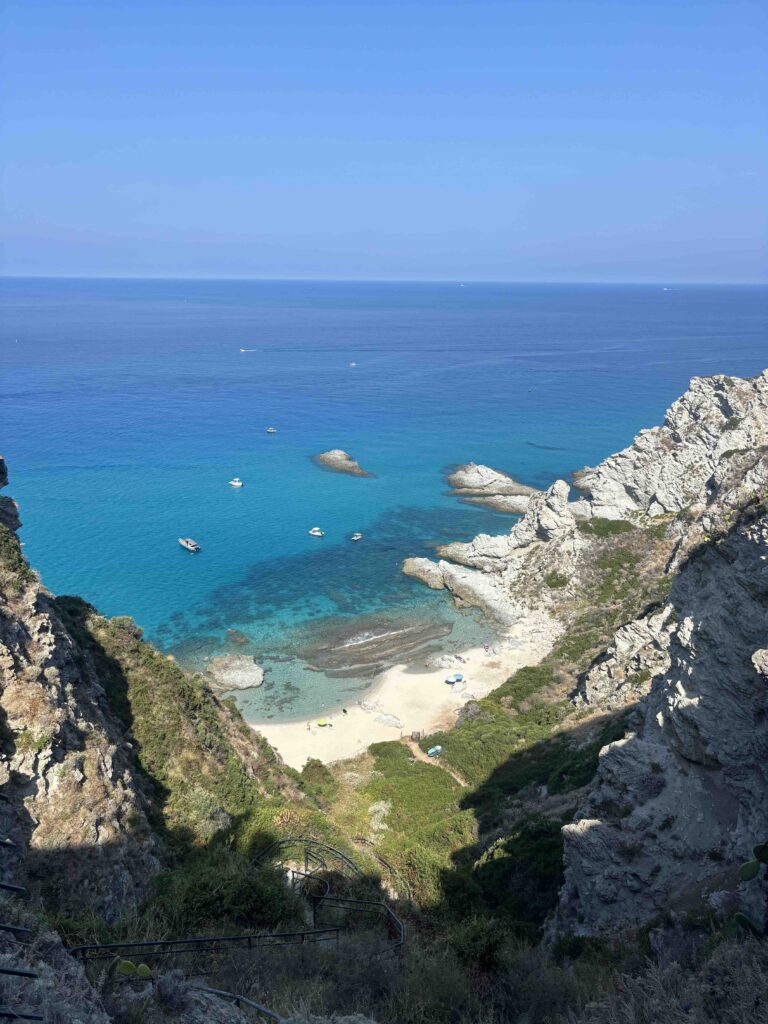
To be clear, these kinds of sacrifices were mostly my idea but this year, I decided to offer a new restriction to my travels. When a friend posted photos from Italy’s Costa degli Dei—the Coast of the Gods, the western shoreline, in Calabria—I started researching rental houses. Seven nights in one place, excursions limited to twenty minutes from where we were staying. When I found a magnificent home perched on a cliff just over 400 steps above a beach only accessible, by land, through private access, or, alternately, by the sea (Spiaggia a Ficara, I would come to find out) in Capo Vaticano, I started thinking about the best ways to tuck into a destination, the way I might a microscopic New York City neighborhood.
It’s entirely possible to stay within 20 miles of a destination in Italy—and it’s something every traveler should attempt. To live deeply. To get to know a place. To slow down. One day, my husband went to the butcher shop, Macelleria Muggeri, in nearby Santa Domenica to get a dry-aged rib steak for the next night’s meal. He watched the butcher cut it by hand. Later that night, as we elbowed through a crowd at the local gelateria, Il Gioiello, we noticed that the butcher had converted itself into a steakhouse for dinner. It was unadvertised.
Our favorite place to eat in Santa Domenica was Pescheria Friggitoria il corallo del mare, not at all a secret to locals, who filled the place from morning to night. No more than a covered outdoor stand, the seafood spot served crudos, fried, and grilled fish, all recently caught. Our server ushered me inside to show me what was available.
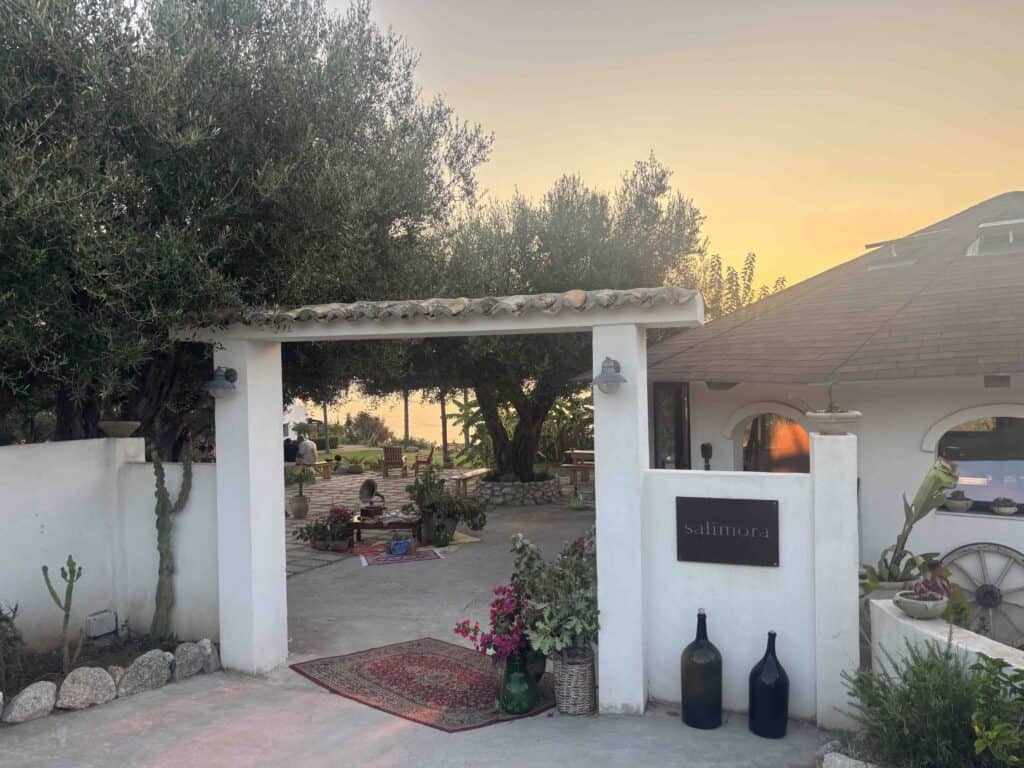
I stumbled upon agriturismos, like Salimora, with its stunning gardens and sunset view. In an olive grove, my family and I ate fresh pastas and fish brought in from the market that day (for me: ruby red tuna with figs; for my husband: silver-fleshed anchovies, dusted with almonds). Ruralia, a town away, offered a set menu high above the sea and in a rustic, open setting. Ceaseless bowls arrived the moment we sat: arancini stuffed with tomato and cheese; layered eggplant and salami; peppers stuffed with tuna; caponata; a salad made with eggs, potatoes, and Tropea onions. A pitcher of house wine, aromatic with stone fruit, cost less than a glass would back home.
One night, we walked down a set of stairs into the cavernous basement of a private Calabrese home for dinner at Da Zia Concetta Home Restaurant. Concetta and her husband, Fortunato, make everything at their family-style dinner in-house, from the charcuterie to the pastas (fileja, the long, dumpling-style pasta, is their specialty). At the long table, which sat 14, we were the sole Americans. For dinner: Tropean onion fritters, homemade sausages; fried eggplant; ‘Nduja on homemade bread; a pasta course served with a basket of Calabrian chiles, for seasoning by hand; bottles of unnamed wine, left on the table at strategic points, for pouring; a buttery albicocca crostada; tiny plastic cups of mandarin liqueur, as a digestif; wafts of cigarette smoke; a bread basket kept fresh with a shower cap. These are things that no guidebook will show you. I found it by accident, and it is the true and beating heart of Calabria, a mystery, a flavor, a dance. I found it because I was not busy looking for other things. I was not busy looking for anything at all.
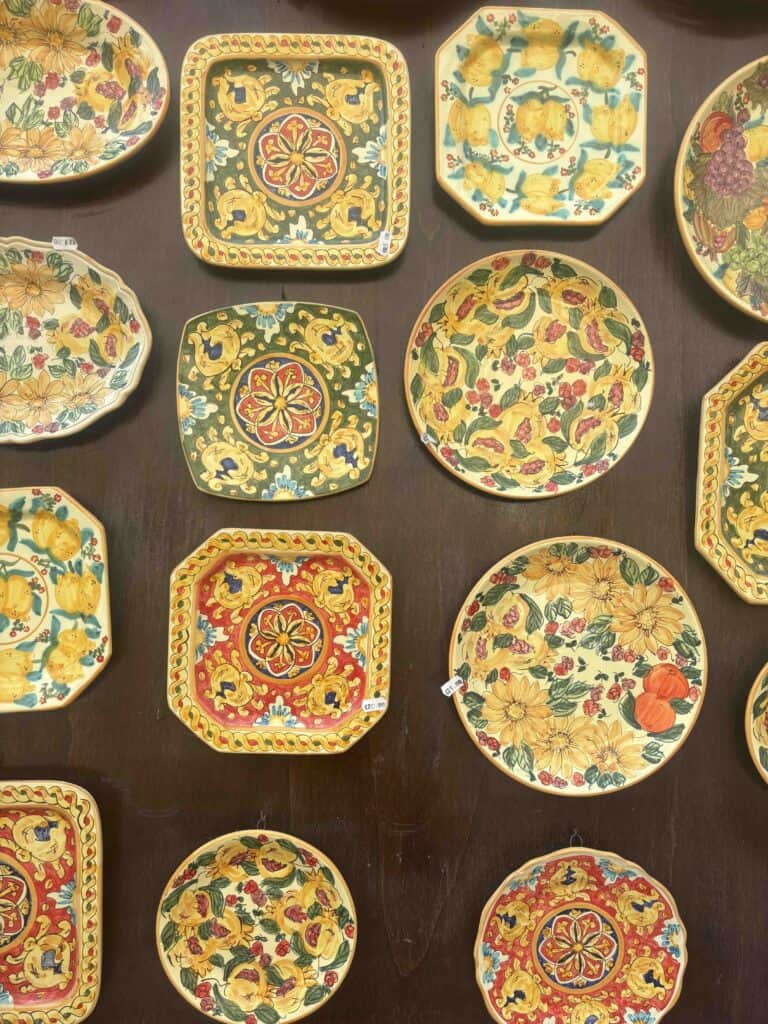
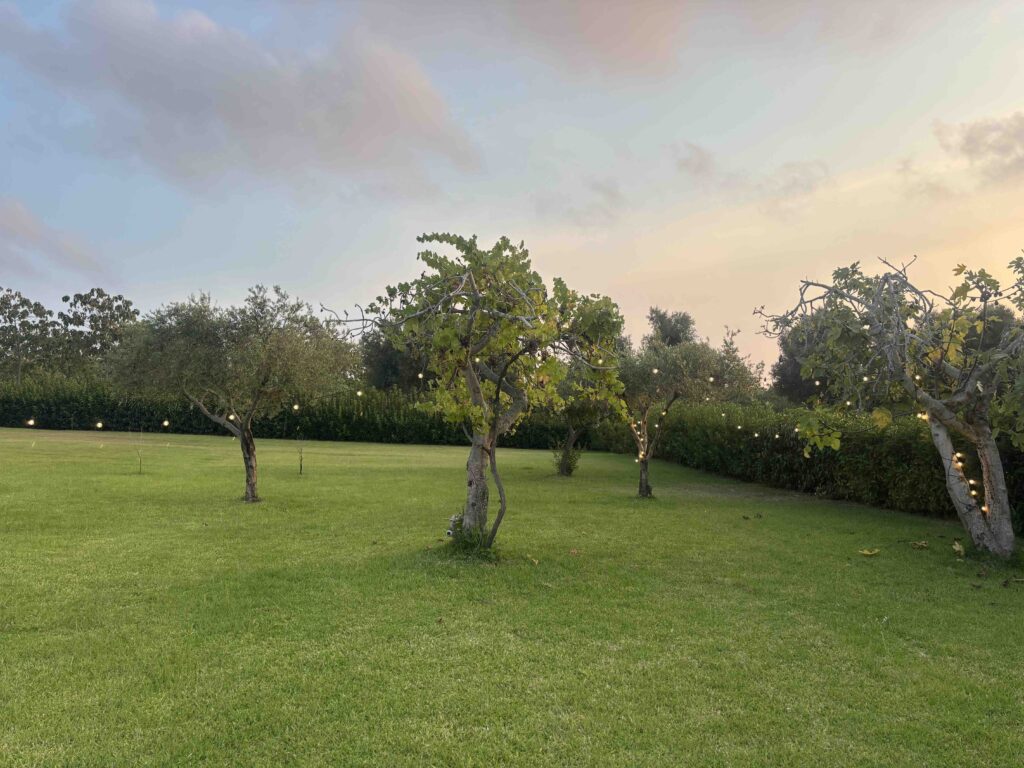
There were other places. A place called Villa Eirene, where we dined between fruit trees and string lights. A ceramics store where the storekeeper—she spoke not a lick of English—took me into the back to show me where she painted each piece by hand. I bought a set of seven serving pieces, had them shipped home. I climbed over rocks and jumped off of cliffs and spent less time worrying about the things I wasn’t seeing and more time savoring the things I was.
This version of Italian travel is the version I love most: seeing summer through a very small radius. Hyperlocalism. Drawing small circles. Finding restaurants organically. Taking chances. Failing occasionally—and being ok with it. Eating at the restaurants that do not appear in Michelin guides. Stopping at roadside fruit stands. Learning to order in another language. Getting rid of FOMO. Making a trip smaller, and not bigger. Vowing to return someday instead of assuming that you never will. We’ll be back. I just know it.




![Festive flavors, candlelit corners, and winter menus worth the splurge 🍷 This season’s dining scene brings elegant French favorites, seasonal seafood, and cozy classics to the East End table. Whether it’s brunch, dinner, or something in between, these spots are celebrating the holidays in style. [link in bio]](https://hamptonsrealestateshowcase.com/wp-content/uploads/sb-instagram-feed-images/589526657_18551254843030135_4235854489711269175_nfull.webp)


![Space reservations are closing soon for the Holiday / New Year Issue of Hamptons Real Estate Showcase 🎁 This double issue comes with expanded reach, now landing in South Florida as well. Start the new year with premium visibility among luxury homeowners from the Hamptons to Miami. [link in bio]](https://hamptonsrealestateshowcase.com/wp-content/uploads/sb-instagram-feed-images/588642217_18550541596030135_1974828802096238970_nfull.webp)
![Holiday hosting is all about the details 🕯️ This season’s tabletops mix nostalgic charm with fresh touches. Think layered textures, seasonal greens, and flickering candlelight. Whether it’s a quiet dinner or a festive feast, there’s beauty in every setting. [link in bio]](https://hamptonsrealestateshowcase.com/wp-content/uploads/sb-instagram-feed-images/587562593_18550195297030135_5307983913708101790_nfull.webp)
![There’s no shortage of thoughtful, design-forward gifts to discover across the East End this season 🎁 Whether you're shopping for a hostess, a homebody, or someone who simply loves beautiful things, we’ve rounded up a few local finds that are sure to surprise and delight. [link in bio]](https://hamptonsrealestateshowcase.com/wp-content/uploads/sb-instagram-feed-images/587623967_18550040371030135_5392968951052147490_nfull.webp)