One zip code calls for linen and driftwood. The other embraces lacquer, palm fronds and unapologetic glamour.
For many second-home owners, however, the choice isn’t either-or. They spend summers in the Hamptons and winters in Palm Beach, moving between two of the country’s most coveted coastal enclaves — and two distinctly different design languages. “They are linked by resort living, ocean light, indoor-outdoor entertaining, and the fact that they can appeal to the same luxury buyer in different seasons,” says Andrés Muñoz, founder and CEO of MILLION Luxury, a South Florida-based brokerage.
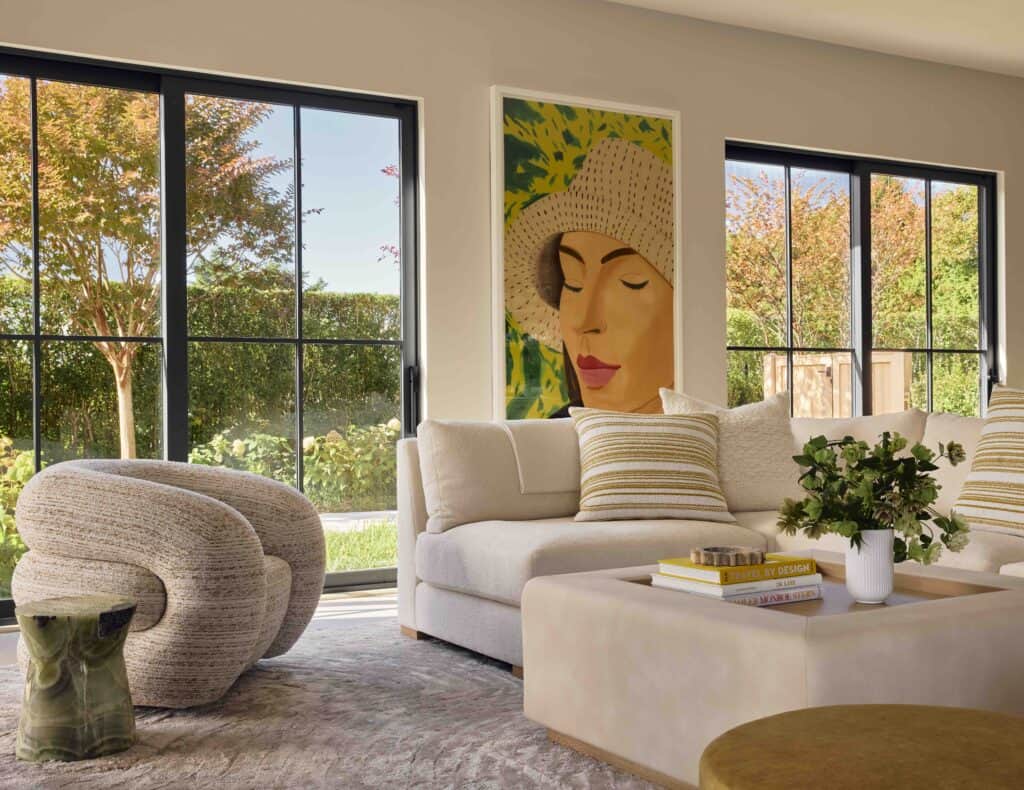
Michelle Gerson Interiors
Photo: Gieves Anderson
But while the Hamptons tends to communicate quiet luxury and vintage aesthetics, he says, Palm Beach embraces tropical character and a stronger sense of occasion.
“The Hamptons are more restrained, while Palm Beach is more outgoing,” explains Geoffrey Walsky, executive creative director of the Water Mill-based design studio Iconic Modern Home. “Palm Beach tends to be more expressive and glamorous.”
Different looks, shared vibes
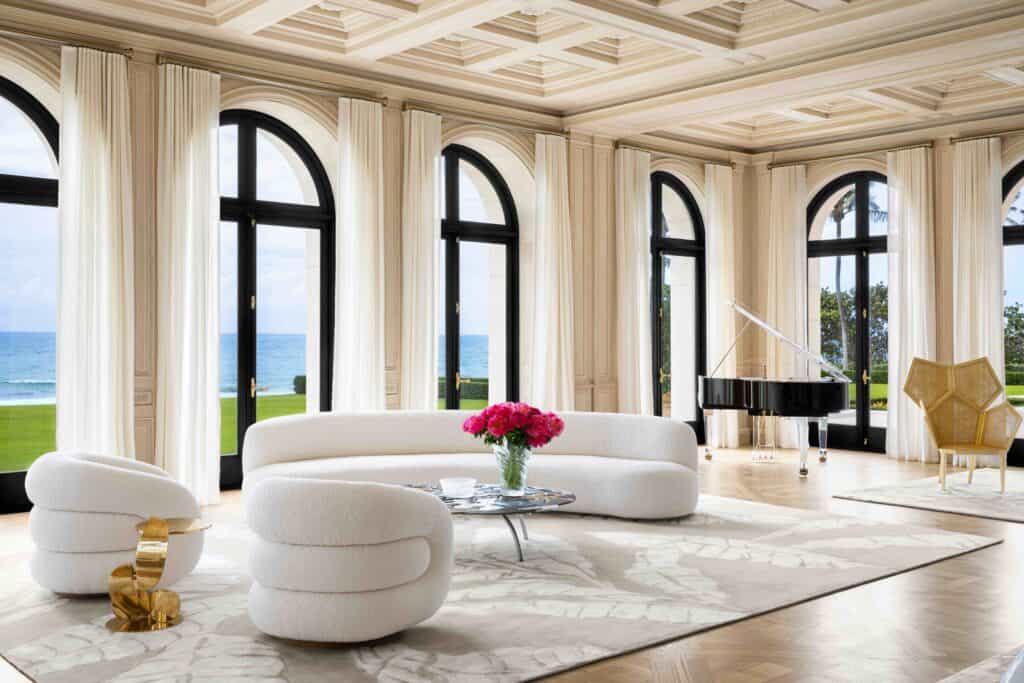
Although both destinations embrace luxury coastal living, their design aesthetics reflect very different settings and architectural histories. Palm Beach interiors tend to celebrate color, ornamentation and tropical influences, while Hamptons homes favor a quieter, more natural palette inspired by the East End landscape.
“Palm Beach is rooted in Mediterranean and Art Deco influences, with stucco architecture, vibrant colors, tropical landscapes, and a more glamorous, layered aesthetic,” says designer Michelle Gerson, who designs luxury residences in both markets. “The Hamptons, on the other hand, is defined by shingle-style architecture, natural wood, soft neutral palettes and a more understated, relaxed elegance.”
The surrounding landscape also shapes the way homes are designed. “As with any regions separated by 1,300 miles, the environments are quite different,” Walsky says. “The Hamptons relies on perennial and hearty plantings that can withstand cold winters,” he explains. “Palm Beach is more of a tropical environment with year-round vibrant flowers and vegetation.”
Beyond the beach clichés
Designers say one of the biggest pitfalls is confusing a regional style with a collection of decorative motifs. “The best designs capture the spirit of each place while still feeling authentic to the homeowner,” says Adam Hofer, a Douglas Elliman agent licensed in New York and Florida. Avoid treating either aesthetic like “it’s a costume,” Muñoz agrees.
“Nautical accessories, rope, shiplap, and navy stripes do not automatically create an authentic Hamptons home, just as flamingos, palm prints, and pink-and-green combinations do not automatically create Palm Beach,” he says.
Michelle Gerson Interiors
Luxury taken personally
While the Hamptons and Palm Beach continue to embrace distinct aesthetics, designers say both markets are moving away from more obvious interpretations of coastal style.
“Clients are looking for homes that feel highly personal rather than formulaic, and they’re willing to invest in custom craftsmanship to achieve that,” says Michelle Gerson of Michelle Gerson Interiors. “Whether it’s commissioning artists to create one-of-a-kind wall treatments or incorporating specialty finishes throughout the home, the focus is on creating timeless interiors.”
The sterile, all-white coastal house is giving way to warmer woods, handcrafted finishes, art and more expressive color, Muñoz adds. “In the Hamptons, this often appears as a contemporary interpretation of the traditional shingle house,” he says. “In Palm Beach, it can take the form of a cleaner and more tailored interpretation of Mediterranean or Regency references, as well as quiet tropical modernism.”
And of course, there’s the big trend as of late, which spans both destinations. “Across both markets, buyers are looking for homes that feel wellness-focused,” Hofer says. “We’re seeing more demand for amenities that support relaxation, entertaining and everyday living.”