In recent years, indoor/outdoor living has shifted In the Hamptons’ ultra-luxury market, staging has evolved far beyond simply furnishing a home — it has become a carefully calibrated exercise in lifestyle storytelling. “It’s an art form that allows buyers to envision their most aspirational lifestyle,” says Lana Wear, president and chief executive officer of the staging company HomeWear Designs.
Designers tailor every detail to the buyer’s mindset, whether that means a serene summer escape or a sleek entertaining hub. “If buyers are picturing the homes they want to live in as bright, easy, inviting and interconnected with outdoor living, almost every detail from textures to furniture scale must support that aspirational lifestyle,” adds designer Swati Goorha.
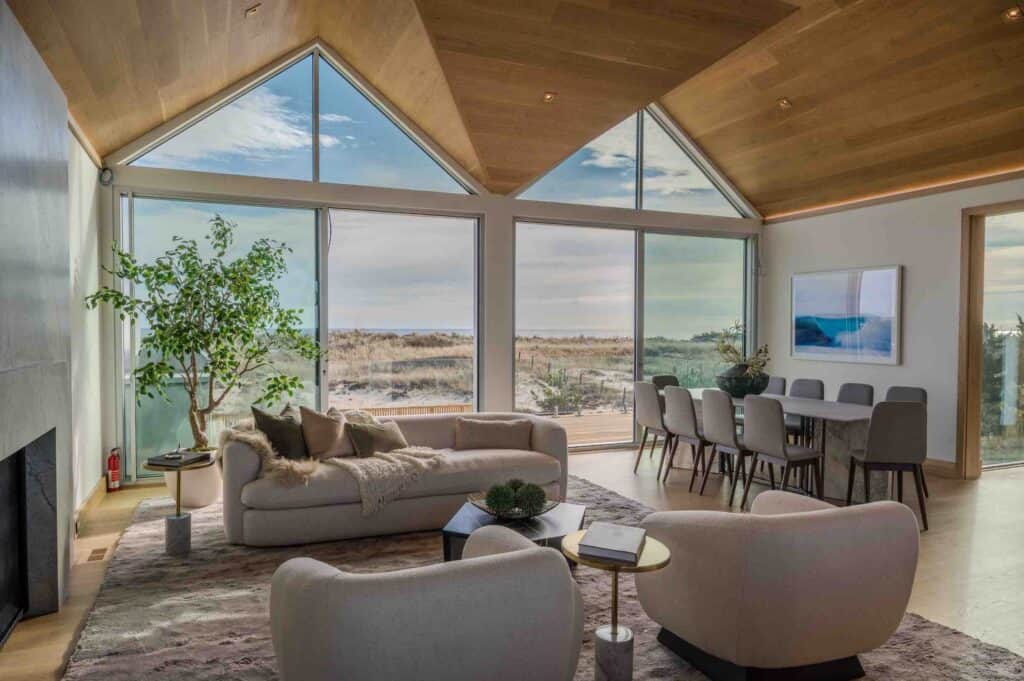
Photo: Vesta Home
Beyond the Beach House
“Going to the Hamptons for the summer almost feels like going away to camp for adults,” says Christina Slater, creative director at the staging firm Vesta Home. “Buyers want ease, comfort, and a turnkey lifestyle the moment they arrive.”
These days, buyers increasingly favor interiors that feel layered, warm, and livable rather than starkly modern, she notes. “Buyers still appreciate clean lines and sophistication, but they also want softness and texture layered throughout the space,” Slater explains. “We’re seeing a lot of interest in organic fabrics, linens, layered lighting, collected styling and earthy palettes.”
Wellness is another major driver in the luxury market right now,” she adds. “Buyers are increasingly drawn to homes that feel restorative and retreat-like,” Slater says, “which is why we’ve seen a major increase in requests for gyms, yoga rooms, spa spaces, and areas dedicated to relaxation.”
Creating A Lifestyle
Luxury staging goes far beyond filling a home with attractive furniture; it’s about creating an atmosphere buyers can emotionally step into.
“Generic staging is placing furniture in a room, so it does not feel empty. Lifestyle-driven staging is creating a story,” says Nastassja Balick Coppers, real estate agent and partner at Decode Hamptons. Rather than simply arranging seating, the latter anticipates how buyers imagine spending time in the home, from post-beach gatherings to relaxed summer dinners. That could mean styling a poolside retreat with towels and lounge seating or placing a backgammon board in a living room to evoke after-dinner entertaining. “It’s about anticipating the ‘what could be,’” she explains.

Photo: Vesta Home
Emotional layering is especially important in the high-end market, where buyers expect more than a polished presentation. “Luxury buyers can easily distinguish between a staged home set up as a basic utility experience versus one curated for living outside its walls,” Goorha says.
Selecting A Stager
The right staging designer in the Hamptons has more than a strong aesthetic eye, experts say. Instead, they understand both luxury design and buyer psychology.
“I would look for someone who understands both design and the market, but also someone who is collaborative,” Balick Coppers says. The best staging professionals know how to create interiors that feel effortless rather than overly styled. “Sometimes the most important thing is not adding more, but removing what distracts from the house,” she says. “The home should still feel like the star of the show.”
For Wear, successful staging comes down to understanding the target buyer. “I often remind clients that it doesn’t matter if they personally love the design — it matters if their target buyer does,” she says. “That’s when staging stops being about furniture and starts becoming a true driver of value.