At first ask, the project seemed straightforward enough: a young couple with children wanted to renovate and decorate their three-bedroom apartment on the Upper West Side in New York. The unit was located in a storied 1928 building that exuded glamour. The owners appreciated many aspects of their new home from its graceful proportions to its views of Central Park. Yet because they had previously lived in lower Manhattan, the somewhat formal nature of the place felt a bit at odds with their own more relaxed sensibility and way of life. Neal Beckstedt, the founder of the design studio that bears his name, sized up the situation in a glance. “The challenge,” he says, “was to marry downtown style with uptown elegance in a compatible way.”
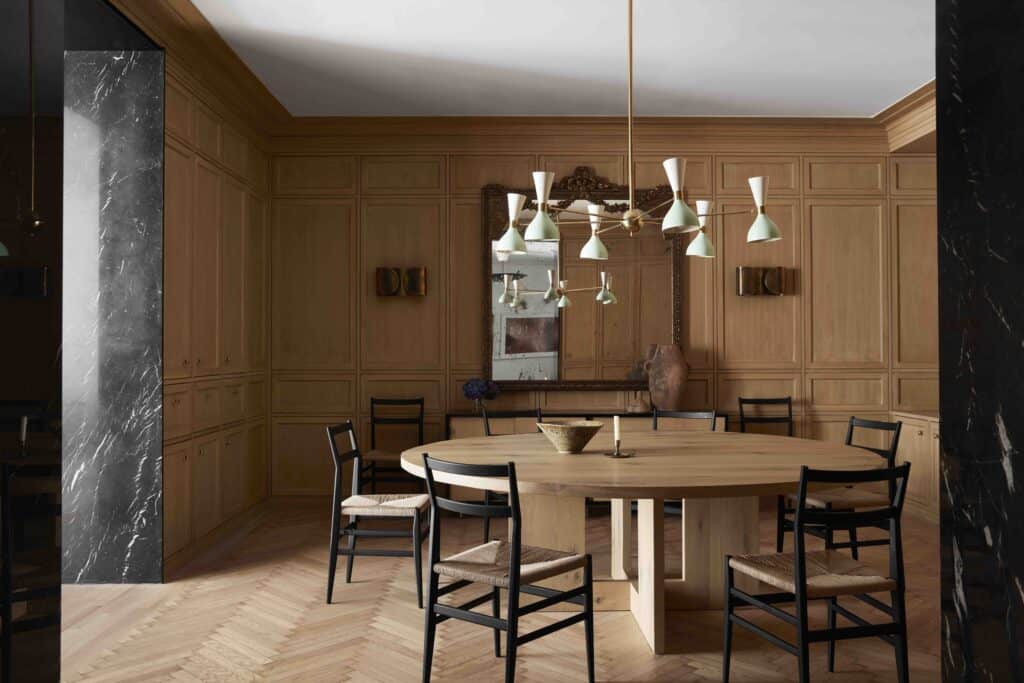
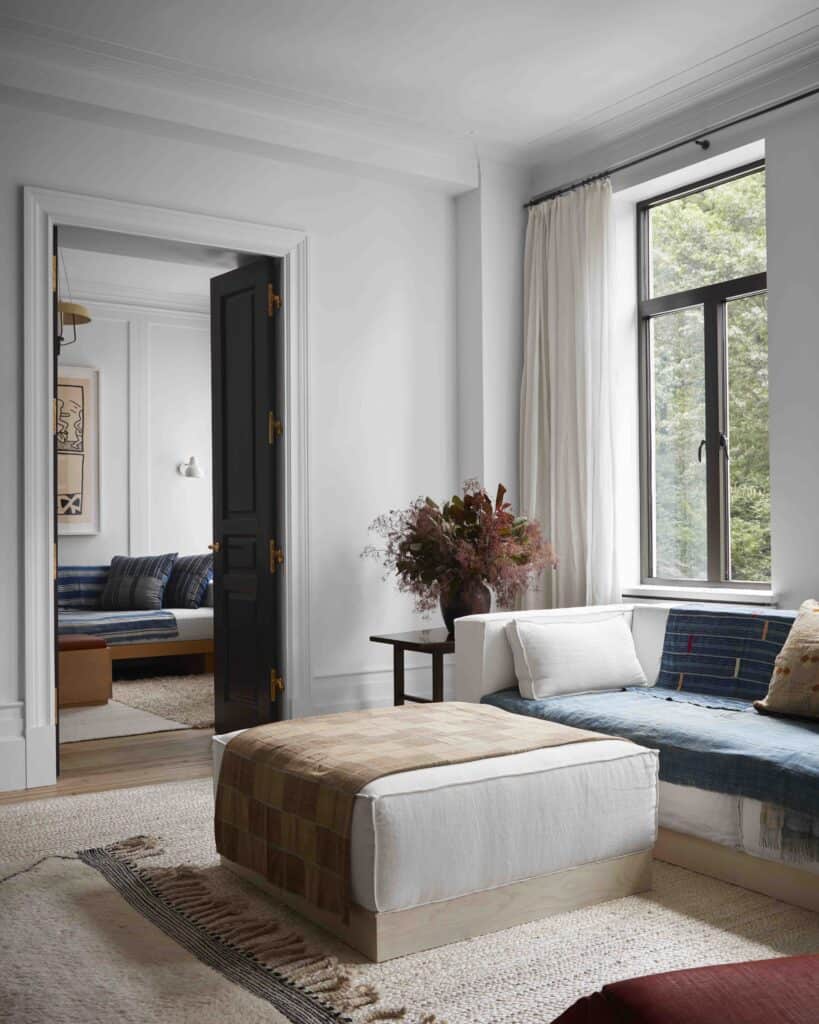
Bridging the distance between those two aesthetic poles required a feat of intellect and imagination – the kind for which Beckstedt is known. His opening gambit was to reorganize the floor plan. “It was a maze,” he recalls. “There was an entry hall and then another foyer and off that foyer a living room and a dining room.” Guests were disoriented, so much so, in fact, that when “they entered the apartment they didn’t know which way to turn.” A gut renovation followed as did much thoughtful, unfussy detail work. Certain doorways and thresholds were lined with slabs of Nero Marquina marble, a move that added drama and definition to the space while creating, as Beckstedt puts it, “a sense of hierarchy and a direct visual link between each room.”
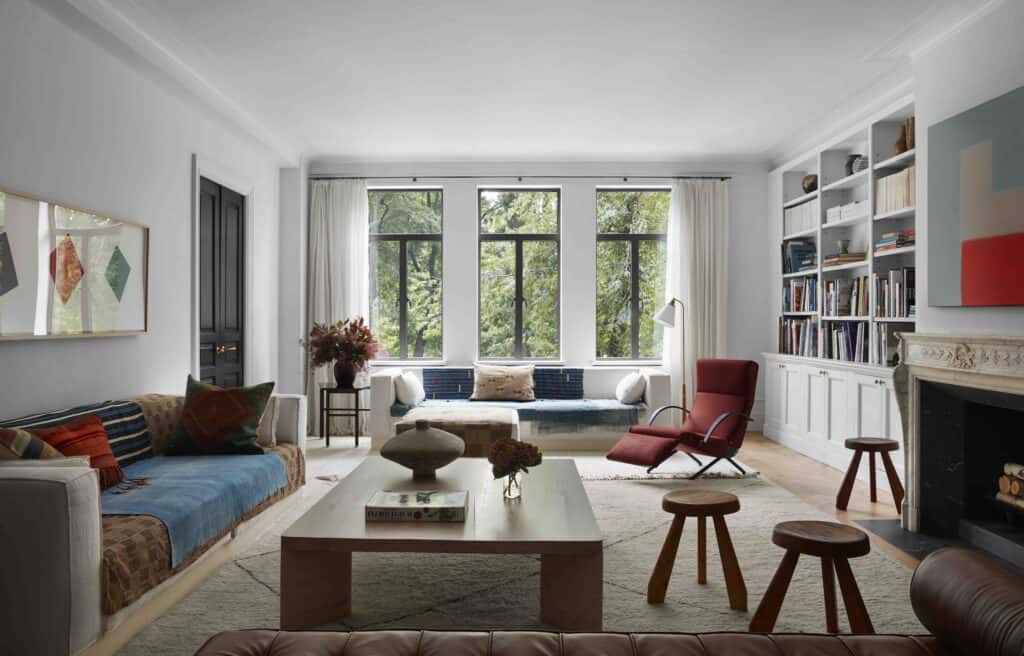
Many of his decisions were informed by the building’s architecture, history and location and he sought to respect its heritage (“It’s a really beautiful example of prewar residential architecture,” he says). To this end, Beckstedt made a great effort to retain original elements, including a Carrara marble mantlepiece, and to use materials and finishes that were of a piece with the apartment’s origins.
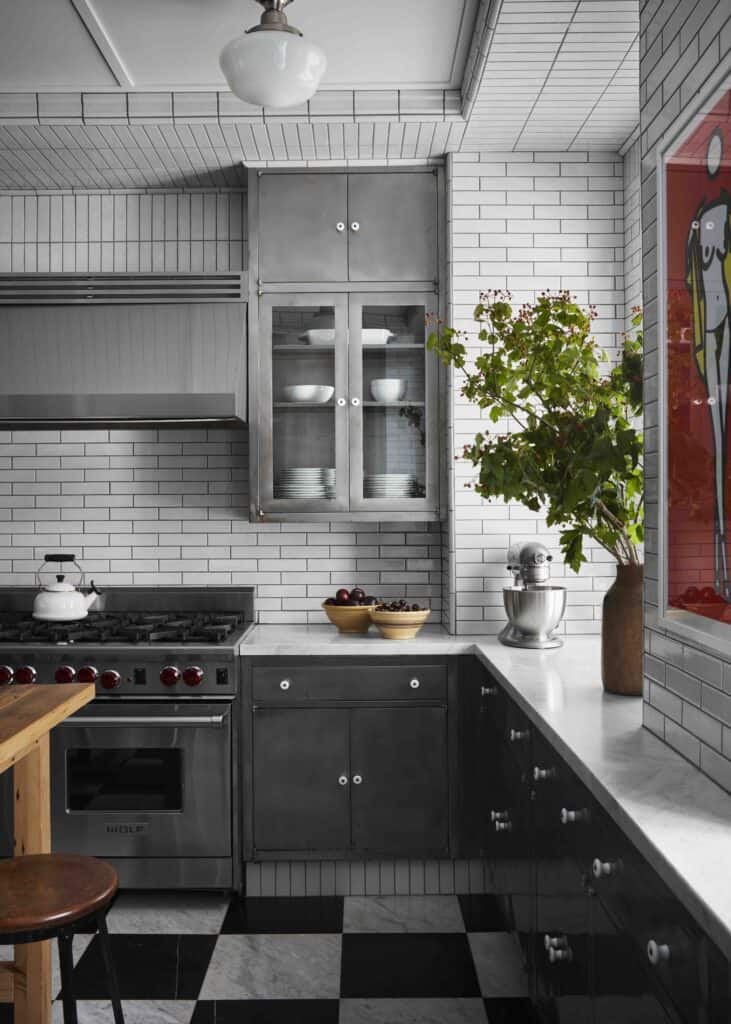
Thus the oak herringbone floors were salvaged and the stainless steel kitchen cabinets, which he loved, stayed. And when the team discovered a plaster crown molding during demo – the place had been subjected to what Beckstedt describes as an excessively modern renovation in the nineteen-eighties – not only did they retain it but they carried the detail over into other rooms. It’s one of several motifs that work in concert to tie the design scheme together in a cohesive way.
Another happy find was what appeared to be original or near-original baseboard (“We didn’t carbon-date it,” Beckstedt jokes) which they reproduced and reinstated, along with matching trim, throughout. Elsewhere maple doors were ebonized and waxed to a lacquered sheen that works brilliantly with the stone-lined doorways. The subtle interplay between black tones and the apartment’s uniformly white walls gives the space the crispness of, as Beckstedt puts it, “a tuxedo”. And in the dining room, where the natural light is subdued, he deployed a warm, honey-colored paneling that matched the floorboards.
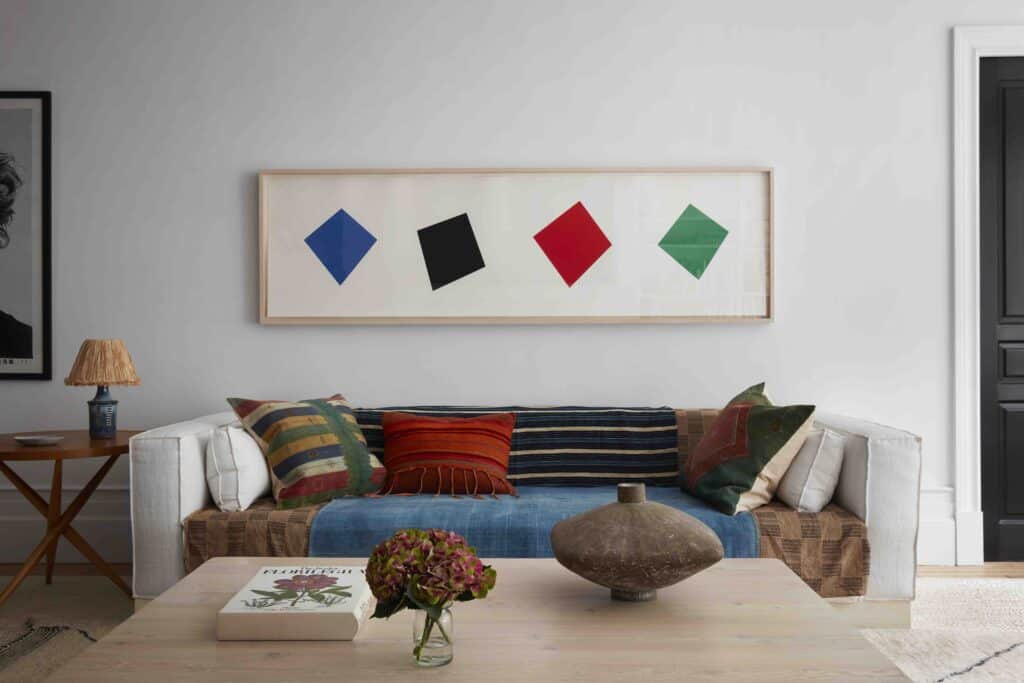
In decorating the apartment, Beckstedt opted for solid colors over patterns “to keep visual clutter to a minimum.” Playing a role he describes as “half art therapist, half detective,” Beckstedt blended the couple’s existing art and furniture (a Vladimir Kagan chair; paintings by Ellsworth Kelly, Chuck Close and Keith Haring) with custom pieces (such as the bleached heart pine cocktail table in the living room and the white oak dining table, which he paired with Gio Ponti chairs) and iconic mid-century collectibles. The latter, sourced for the purpose, include a triad of Charlotte Perriand stools, an Alvar Aalto side table and a Swedish floor lamp by Hans Bergström. Such vibrant pieces serve as a perfect counterbalance to the surrounding architecture, which strikes a grander note.
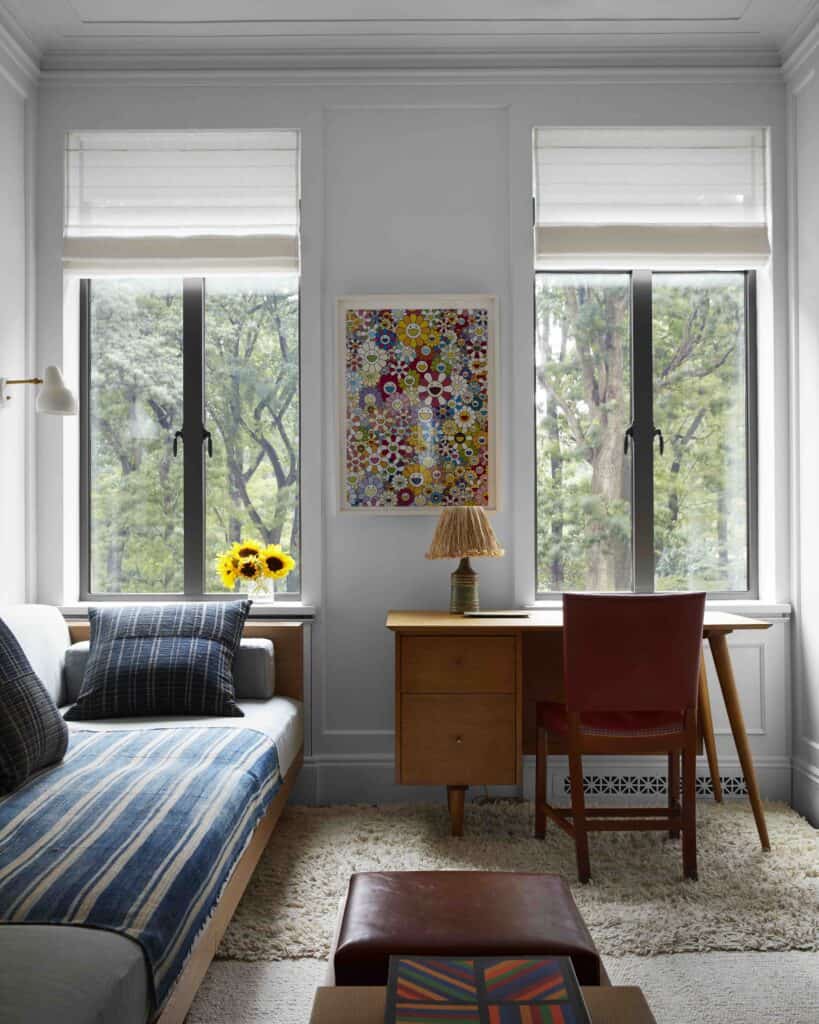
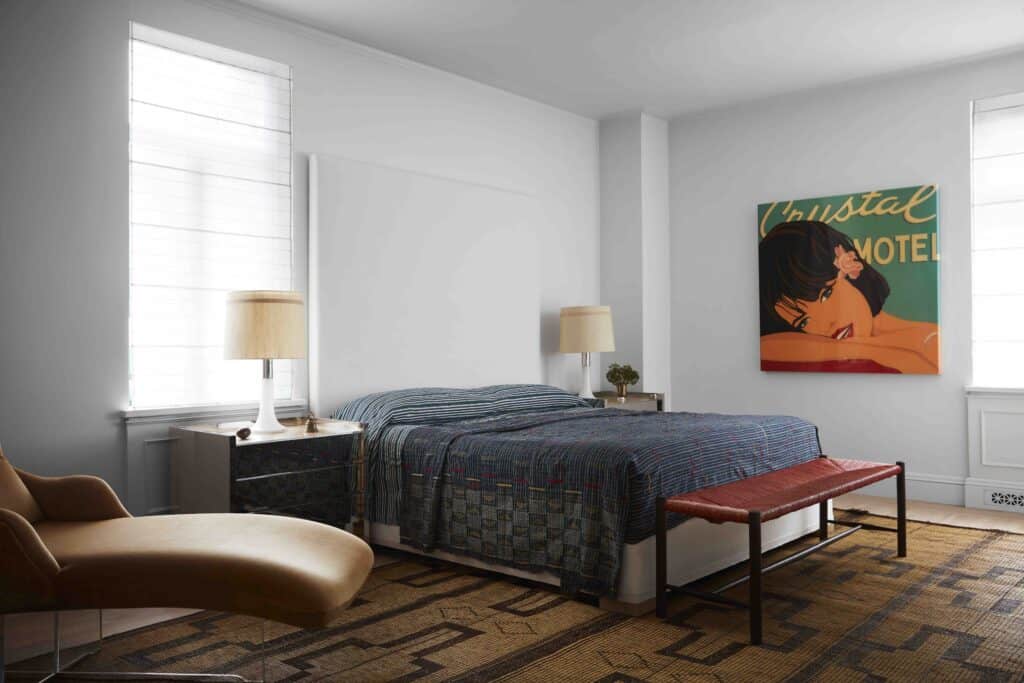
“I love the patina and authenticity of antiques,” says Beckstedt, who laments the American obsession with newness. “Many clients are afraid of them and yet there’s a beauty to aged things. A history, a life.” For those who share his outlook, coaster-less cocktail tables and white linen sofas (dressed with vintage throws and African textiles, naturally) hold no terrors. “Distressed objects make for easier living,” he observes. “Plus they enrich and add so many layers to a home. For me, it’s all about creating spaces that have a certain authenticity – and soul.”
Photography by Stephen Kent Johnson