Where Design and Technology Converge
In the realm of luxury living, few spaces embody both artistry and innovation as seamlessly as the private home theater. Once an afterthought tucked into basements, today’s screening rooms are engineered with the same precision as performance halls and designed with the imagination of fine interiors. They represent not just entertainment, but an elevation of the domestic environment into an immersive experience.
At the core of this evolution is technology that is powerful yet nearly invisible. Top-tier projection systems now deliver 8K resolution, producing images so sharp they rival the human eye. Sound engineering has advanced to the point where Dolby Atmos arrays—often comprising 20 or more strategically concealed speakers—envelop viewers in three-dimensional audio. Designers and engineers collaborate to integrate this machinery discreetly, ensuring the technology serves the experience rather than intrudes upon it. The result is cinematic immersion without distraction.
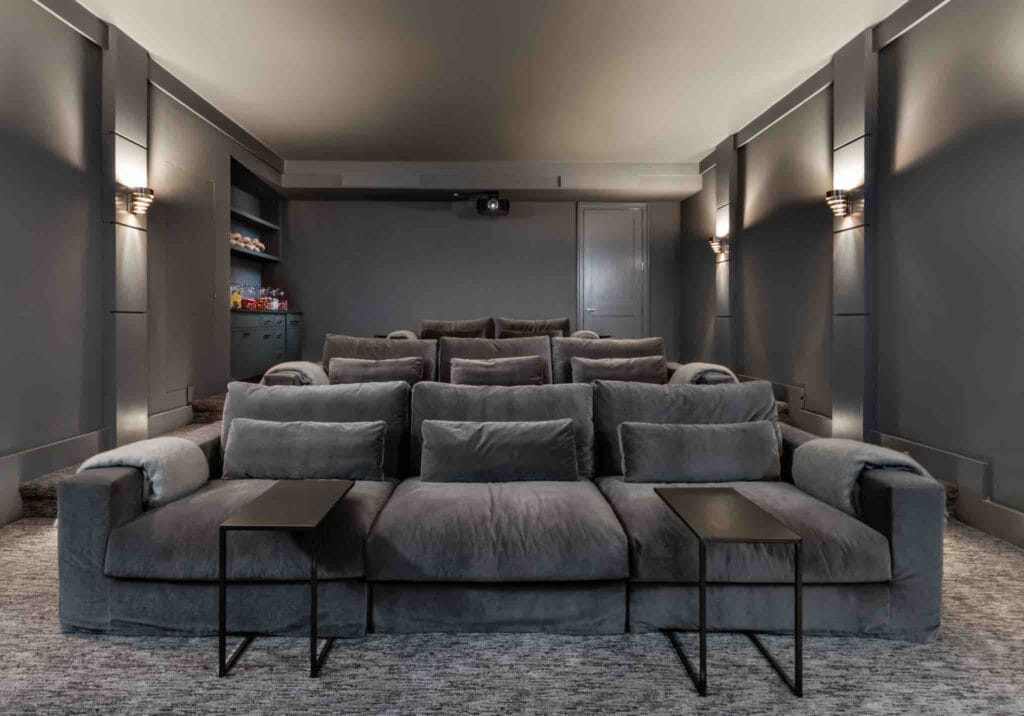
Aesthetic direction varies with the homeowner’s vision. Some pursue a classic, almost nostalgic ambiance—velvet curtains, gilded moldings, and traditional marquee-inspired entrances. Others choose a more modernist route: clean-lined interiors, minimalist palettes, and hidden architectural lighting that emphasizes form over ornament. A growing trend in high-end residences is the hybrid media lounge—spaces designed to transition effortlessly from family gathering spots to full cinematic immersion at the touch of a control panel. These adaptable theaters combine relaxed elegance with uncompromising performance.
“The best private home theaters are where design and experience meet,” says Marissa Stokes of Marissa Stokes Interior Design. “A dark, muted palette keeps the picture crisp and distraction free, while tiered layouts and proper sight lines make every seat feel like the best in the house. Plush recliners with space for drinks and snacks invite comfort during long viewings, while acoustic wall treatments refine the sound and soften the room. Discreet lighting, hidden wiring, and integrated smart controls preserve a sense of sophistication, while personal touches, like cashmere throws, make the space feel as indulgent as it is unique.”
Yet for all their grandeur, the most successful private cinemas are those where design and technology achieve balance. A theater that dazzles with equipment but ignores proportion or materials will feel sterile; one that privileges aesthetics while neglecting acoustics will fall short of immersion. The true luxury lies in coherence: a room where every detail, from the placement of the subwoofers to the stitching of the upholstery, contributes to the singular goal of transforming the act of watching into the act of experiencing.
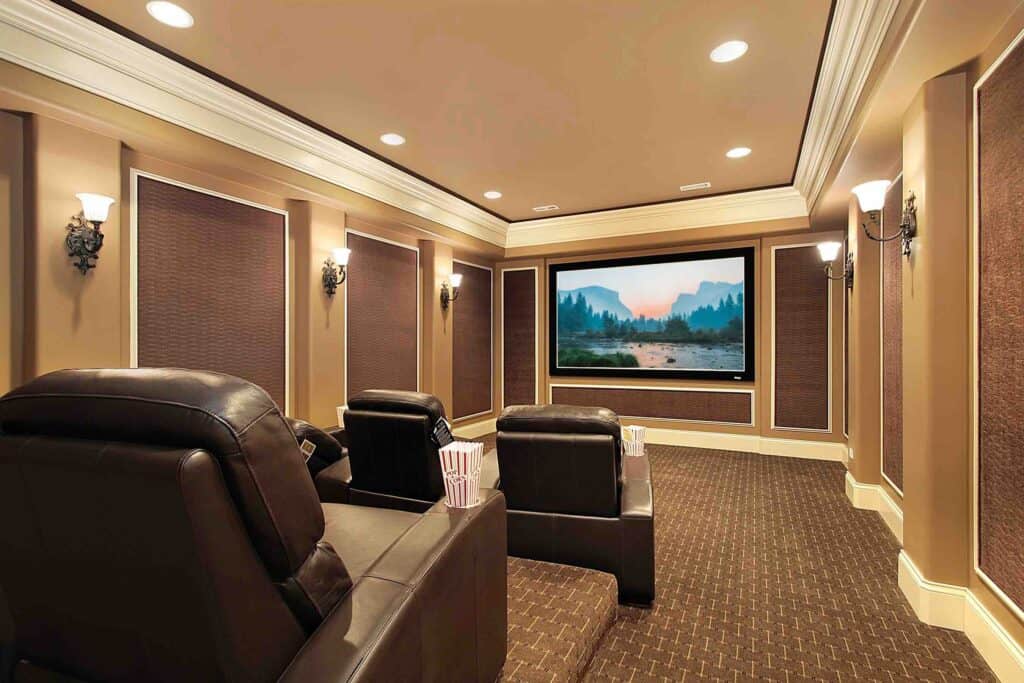
“When designing a high end home theater, the most important thing to remember is that the entire experience needs to be built from the inside out,” says Isifira Jensen, principal interior designer at New York’s Jensen & Co, Interiors. “Sound, atmosphere, and comfort always come first, luxury finishes are the final layer, not the foundation. The details and finishes bring the space to life. Suede or leather acoustic wall panels, dark paints, and custom millwork not only elevate the look but also enhance performance. Together, all of these elements create the ultimate cinematic experience at home.”
For homeowners who seek to live not merely surrounded by art, but enveloped by it, the private cinema has become the ultimate architectural indulgence.
Design Tips for the Ultimate Home Theater
Prioritize Acoustics: Proper wall treatments, bass traps, and soundproofing are essential to achieve immersive sound.
Conceal Technology: Hide speakers, projectors, and wiring within architectural features. Technology should be felt, not seen.
Layer Lighting: Incorporate dimmable lighting in multiple zones—wall sconces, cove lighting, and star ceilings add atmosphere without glare.
Choose Seating Carefully: Opt for custom, tiered arrangements to ensure clear sightline. Materials should be luxurious and acoustically neutral.
Think Beyond Film: Design the space for live-streamed concerts, gaming, or private art showcases to expand its role in the home.