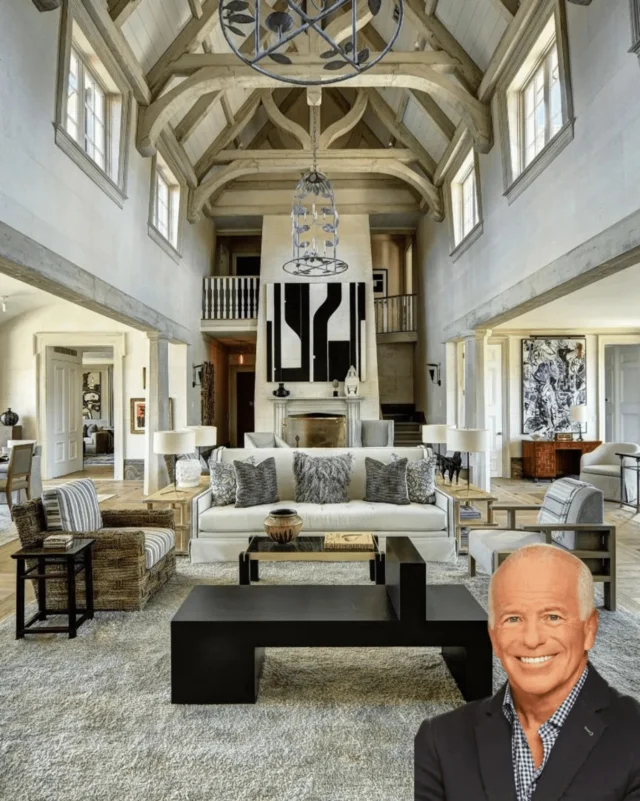
In the Hamptons, pool houses have evolved. No longer used just for quick clothing changes and towel storage, they’ve become treasured additions to main living spaces and, in some cases, architectural centerpieces.
“Homeowners want these spaces to evoke the feeling of their favorite boutique resort or private retreat while still feeling personal and connected to the comfort typically found only at home,” says Meghan Henning, vice president and general manager for the outdoor furniture brand Ledge.
Today’s designs emphasize seamless indoor-outdoor flow, elevated entertaining and performance-driven materials that balance beauty with durability. Architecturally, “there has been a steady move away from a simple outbuilding to structures that have a little more depth to them,” adds Patrick Ambrogi, creative director at Sheds Unlimited, a mid-Atlantic-based shed, prefab garage and pool house builder with clients out East.
Here, designers share the trends and creative approaches redefining these resort-worthy retreats.
Wellness Retreats
Over the past decade, the Hamptons pool house has transformed into wellness-driven, architecturally integrated retreats. Jennifer Weisberg Cohen, owner and principal designer at JLW Interiors, sees a greater integration of wellness features, from saunas to specialty elements like cold plunges. Features such as LED lighting systems change color to align with circadian rhythms, while organic materials like local stone and wood foster a deeper connection to nature. “As the demand grows for wellness spaces that help regulate and restore the nervous system, interior design has had to adapt accordingly,” Weisberg Cohen says. “The poolhouse is one of the most natural places in the home to incorporate these elements, particularly in a coastal area like the Hamptons.”
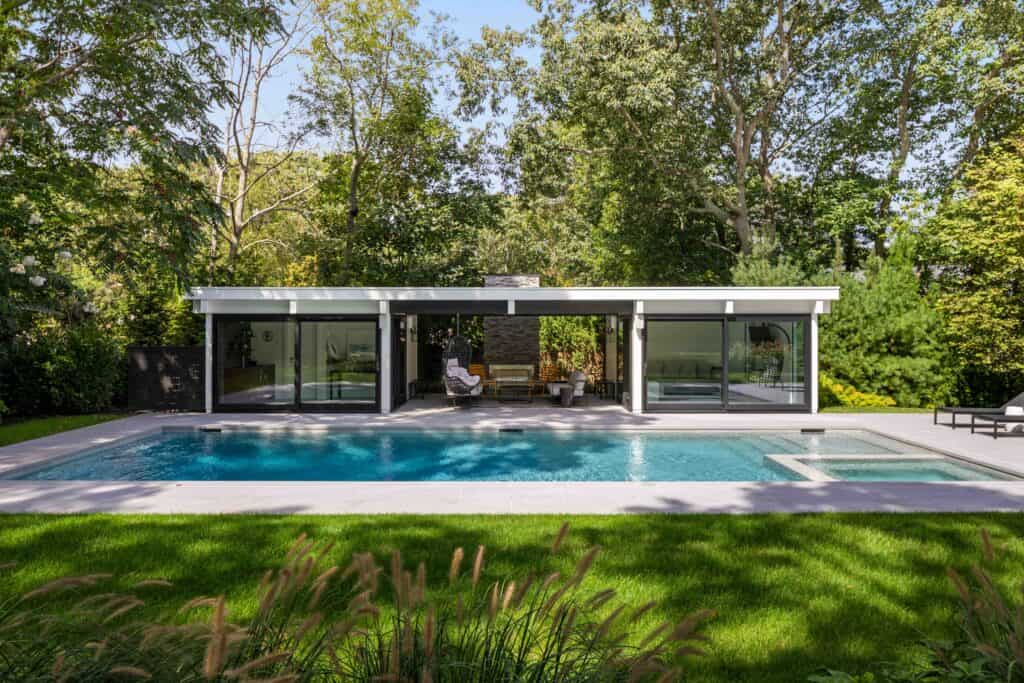
Photo: Josh Goetz
Versatility is also becoming essential, Henning says: “These spaces are expected to support everything from casual family afternoons to evening hosting, meaning the furnishings and finishes have to work much harder.”
Poolside Prefab
Offering an alternative to traditional construction, luxury prefab pool houses are gaining popularity in the Hamptons. “Prefab pool houses align with the Hamptons lifestyle, where indoor-outdoor living and resort-style amenities are central to how people use their homes,” says Punit Chugh, cofounder and managing partner at BuildLabs, a Bridgehampton-based custom and semi-custom homebuilding company. “Because these structures are fully designed and engineered up front, we can intentionally incorporate elements such as expansive sliding glass walls, covered outdoor lounges and flexible-use layouts that blur the line between inside and out.”
His team recently installed a prefab pool house in Sag Harbor — with twin indoor wings and a central patio — that has become “the focal point of the entire property,” Chugh says. One side functions as a lounge with large sliding windows, while the other has a fully equipped kitchenette and a poolside bath. “The homeowners describe their prefab pool house as the space where they spend most of their time,” he says.
Many of these thoughtfully designed structures are brought to life in collaboration with Val Florio, who frequently partners with BuildLabs via the build company’s Design Consortium. Together, BuildLabs and the Sag Harbor-based architect have teamed up on more than half a dozen projects that emphasize both architectural integrity and modern lifestyle functionality.
Creativity Abounds
In the Hamptons, creativity is turning pool houses into some of the most expressive spaces on a property.
“Truly, I think it’s one of the most fun parts of a home because there are what feels like endless ways to get creative and to personalize the space,” Henning says.
Recalling a favorite New England project, she notes, “A carriage house was converted in a way that maintained the same charm as the primary residence through its shingled exterior, but was elevated to incorporate a more modern open pavilion area,” she explains, adding that roses climbing over a trellis created an “almost magical” sense of place. “This is what great design does: it transports.”
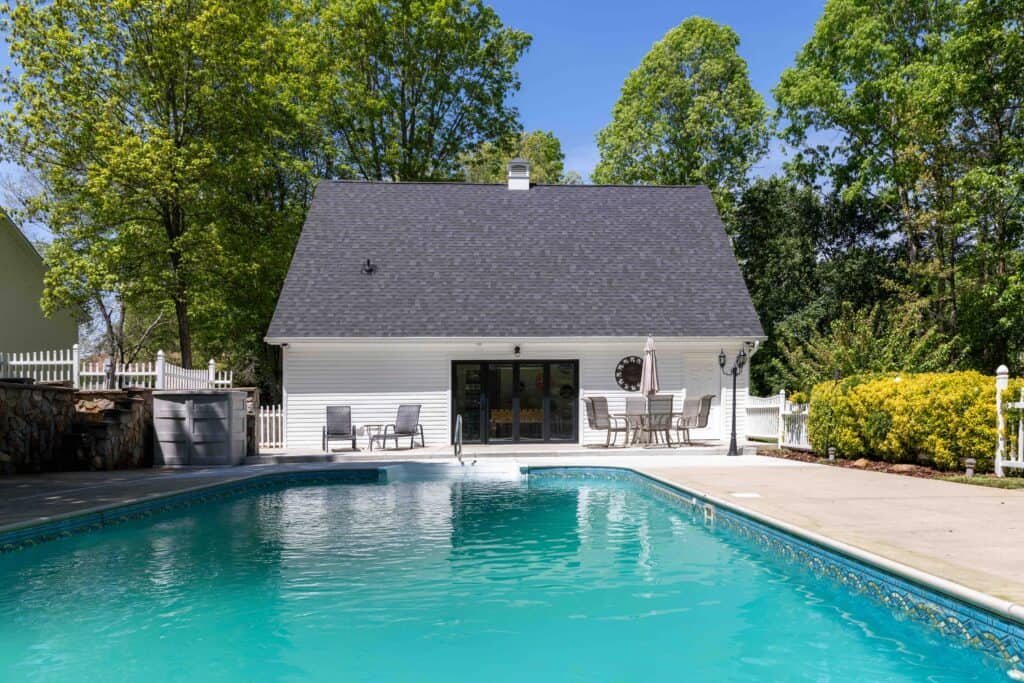
Builders are also rethinking form and function. Ambrogi points to a recent project where a workshop garage doubled as a pool house. “This is definitely more of a unique way to incorporate both that detached garage space and a more social hub by the pool,” he says.
Quietly placed or hidden technology is also a priority, Weisberg Cohen notes, while features like motorized shades and built-in sound systems are now considered essential. “Clients do not want these elements to create a statement,” she says. “They want something seamlessly woven into the existing interior architecture in a way that feels unobtrusive and sophisticated.”




![🎨 Through vibrant fabrics, layered textures, and intricate stitching, artist Nicole A. Vanasse transforms everyday moments into richly detailed works of art. Drawing inspiration from real life while inviting viewers to find their own meaning, her textile compositions celebrate memory, storytelling, and the beauty found in life's smallest details. Each piece is a reminder that art can be as much about the journey of creation as the finished work itself. [link in bio]](https://hamptonsrealestateshowcase.com/wp-content/uploads/sb-instagram-feed-images/763433386_18619953184030135_3337811349419388933_nfull.webp)