For decades, Miami was a playground for vacationers and second-home owners. But the real estate narrative has shifted fundamentally. The “Magic City” is no longer just a vacation spot; it has become the world’s new front office. In the last few months, headlines have featured Meta CEO Mark Zuckerberg, ex-Starbucks CEO Howard Schultz, and Google co-founder Sergey Brin purchasing real estate in Miami. Driven by a massive migration of wealth, tech, and finance, Miami’s booming real estate market is attracting a sophisticated, year-round global population.
Photo: The Boundary for Ytech
The New Front Office
The catalyst for this transformation is a mix of favorable tax climates and a corporate exodus from traditional business headquarters. “Miami has evolved from a vacation destination into a true global residential hub,” says Allie Eichner, President of Continuum Florida. According to Eichner, the shift is permanent. “Five years ago, many people still viewed Miami primarily as a second-home destination. Today, buyers are choosing to live here year-round because the city truly supports a full lifestyle.”
This sentiment is echoed across the city’s most dynamic neighborhoods. Brickell, often called the “Wall Street of the South,” is a certified business powerhouse.
Andrew Kraynak, Chief Sales and Marketing Officer at Ytech, notes that the city has moved onto the world stage as a place to conduct business full-time. “The change has been driven not only by the continued growth of finance, investment, and other global businesses here, but also by the city’s architectural and residential maturation,” Kraynak explains. “Buyers now expect Miami to offer not just sunshine and energy, but residences of real quality that meet an international standard.”

Sharon Novotny, Senior Vice President of New Developments at Douglas Elliman Development Marketing, points to the arrival of giants such as Goldman Sachs and Blackstone, as well as private equity groups and technology companies, as major draws. “Beyond its favorable tax climate, the relocation and expansion of major firms… have reshaped the city into a year-round destination where professionals can build careers and scale enterprises,” Novotny says.
Beyond California: A Global Draw
While headlines have focused heavily on the “California-to-Miami” tech pipeline, the reality is more diverse. Real estate experts say interest is surging from the Northeast, especially New York, as well as Chicago, Texas, and London.
International demand remains a cornerstone of the market, particularly in areas like Wynwood and Bay Harbor Islands. Ricardo Dunin, Founding Partner and Director of North Development, sees a deep, evolving connection with Latin America and Europe.
“Buyers today see the city not just as a place for a second home, but as a long-term international destination to live, invest, and spend time throughout the year,” Dunin observes. He notes that neighborhoods like Brickell have evolved into “fully walkable urban centers where everything is within reach.”
The New “Holy Grail” of Amenities
In 2026, a simple infinity pool is no longer the closing argument. Today’s buyers are looking for hyper-specific amenities and emotional resonance. At La Baia North in Bay Harbor Islands, the “yes” factors are promises of exclusive water access. “Private boat slips with direct ocean access are becoming increasingly rare in new residential developments in Miami,” Eichner notes. “At La Baia North, residents have access to a private marina with boat slips and direct ocean access through Haulover Inlet.”
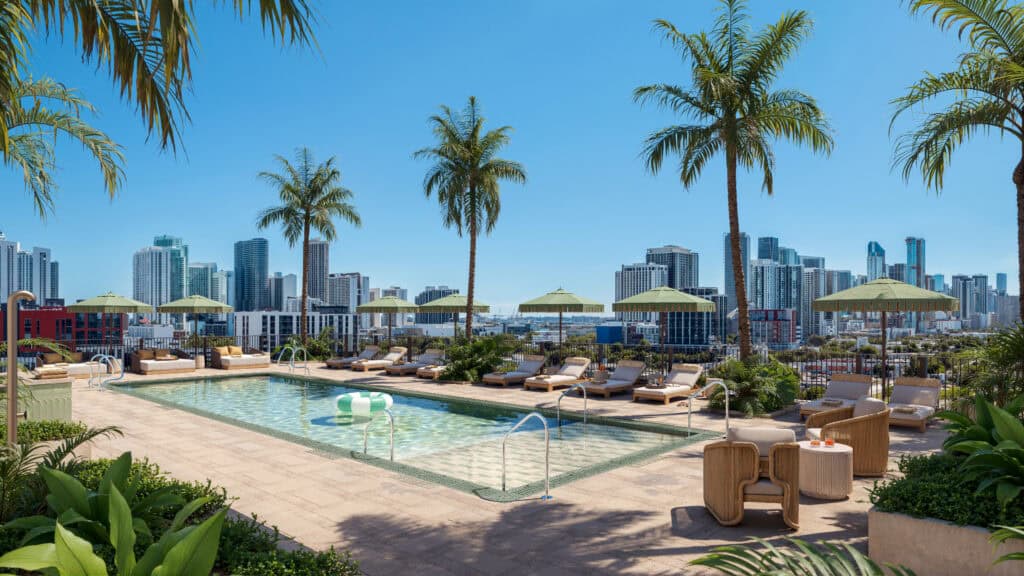
Photo: VMI Studio
For others, the ultimate luxury is privacy and the absence of friction. At The Residences at 1428 Brickell, Ytech has doubled down on a residents-only experience. “For our buyer, privacy is one of the most important luxuries a building can offer, and it is often what creates the final sense of confidence,” says Kraynak. “The wellness spaces, the social spaces, and the wine and spirits lounge feel more elevated, more discreet, and more consistent with how they actually want to live.”
Meanwhile, in the vibrant Wynwood district, The Cloud One Hotel & Residences Wynwood offers a hospitality-led model that prioritizes service. Novotny highlights their serviced rooftop environment, complete with a landscaped pool deck and an indoor-outdoor restaurant and bar, as a major differentiator. “That degree of service has become highly persuasive because it immediately communicates ease, comfort, and everyday luxury,” she explains.
Wellness and the Luxury of Time
As Miami becomes a primary residence for the global business class, buildings are being designed as sanctuaries for health and productivity. At Domus Brickell Center, the focus is on flexibility. “Our approach to design focuses on anticipating the small details,” says Dunin. This includes spaces that allow residents to move seamlessly from a morning workout to a shared workspace and, eventually, to a rooftop sunset.
Ytech’s 1428 Brickell takes wellness to the literal top of the tower, dedicating over 10,000 square feet to health and restoration. “Modern luxury is increasingly about reducing friction in daily life,” Kraynak says. “When a building is planned properly… residents get back something extremely valuable: time.”
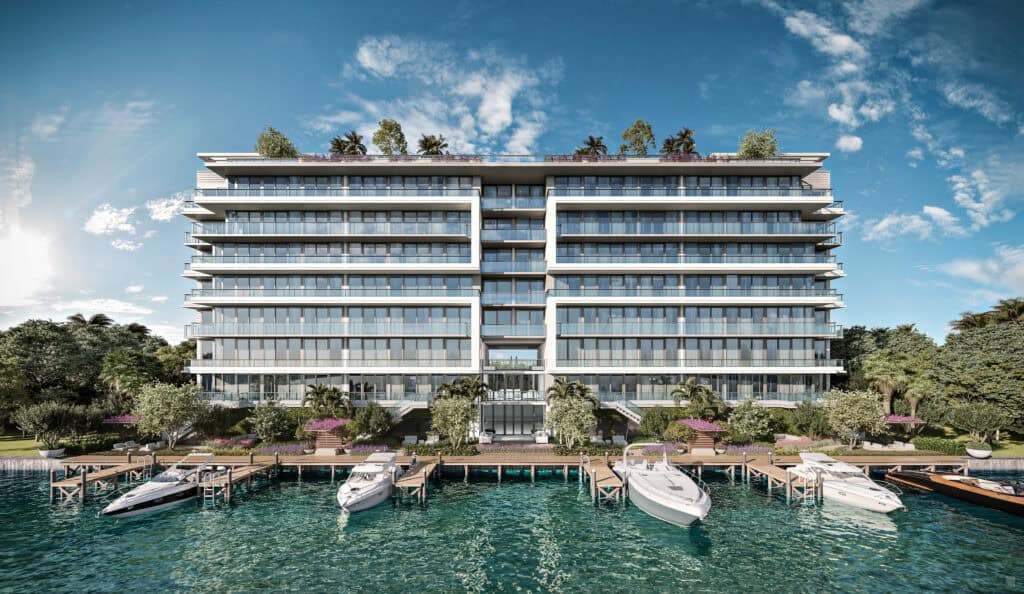
Photo: Continuum Company
Even in more boutique settings, the emphasis on an effortless lifestyle is clear. Eichner describes La Baia North as a place designed to be “effortless to live in,” offering services like 24-hour concierge and valet to simplify the “everyday life so residents can spend more time enjoying the waterfront.”
A Rare Opportunity
As the real estate spotlight intensifies on Miami, the available inventory in these ultra-luxury developments is tightening. La Baia North, for instance, is already 80% sold with only 11 units remaining. Another big draw of Miami that wasn’t true a few years ago is the development of Miami neighborhoods like Brickell and Wynwood, giving buyers plenty of options on and off the water.
“What makes the project especially compelling,” Novotny concludes regarding The Cloud One Hotel & Residences Wynwood, “is the way it brings together the cultural energy, walkability, and creative identity of Wynwood with a hospitality-led ownership model.”
Whether it is the private docks of Bay Harbor, the soaring privacy of Brickell, or the artistic pulse of Wynwood, Miami promises potential buyers that you can manage a billion-dollar company in the morning and be on the water by sunset.