If you were in the market for a second home, you could do worse than to pick up a little something in the ultra-posh seventh arrondissement of Paris. And at first sight, a 2000-square-foot apartment overlooking, say, the Champ de Mars park and the Eiffel Tower might serve you nicely. But what if the apartment was terribly run-down? And what if, despite its splendid front-facing street views, you also had to contend with a window that gave on to a less-than-scenic internal courtyard?
From a design point of view, such an apartment could look like an opportunity awaiting the right pair of eyes – or an unmitigated disaster. Mark Howorth saw it from the former vantage when he was brought on to refurbish and decorate a California family’s new digs, which were in the condition described above.
“The clients loved color. They wanted a space that was layered and textured and cozy,” says Howorth, the founder and creative director of Callender Howorth, a UK-based interior design studio with offices in London, New York and the south of France. They requested refined interiors that were sympathetic to the past but decidedly modern when it came to conveniences and comfort.
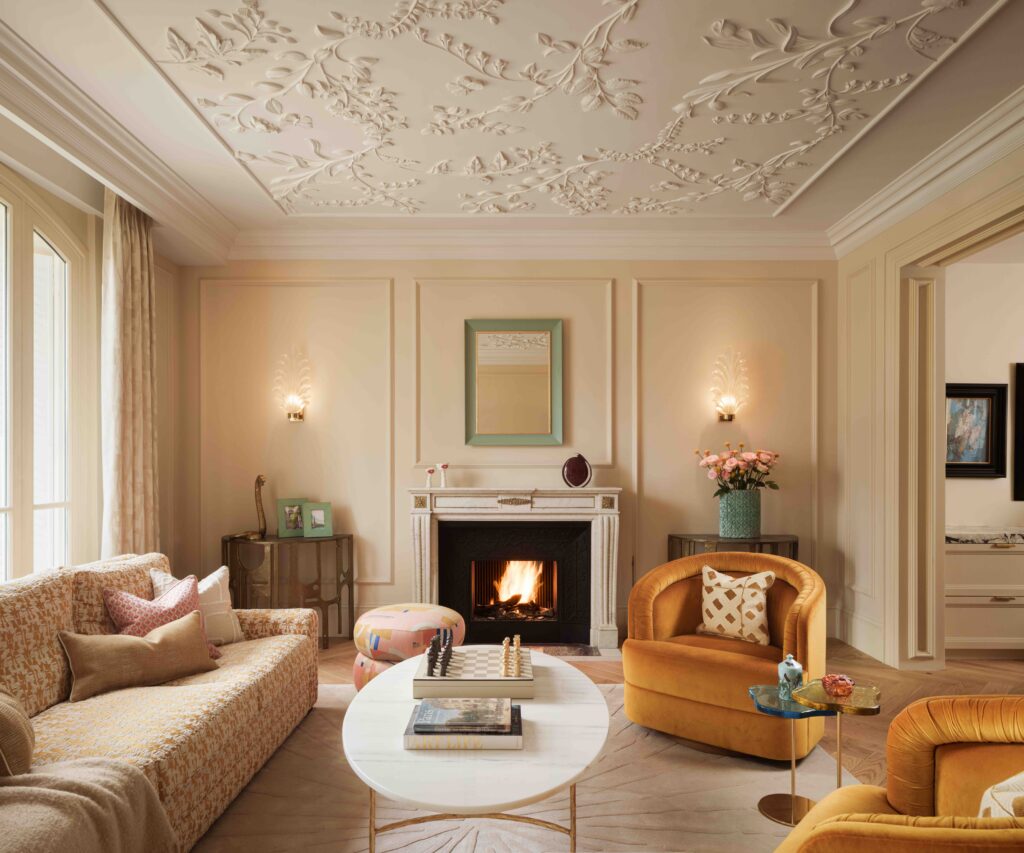
Housed in a building erected at the tail end of the Belle-Époque (1817-1914), it was clear to all concerned that the apartment had seen better days. For Howorth, whose studio has completed full-service design projects in the Hamptons, California, New York City, and throughout Europe, it seemed logical to take decorative and historic cues from the building’s origins, which harked back to a time when ornamentation was the order of the day.
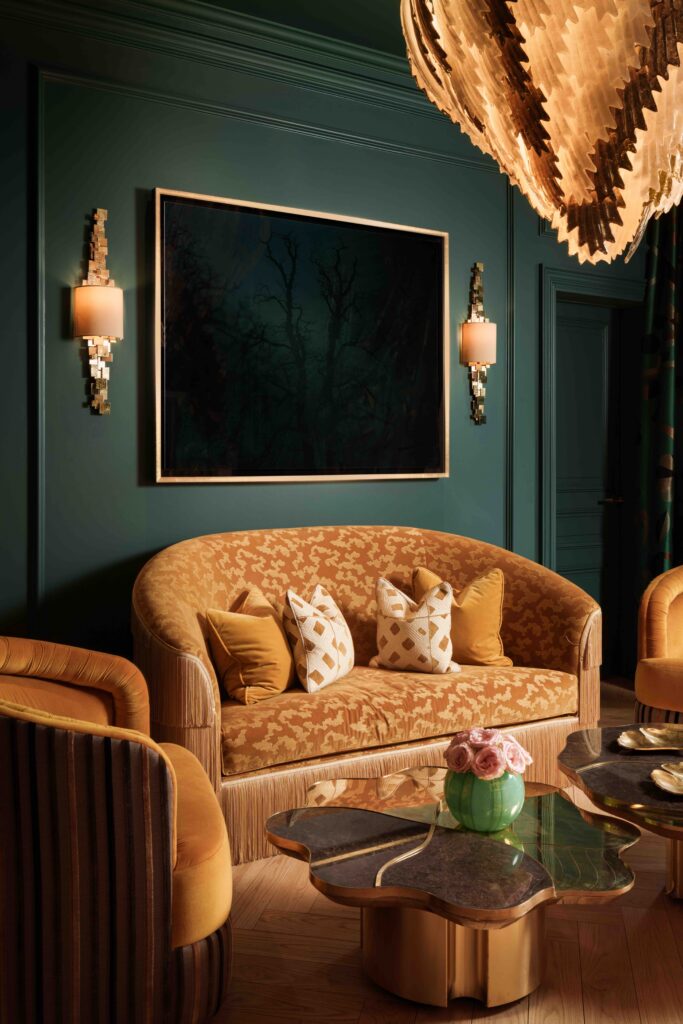
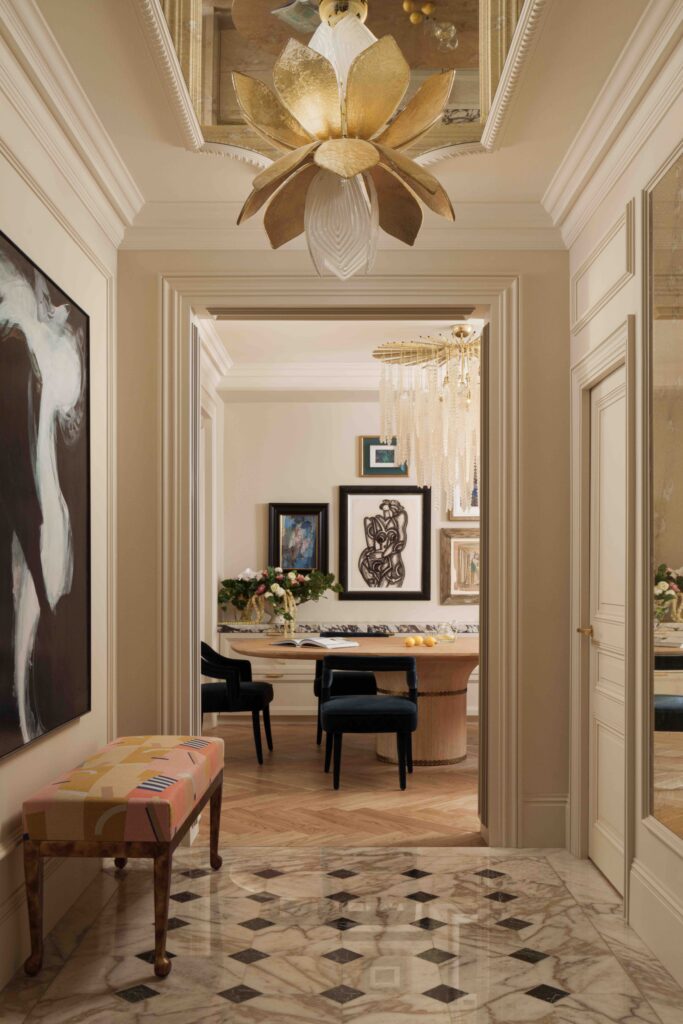
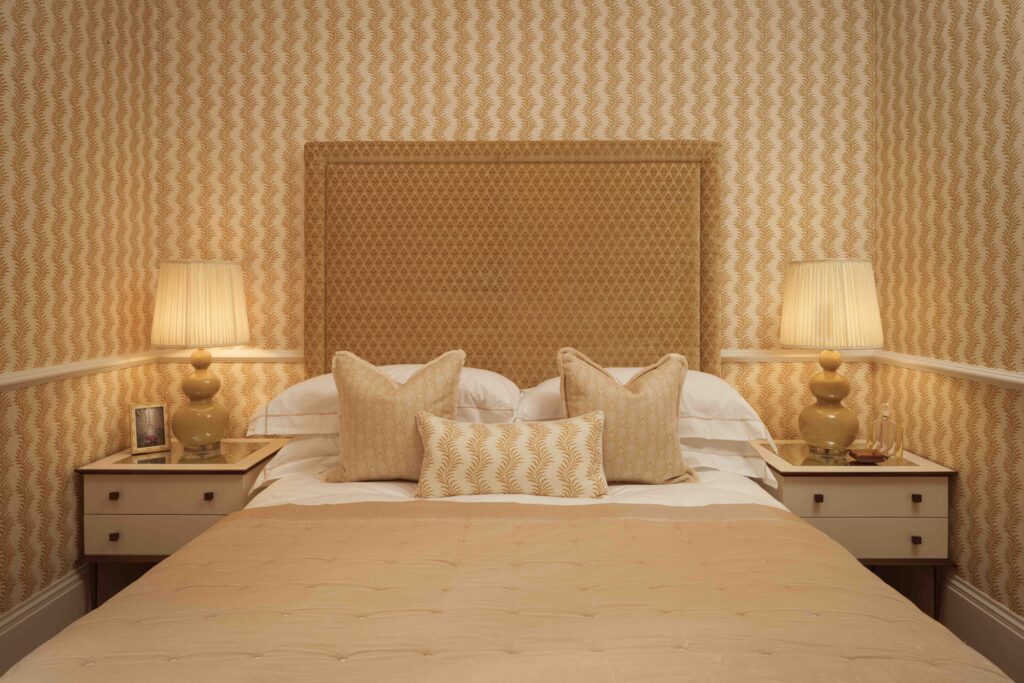
Accordingly he conceived of the apartment’s rooms as a series of jewel boxes, each filled with the rich, saturated colors and materials of the era – from the emerald-green bar room with its onyx bar, the Prussian-blue bedroom, and the unashamedly glamorous gold-toned Chinoiserie wall covering in the powder room to the gold leaf and Murano glass pendant in the entrance hall.
But before the studio got to the fun stuff, there was some very serious structural and detail work to be done. This included updating the apartment’s physical plant, reconfiguring the floor plan, and enlarging rooms, among them what Howorth describes as a “pokey” kitchen. Walls were moved and thickened, spaces were reconfigured, boiserie panelling and architraves were added. “It was vitally important to prepare the canvas before we moved on to color and texture,” says Howorth. “We had to get the spatial and interior architectural elements right and everything had to be brought up to American standards. For our American clients, the best water pressure, under-floor heating, air conditioning and a steam shower in the primary en suite are base-line requirements.”
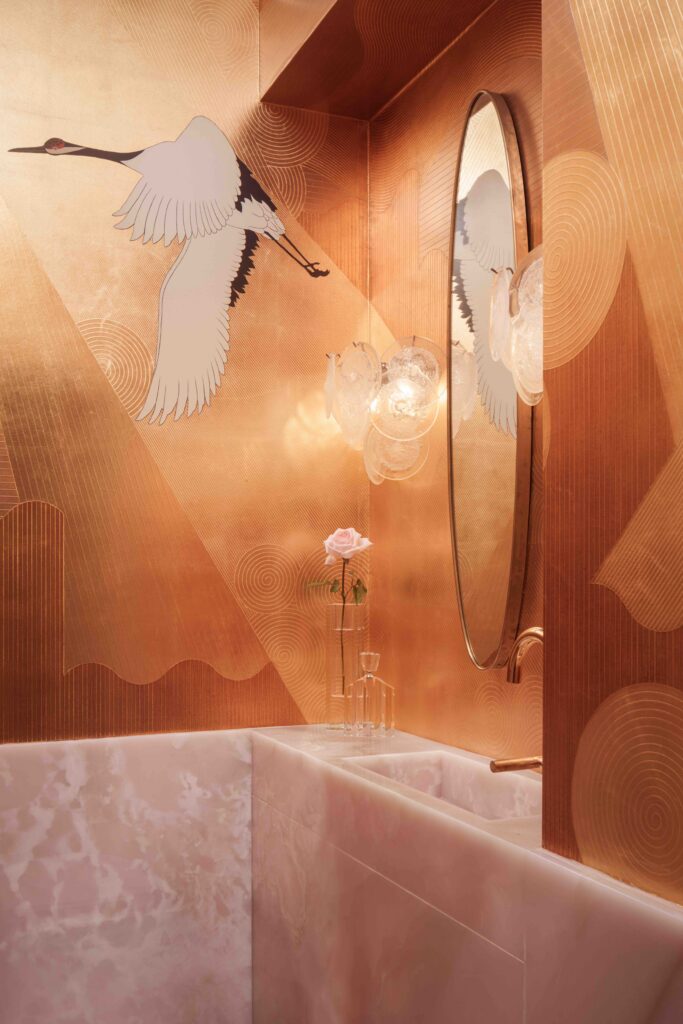
Construction took twelve months to complete. “A lot of the project was about the reintroduction of character,” he says. “The flat had been ripped bare. A classic Belle Époque entrance hall would have had a marble-floored foyer and so we installed one in Calacatta Viola with bronze inlays in a bespoke pattern.”

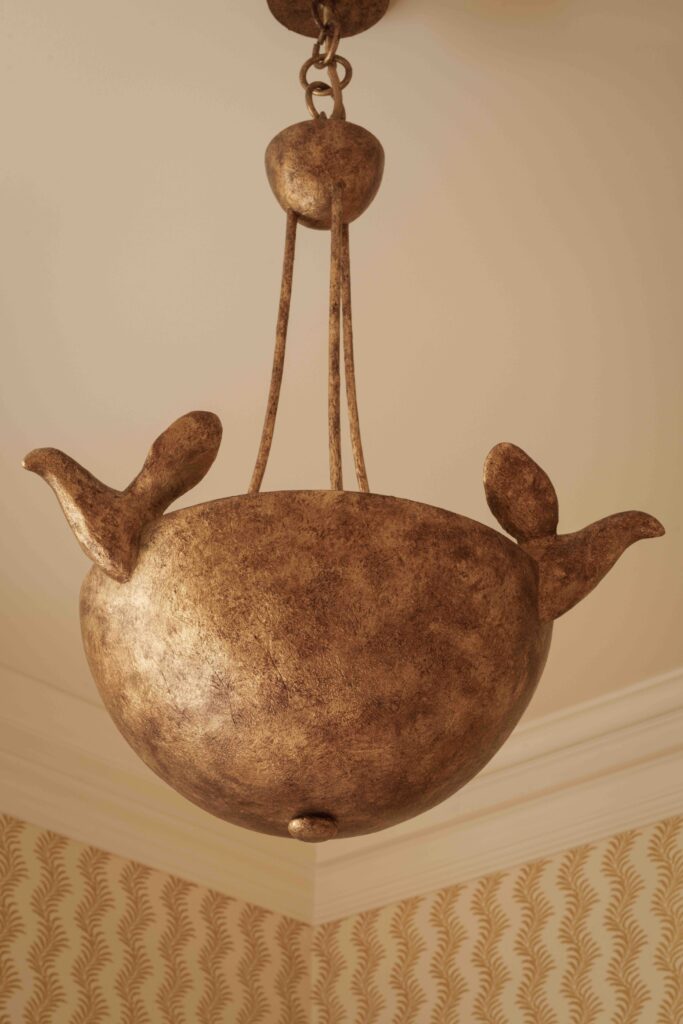
Throughout the apartment, Howorth deployed other sumptuous materials such as shagreen leather, pink onyx, marble from Patagonia and gold and bronze trim. He added atmospheric lighting (“We sourced incredible maximalist chandeliers,” he says) and designed the plaster butterfly motifs that now decorate the ceiling in an inspired reinterpretation of Belle-Époque décor. “All the different elements came together to form the show-stopper of a flat that the clients wanted,” says Howorth.
And speaking of show-stoppers, the owners were so delighted with the end result that they’ve since acquired the ground-floor duplex directly beneath it – and they’ve commissioned Callender Howorth to fuse the apartments into a single 5000-square-foot unit distributed over three floors.
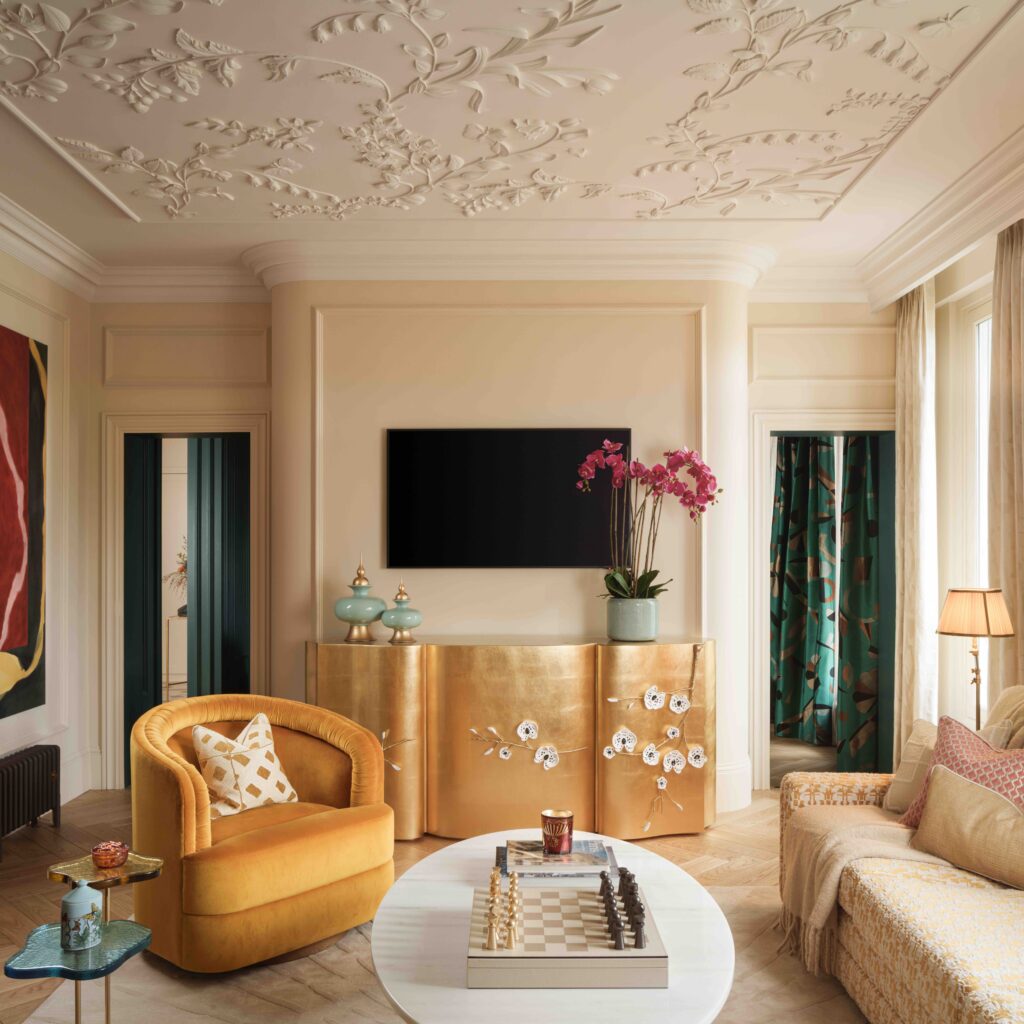
“We found a minimally-invasive way to connect the two structures,” reports Howorth. Plans are underway to create guest rooms, a cinema, and a grand space for entertaining. The latter will open onto an existing private garden, an exceedingly rare luxury in central Paris. “It’s going to be fantastic,” he says of the future triplex. “The clients let us go bonkers with color and texture.”
Photography by Vigo Jansons