South Florida’s luxury real estate market has moved well beyond the narrative of tax advantages and seasonal appeal
Hamptons Real Estate Showcase spoke with three of the region’s most accomplished brokers — Dana Koch of Corcoran, Elizabeth DeWoody of Compass, and Candace and Phil Friis of Corcoran. What emerged is a portrait of a market defined by permanence, scarcity, and an exceptionally discerning buyer. From Palm Beach Island, where the median home price has climbed from $7 million in 2021 to $14 million today, to the intimate communities of Gulf Stream and Delray Beach, demand is being driven not by financial incentive alone but by a genuine and lasting commitment to the South Florida way of life. What follows is their candid assessment of where the market stands — and where it is headed.
HRES: South Florida continues to attract a disproportionate share of high-net-worth buyers from the Northeast, Midwest, and internationally. What is driving that demand in your conversations with buyers right now, and do you see any signs of that pipeline slowing heading into fall?
Dana Koch: Tax advantages are certainly part of the conversation, but they’re no longer the primary reason buyers are choosing South Florida. Today, they’re looking for an exceptional lifestyle, year-round outdoor living, business connectivity, privacy, security, and long-term stability. Palm Beach, in particular, offers a unique combination of exclusivity, world-class amenities, and limited inventory that appeals to affluent buyers from across the U.S. While buyers are more selective than they were a few years ago, our pipeline remains limited heading into the Fall, and I don’t see that demand slowing, leading to higher levels of competition for quality product.
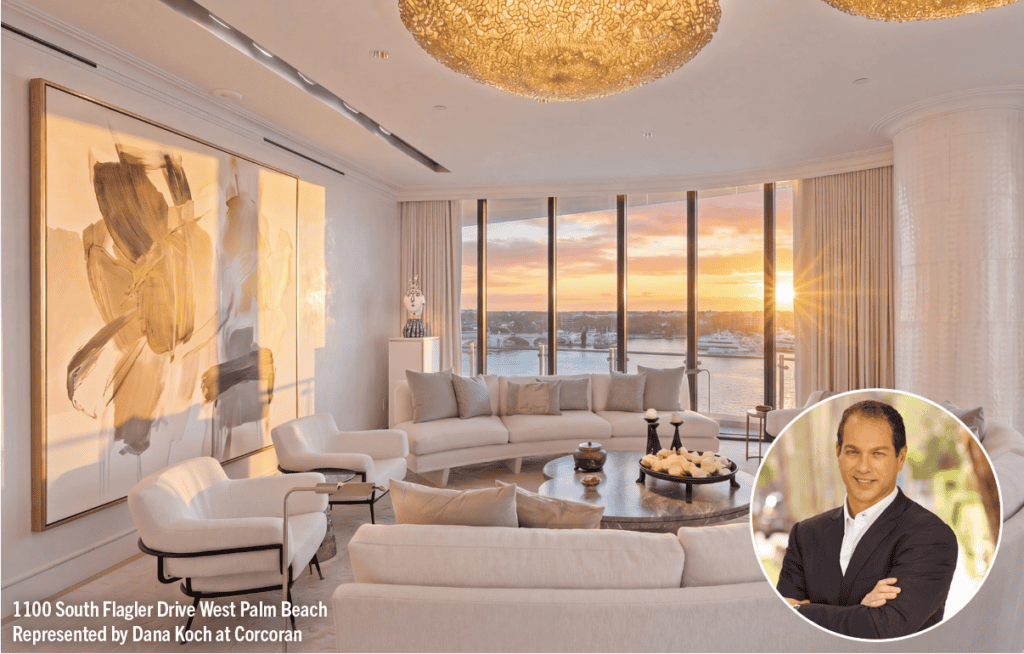
Elizabeth DeWoody: South Florida has undergone a fundamental transformation. What was once viewed primarily as a seasonal retreat has evolved into a premier destination for long-term residency. Between 2019 and 2023, Florida attracted approximately $137 billion in adjusted gross income through domestic migration — more than any other state. Palm Beach County led the country with a net inflow of roughly $22.7 billion, fueled not only by tax advantages but by a maturing financial sector, expanding cultural offerings, and a year-round lifestyle that blends business with recreation seamlessly. The market data reflects this momentum clearly: Palm Beach County sales above $1 million surged 57% year-over-year in June alone, while single-family home volume on the Island of Palm Beach jumped 75% in the second quarter, with the median price stabilizing at $13 million. Inventory remains scarce, and serious buyers have already committed to South Florida — the focus now is simply finding the right home.
Candace Friis & Phil Friis: South Florida continues to attract buyers because it offers something that’s becoming increasingly difficult to find—a wonderful quality of life. In my conversations with buyers, it’s about much more than tax benefits. They’re looking for sunshine, beautiful beaches, a safe community, excellent schools, and the ability to enjoy an active, outdoor lifestyle year-round. Delray Beach and Gulf Stream, in particular, offer a true small-town lifestyle with a strong sense of community, while still providing world-class dining, culture, and amenities. I don’t see that demand slowing down as we head into the fall. If anything, we’re continuing to see well-qualified buyers from across the country and around the world who are making South Florida their permanent home or choosing to spend more of the year here.
HRES: South Florida luxury values have demonstrated remarkable staying power compared to other major U.S. markets. Which specific submarkets — whether Coral Gables, Palm Beach, Coconut Grove, or elsewhere — are you seeing the strongest price-per-square-foot performance, and what is underpinning that resilience?
Dana Koch: Palm Beach continues to set the benchmark for luxury pricing because there is simply no way to create more “Palm Beach” especially waterfront property. That scarcity is one of the market’s greatest strengths. There are only 2200+ homes on the entire island and currently just over 60 homes for sale which is near a record low. Buyers want a piece of paradise! The same dynamic is supporting values in select markets like Coral Gables and Coconut Grove as well. Wealth migration and limited supply add to the scarcity that has helped sustain pricing in the most stable luxury markets in the entire country.
Elizabeth DeWoody: Palm Beach Island continues to set the national standard for capital preservation and investment resilience. The median home price has doubled from $7 million in 2021 to $14 million today, reflecting sustained demand across the market. Non-waterfront resales trade around $2,500 per square foot; new construction has reached $4,000 — a premium driven by a development cycle that now takes roughly three years from land acquisition to completion. Waterfront properties, whether Intracoastal, oceanfront, or rare “ocean-to-lake” parcels, command values scaled to specific views and frontage. What ultimately supports these numbers is scarcity. Larger lots, architectural excellence, privacy, and beach access are exceptionally difficult to replicate, and buyers are willing to pay accordingly.
Candace Friis & Phil Friis: Gulf Stream continues to command exceptional values because of its ultra-private, low-density lifestyle and beautiful oceanfront setting. Delray Beach attracts buyers with its vibrant downtown, outstanding dining, beautiful beaches, and true sense of community. Palm Beach with its history has long been an established luxury market. Across all three communities, buyers are investing in a lifestyle, and I continue to see strong demand.
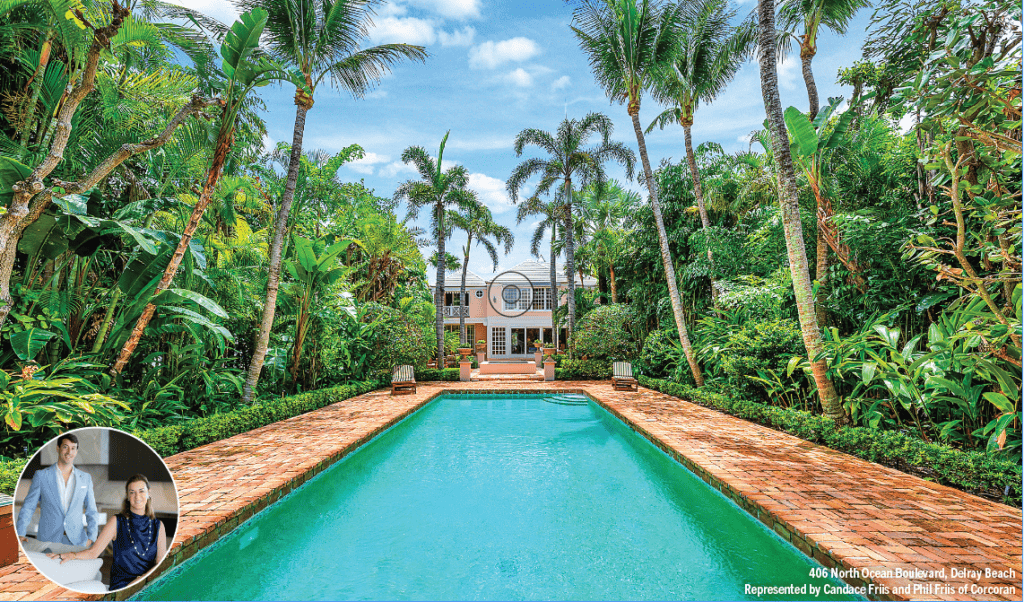
HRES: Florida’s tax environment and lifestyle proposition remain a powerful draw for buyers relocating from high-tax states. How prominently does that conversation factor into your buyer consultations, and has it become a baseline expectation rather than a selling point?
Dana Koch: It’s definitely part of the conversation, but today it’s more of an expectation than the deciding factor. Most buyers relocating from states like New York, New Jersey, California, or Illinois are already well aware of Florida’s tax advantages before we ever meet. What ultimately drives their decision is the quality of life—access to the water, golf, tennis, & padel, exceptional private clubs, a thriving cultural and art scene, excellent dining, and the ability to enjoy the outdoor lifestyle year-round. The tax benefits may open the door, but Palm Beach’s lifestyle is what ultimately convinces people to make the move.
Elizabeth DeWoody: Florida’s tax environment remains an important part of the conversation, particularly for buyers relocating from the Tristate, Illinois, California, and increasingly Washington. For families making a permanent move, the long-term benefits of no personal state income tax can be significant. That said, I’d describe it today as a baseline advantage rather than the deciding factor. Most buyers already understand the financial benefits before they reach out. My role is helping them determine whether the lifestyle supports a lasting move—whether that’s schools, clubs, healthcare, boating, aviation access, cultural amenities, or staying well connected to the Northeast. Tax policy may start the search, but lifestyle, community, and the quality of the real estate are ultimately what drive buyers to commit.
Candace Friis & Phil Friis: Florida’s lack of a state income tax is often a major motivating factor for buyers considering a move here. It gets them to take a closer look. But once they do, it’s the lifestyle that seals the decision. They’re looking for safe communities, beautiful beaches, excellent schools, sunshine, and the ability to enjoy an active outdoor lifestyle year-round. The tax advantages may bring them here, but the quality of life is what makes them want to stay.
HRES: South Florida’s new development pipeline has raised the overall quality of available inventory considerably. Are buyers gravitating toward new construction over resale, and how is that dynamic affecting pricing and negotiability in the $5M-and-above segment?
Dana Koch: Demand for new construction remains exceptionally strong because today’s luxury buyers value modern design, energy efficiency, smart-home technology, and turnkey convenience. With that being said, most of the new development is happening on the eastern half of West Palm Beach. This has become a highly desirable alternative to the Palm Beach market as pricing in the Palm Beach market has appreciated significantly. New development has allowed the West Palm Beach market to evolve and continue to grow to new heights that were unimaginable a few years ago. In the $5 million-plus market, buyers are discerning and expect quality. Properties that are priced correctly and offer exceptional value continue to sell at strong prices, while resale homes that require substantial updating or are priced aggressively are seeing greater room for negotiation.
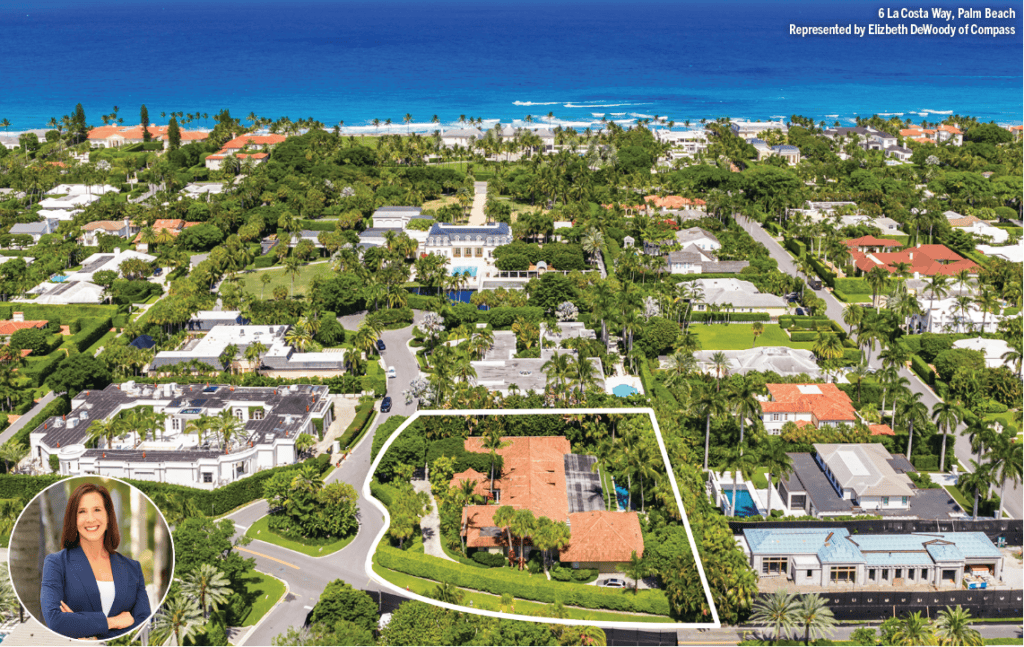
Elizabeth DeWoody: The premium for new construction and thoughtfully renovated homes is real, but buyers are not simply chasing what is new — they are seeking exceptional design, resilient construction, natural light, wellness features, and a level of finish that is genuinely difficult to replicate. That preference has sharpened as buyers weigh new developments against older condominium inventory; Florida’s enhanced inspection and reserve requirements have made building condition and capitalization a meaningful part of the conversation. International demand continues to drive the market, with overseas buyers accounting for 49% of new development, preconstruction, and condominium sales across South Florida over the past 18 months. Above $5 million, pricing is highly property-specific. Best-in-class homes command strong numbers while dated resale properties offer negotiating leverage. The market isn’t rewarding just “new” – it’s rewarding quality, certainty, and scarcity.
Candace Friis & Phil Friis: Buyers today are first and foremost looking for the right location and community to fit their lifestyle. Once they’ve found that, some prefer the convenience of brand-new construction, while others enjoy the opportunity to renovate or build a home that’s uniquely their own. In the $5 million-plus market, quality inventory remains limited, whether it’s new construction or resale, and that’s continued to support pricing.
HRES: For buyers who have been evaluating the South Florida market, what is your honest assessment of the opportunity this fall — and what would you tell a serious buyer today about why waiting could cost them in a market with South Florida’s long-term fundamentals?
Dana Koch: Fall presents an excellent opportunity for well-prepared buyers because inventory tends to improve after summer, giving them more choices while competition remains disciplined. At the same time, Palm Beach’s long-term fundamentals haven’t changed. Waterfront properties remain extremely limited; demand from affluent buyers continues, and the market has consistently demonstrated resilience over time. For buyers focused on owning in Palm Beach for the long term, waiting for the ‘perfect’ moment often means missing the right property. In this market, exceptional homes rarely become more available over time—they simply become harder to replace. My word of advice is that if you find a home that you like, make an offer or else someone else will. The property is not waiting for you, I promise!
Elizabeth DeWoody: This fall should offer buyers greater choice and a more measured negotiating environment — a healthy shift that allows for careful comparison, thorough due diligence, and a clearer distinction between aspirational pricing and truly irreplaceable assets. But more inventory should not be mistaken for weakening demand. South Florida’s luxury market entered 2026 with considerable momentum: sales above $1 million were up 18.4% year over year through May, while the top five percent threshold rose to $3.3 million across South Florida and $4.4 million in Palm Beach County during the first half of the year. Exceptional waterfront homes, prime locations, and turnkey properties remain genuinely scarce — and those opportunities rarely become less expensive over time. The buyers who benefit most this fall will be the ones who arrive informed and prepared to move decisively when the right property appears.
Candace Friis & Phil Friis: I don’t think buyers should try to time the market. They should buy when they find the right property in the right location for the lifestyle they’re looking for. In South Florida, especially in the luxury market, truly exceptional homes are limited. It’s not just about the possibility of prices increasing. It’s about missing the opportunity to own that one special property that simply can’t be replaced.





![🎨 Through vibrant fabrics, layered textures, and intricate stitching, artist Nicole A. Vanasse transforms everyday moments into richly detailed works of art. Drawing inspiration from real life while inviting viewers to find their own meaning, her textile compositions celebrate memory, storytelling, and the beauty found in life's smallest details. Each piece is a reminder that art can be as much about the journey of creation as the finished work itself. [link in bio]](https://hamptonsrealestateshowcase.com/wp-content/uploads/sb-instagram-feed-images/763433386_18619953184030135_3337811349419388933_nfull.webp)