Fall was always reliably a time for certain cleanup tasks in the yard and garden—deadheading, pruning and raking among them. But that to-do list has changed over the years, say experts. Some of that is thanks to technology, with a number of Smartphone apps featuring automatic task lists, planting schedules and frost dates. But some is due to the vagaries of climate change, with unpredictable temperatures at unexpected times of the year, affecting everything from photosynthesis and bloom time and duration to water retention, drought resistance and soil temperatures.
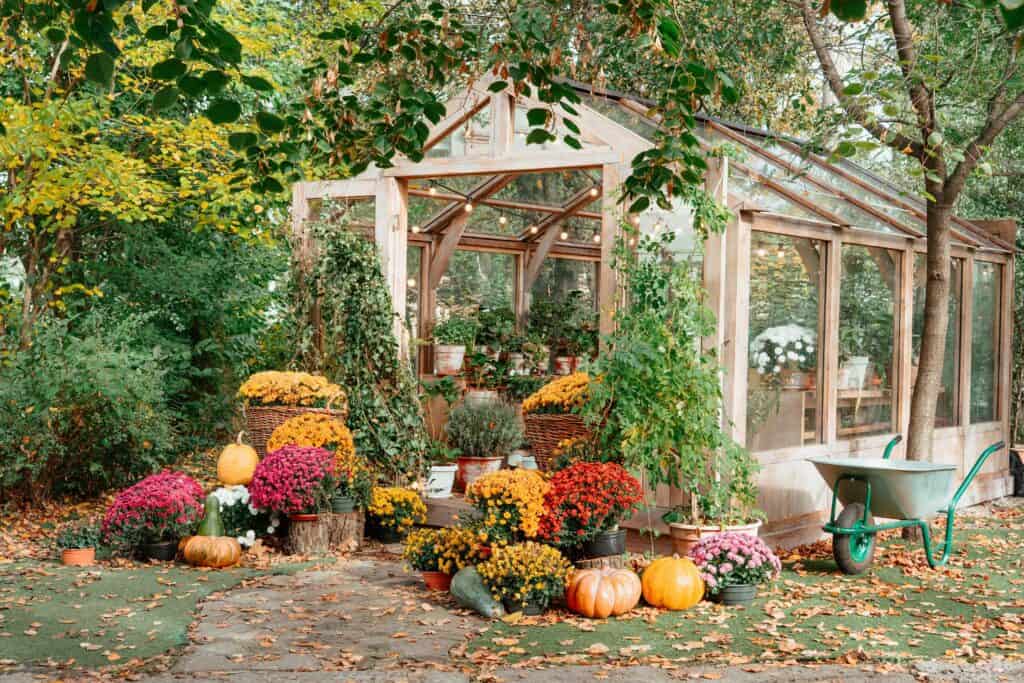
“I think the most important things we’ve been doing for the last 40 or 50 years are not working anymore because of climate change,” says Paige Patterson, long-time plant ambassador at Marders in Bridgehampton. For one, she says, “It’s getting hotter. Last year there was no real fall and it didn’t get cold until winter.” Without those cooler temperatures, plants don’t go dormant, which affects pruning schedules, which in turn, affect blooms in the next season. Which throws everything out of whack.
“We used to do a hard prune on most things in the fall – now I do it in March when I know the plant is dormant,” she says. “You have to know when the plant is dormant before you can prune and with varying temperatures, you can’t know and the plant can’t handle it.”
She cites a favorite Hamptons shrub, Hydrangea macrophylla, better known as bigleaf or mophead/lacecap. Conventional wisdom such as The Old Farmer’s Almanac would advise pruning in late summer right after blooms fade, but in the wake of fickle climates from year to year—plus the East End’s extreme weather, Patterson says she saves the pruning clippers for spring.
“If people aren’t sure when to prune, do it after it’s done blooming. If a plant flowers in the spring, don’t prune in the fall or winter—you’ll cut off next year’s bloom.”
Climate also plays a related role in seeding your lawn—another deviation from what was a rite of spring in many areas. “Fall is the best season for lawn care and repair, while it’s still warm enough for the seed to germinate but not hot enough for it to cook,” says Roxanne Zimmer, community horticulture specialist at the Suffolk County division of Cornell Cooperative Extension.
When (and what) to seed depends on your climate zone and whether you have cool-season or warm-season grass. And now, drought conditions play into those decisions. “Consider more drought-tolerant grass like fescue rather than Kentucky Blue in the mix,” she advises. “And sprinkle a thin layer of compost here and there to help it along.”
Sara Higgins owner of Sara Mairead Landscape in Northport, also suggests lawn design and repair might involve “looking at those alternatives for lawns, and replacing with something like clover or some kind of a creeping phlox or thyme.” Drought resistant ground cover, she says, “likes to be ignored and does very, very well in hot and drier conditions where you can really let it just flourish and look beautiful.”
Speaking of lawns, Zimmer’s No. 1 piece of advice: Leave the leaves. She advises waiting for a dry day after the leaves have fallen and using a bagless mulch mower (your regular lawn mower might have the capability), cut them one way then go back over them and cut again (think cross-shredding as in your confidential papers). Redistribute over the lawn in smaller pieces that will decompose and naturally amend the soil.
You’ll notice lots of garden centers have mulch sales around this time of year. Take advantage and buy what you need but Patterson says resist the temptation to put it down right away on your beds.
“The purpose of mulch is to keep the soil at consistent temperature. It’s an insulation, so wait until it’s cold to put it down,” she advises. “You don’t want to keep the soil warm too early and confuse the plants.”
Some garden centers offer classes on seasonal topics such as transplanting, dividing and overwintering tubers and other plants. Marders’ “Cookies, Coffee and Conversation” Sunday series, for example, offers numerous how-to classes (Oct. 25 is dedicated to putting your garden to bed).
The Cornell Cooperative Extension hosts a hotline Monday through Friday all year ‘round from 9 a.m. til noon (631-727-4126) and the Riverhead location (423 Griffing Ave.) offers a diagnostic lab for samples or specimens drop-off.












![🎨 Through vibrant fabrics, layered textures, and intricate stitching, artist Nicole A. Vanasse transforms everyday moments into richly detailed works of art. Drawing inspiration from real life while inviting viewers to find their own meaning, her textile compositions celebrate memory, storytelling, and the beauty found in life's smallest details. Each piece is a reminder that art can be as much about the journey of creation as the finished work itself. [link in bio]](https://hamptonsrealestateshowcase.com/wp-content/uploads/sb-instagram-feed-images/763433386_18619953184030135_3337811349419388933_nfull.webp)