The newest luxury isn’t necessarily a bigger chandelier. It’s a more sophisticated approach to light itself.
In today’s Hamptons homes, designers are thinking beyond the traditional decorative fixture at the center of the room and considering how light can shape a space’s experience throughout the day. The goal is not simply to make a room brighter, but to give it depth, warmth and flexibility, from the first light of morning through evening entertaining.
Make A Statement
Statement lighting isn’t going anywhere, but bigger isn’t necessarily better, designers say. Today’s sculptural fixtures can introduce texture and personality while still respecting the architecture around them. “The most compelling fixtures right now feel almost like functional art,” says Alyssa Buzzeo, a home and consumer design trends expert at the homewear brand RSLiving.com. “They’re beautiful objects during the day, but once they’re illuminated at night, they create an entirely different experience.”
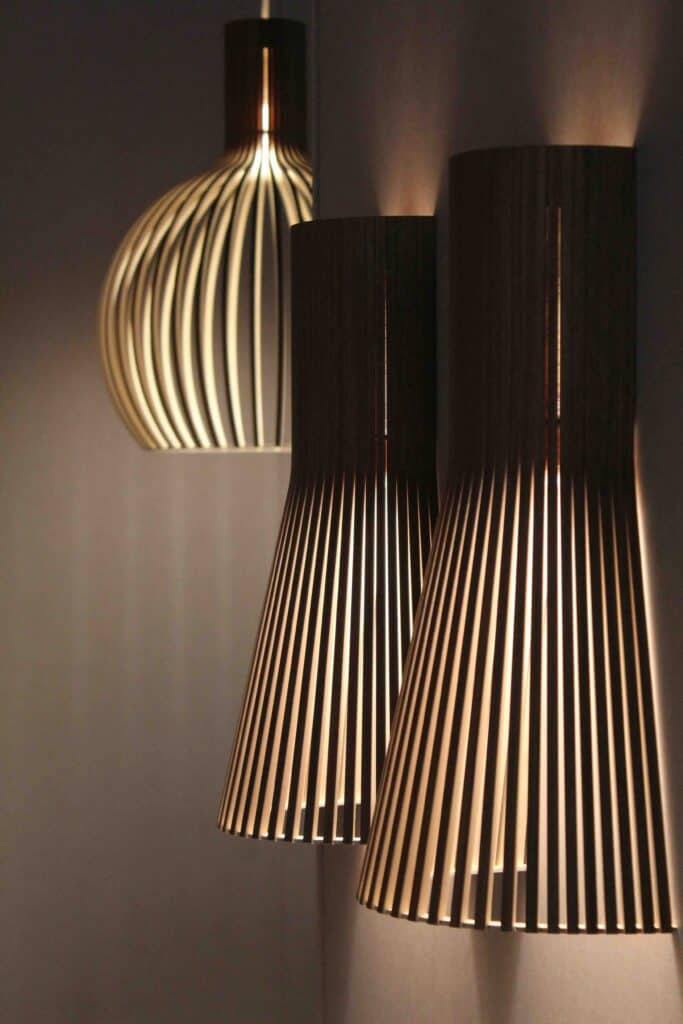
The key is proportion. In a Hamptons home, that means considering ceiling height, room dimensions, furniture placement and, perhaps most importantly, sightlines. A dramatic fixture may work beautifully in a double-height entry or over a substantial dining table, but it shouldn’t compete with a water view or other architectural focal point. Swati Goorha, principal interior designer and founder of Swati Goorha Designs, is drawn to “aged brass, hand-blown glass and linen shades,” which complement the natural wood and stone often found in coastal homes.
Layer The Light
Perhaps the biggest shift is happening overhead. Rather than expecting a single chandelier or a grid of recessed lights to illuminate an entire room, designers are combining sources at different heights and for different purposes. “I think people are starting to realize how impactful lighting can be, but you still see homes that rely solely on overhead lighting,” says Lana Wear, president and chief executive officer of the staging company HomeWear Designs. “It’s a team sport; you can’t expect one type of fixture to do all the work, or you end up with a room that feels flat and cold.”
Goorha approaches lighting in layers, beginning with architectural and ambient illumination, then adding sconces, pendants, table lamps and floor lamps as needed. Each can serve a different purpose, from general illumination to reading, highlighting artwork or emphasizing architecture. The result is a room that can change with the hour. Dimmers and smart controls add another dimension, designers add, allowing homeowners to move from brighter, functional light during the day to a warmer, more intimate atmosphere at night.
Lead With Landscape
If there’s one place where this more restrained approach makes particular sense, it is the Hamptons. Abundant natural light, expansive windows and views of water and landscape already provide a powerful visual experience.
“The natural light as well as the view from a Hamptons home can be so compelling; they should not compete with the artificially created light,” Goorha says. She favors lighting that helps a home transition from a sunny afternoon to an evening spent indoors or outside, while fixtures near windows support rather than distract from the view. “It’s about creating a space that feels elevated, but still warm, soft and inviting,” Wear says. “It’s approachable luxury.”







![Parisian history meets bold, expressive design in this Belle Époque apartment transformed by British designer Mark Howorth. Rich color, layered pattern, luxurious materials, and playful details bring new personality to the historic interiors, while restored architectural elements honor the character of the original building. The result is a home that feels distinctly Parisian without being bound by tradition, balancing old-world elegance with contemporary comfort and a sense of individuality. [link in bio]](https://hamptonsrealestateshowcase.com/wp-content/uploads/sb-instagram-feed-images/815038029_18636432205030135_1617405309612089952_nfull.webp)