Earlier this year before the event returns to Las Vegas. With more than 2,250 exhibitors and upward of 100,000 registrants, KBIS 2026 drew record crowds, a testament to an industry that, far from resting on its laurels, is redefining what a well-considered home can be.
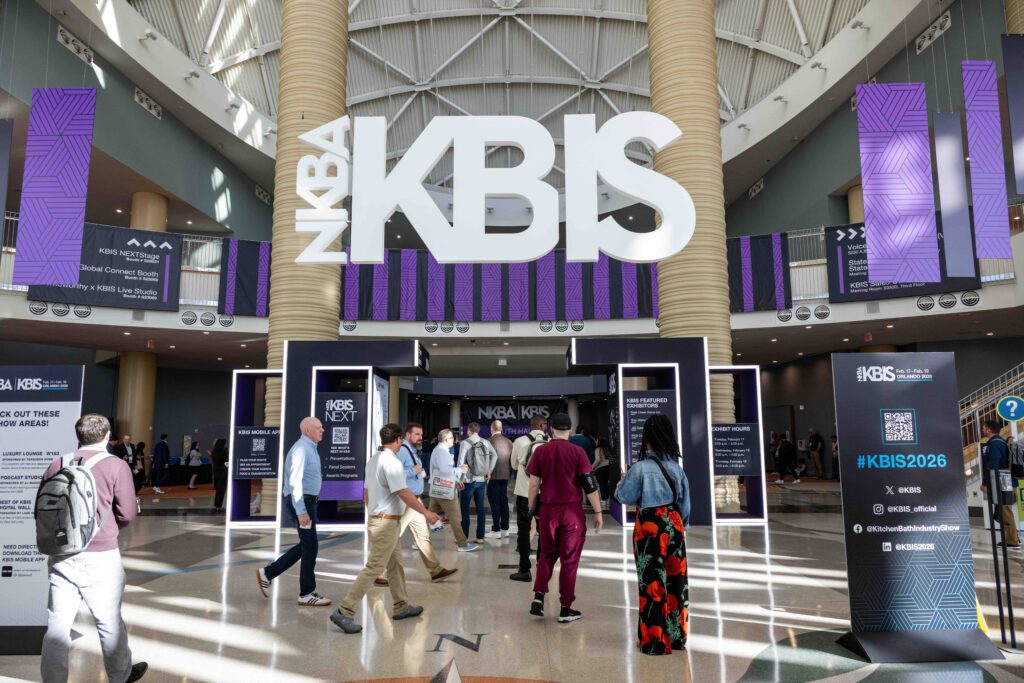
The throughline of the show was not innovation for its own sake, but innovation with intention. “What I’m seeing for 2026 is the industry shifting from ‘more innovation’ to ‘better innovation,'” observed Mason Watkins, Senior Director of Marketing at ZLINE. “Consumers are looking for choice: sizes, layouts, and pricing that fit real kitchens.” It was a sentiment that echoed across the show floor in product after product.
Artificial intelligence, once a peripheral presence at the show, arrived at KBIS 2026 with considerably more confidence, reflecting the ground the technology has covered in just the past year.
GE brought perhaps the broadest AI portfolio, led by the in-oven CookCam, which distinguishes between food types and calibrates temperature and timing accordingly, and a new Smart 4-Door French-Door Refrigerator with Kitchen Assistant that recognizes more than four million individual items, monitors supply levels and adds depleted products to a digital shopping list. Select GE Profile, Café and Monogram models now feature built-in microphones and speakers, allowing owners to manage their kitchens entirely through voice.
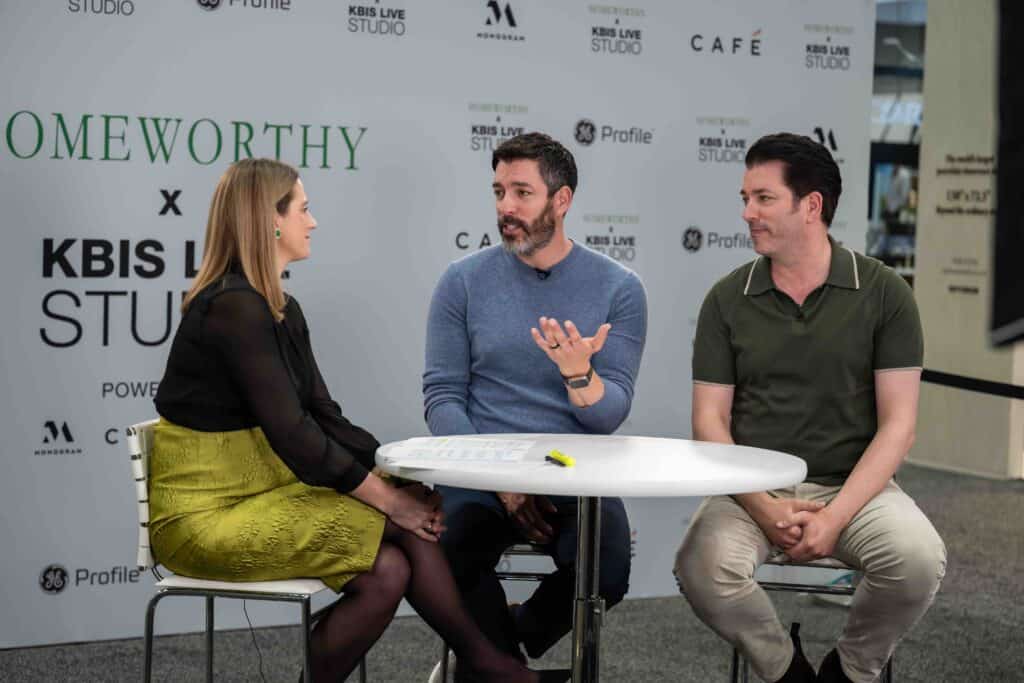
LG extended its Gourmet AI platform across the Signature Oven Range, adding camera-based dish detection and a dedicated AI Browning feature that monitors bread through the baking process and alerts users via mobile app when it’s ready. Its new Signature refrigerator introduces conversational AI alongside an AI Fresh function that studies door-opening patterns and precools the interior in anticipation, sometimes up to two hours in advance.
“Appliance brands have realized that consumers are looking for kitchens that simplify everyday tasks while expanding what is possible in functionality, versatility and style,” said Jeremy Parcels, Principal at Parcels Design Studio. “Manufacturers are delivering with high quality materials and quietly integrated technology.” That philosophy extended to surface innovation as well.
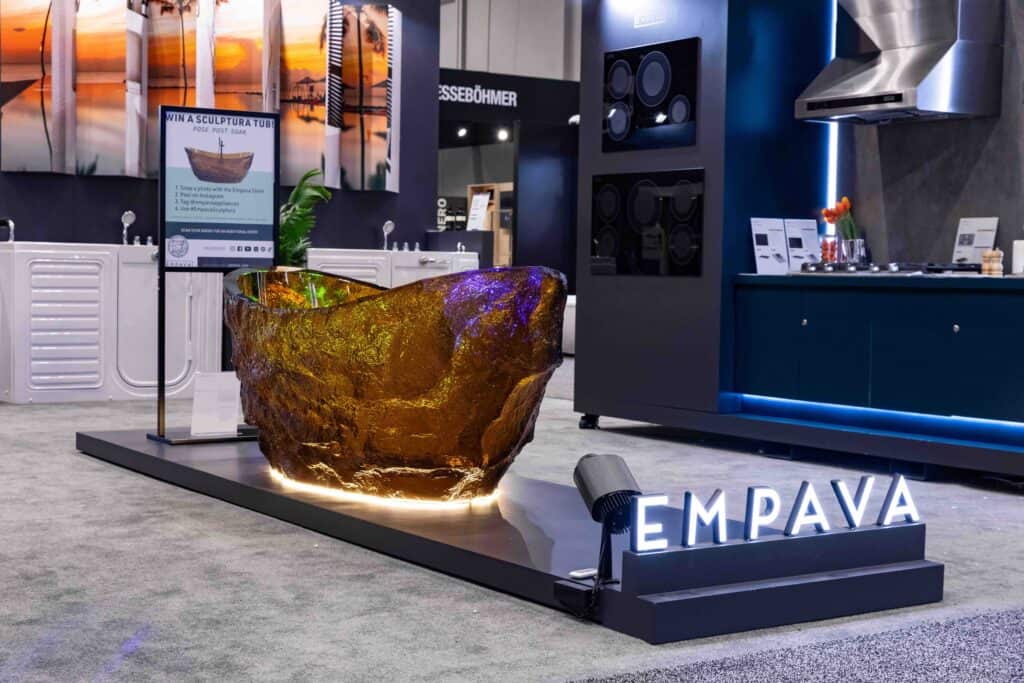
FreePower, a wireless charging system integrated directly into countertops, generated significant interest, its technology so seamlessly embedded that the surface itself becomes the utility. In tile and stone, abstract waterjet mosaics emerged as artistic focal points, with collections like the Sculpta Waterjet Mosaic by Ali Budd for Artistic Tile standing out for sculptural texture and layered composition.
The intelligence on display was not confined to the kitchen. Kohler used the show to debut an entirely new initiative, Kohler Health, positioning the bathroom as what the brand describes as an untapped hub of vital health data. Its flagship product, the Dekoda, attaches to a toilet bowl and uses machine learning and optical sensors to track hydration, gut health, blood detection and daily routines, transmitting data securely to a companion app alongside personalized insights. It was a bold move, and one that suggested the category is prepared to venture well beyond aesthetics.
What KBIS 2026 confirmed, above all else, is that the kitchen and bath industry has matured into something more than a showcase of objects. It is a conversation about how people live and how the spaces around them can rise, quietly and beautifully, to meet them.
Photos: Emerald/KBIS










![🎨 Through vibrant fabrics, layered textures, and intricate stitching, artist Nicole A. Vanasse transforms everyday moments into richly detailed works of art. Drawing inspiration from real life while inviting viewers to find their own meaning, her textile compositions celebrate memory, storytelling, and the beauty found in life's smallest details. Each piece is a reminder that art can be as much about the journey of creation as the finished work itself. [link in bio]](https://hamptonsrealestateshowcase.com/wp-content/uploads/sb-instagram-feed-images/763433386_18619953184030135_3337811349419388933_nfull.webp)