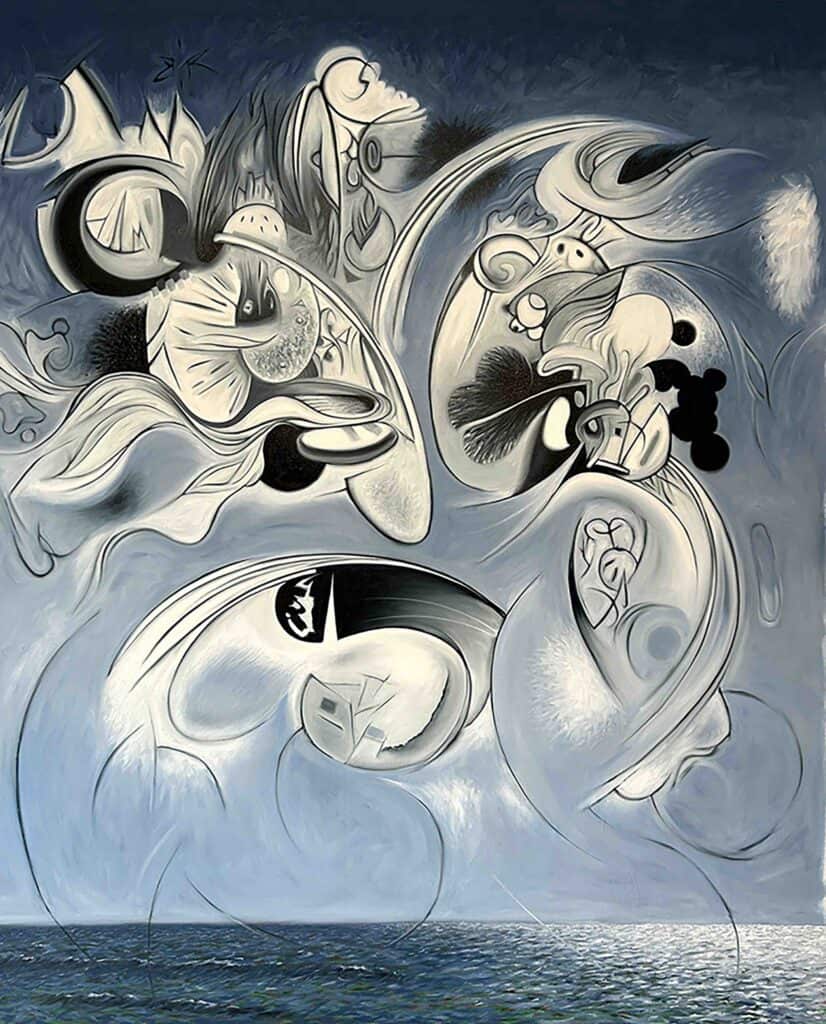
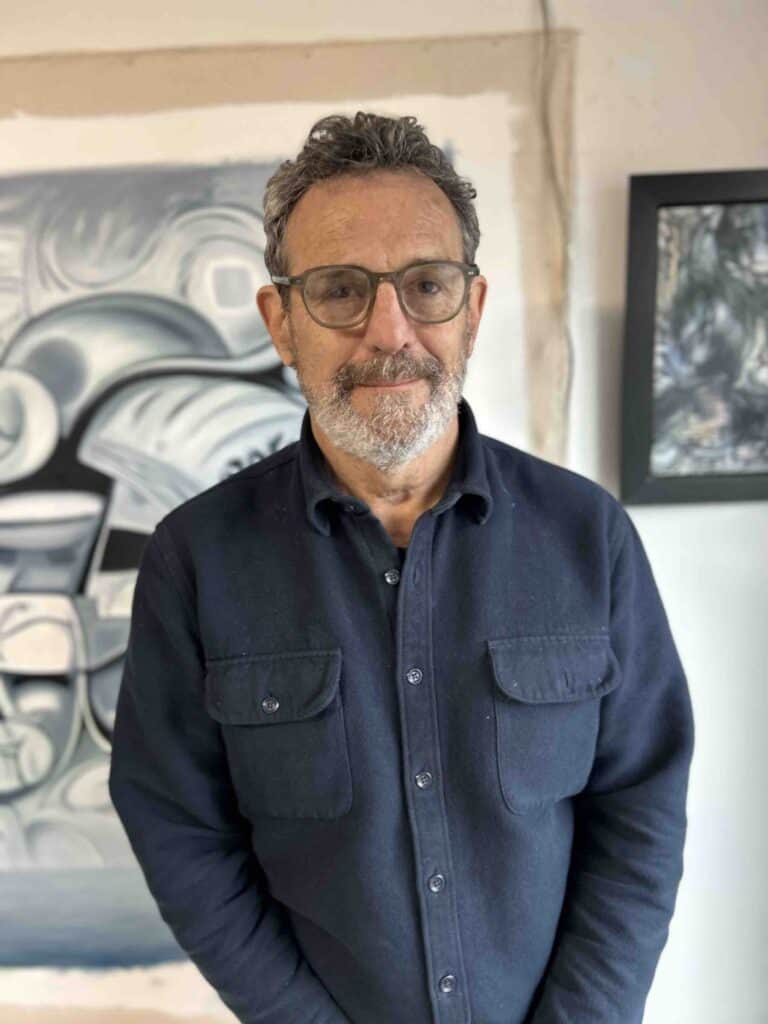
Brent Richardson’s paintings and drawings are filled with a restless visual energy that has caught the attention of a wide creative community, from fellow artists to film directors, musicians, and collectors. His images draw viewers in through a balance of the realistic and the abstract, using shadows and atmospheric backgrounds to create a striking sense of depth, as though forms are hovering just above the canvas.
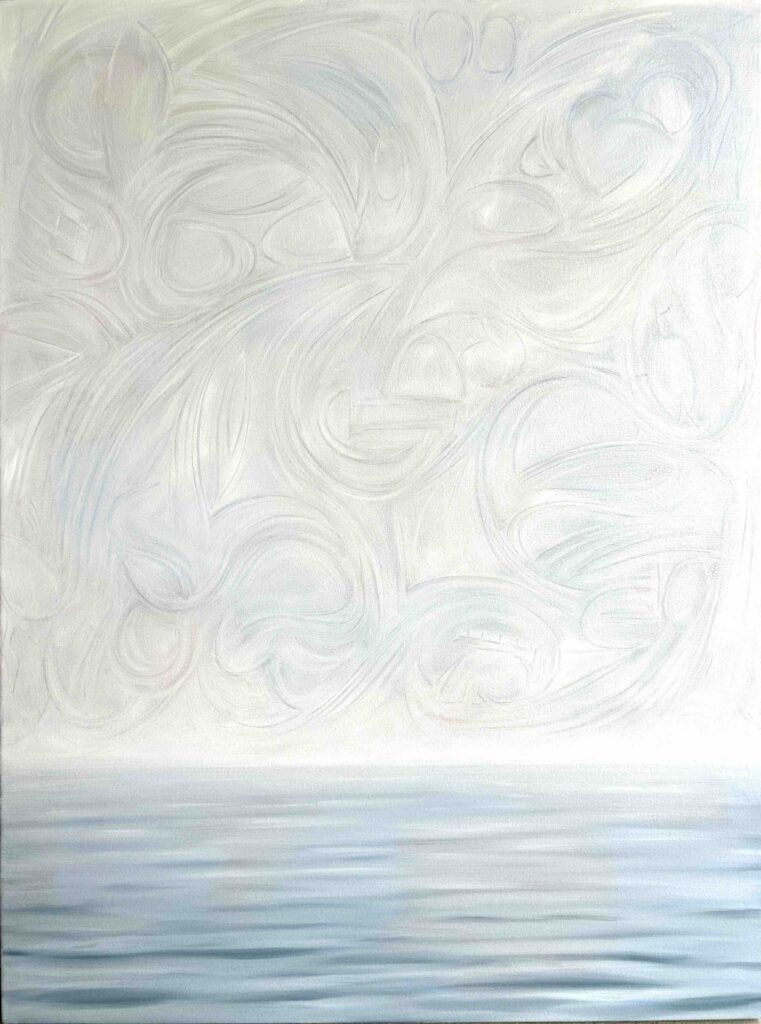
“There are objects which are familiar but not quite tangible,” says Richardson. “I like the ambiguity of it, organic shapes from nature but it doesn’t quite solidify.” Richardson lived in New York City and Brooklyn from the early 80’s but has a home in Montauk which has become his full-time residence and studio since Covid. That sense of space has also influenced his work. “My images used to be really dense, and then I started letting them breathe. Every day I see this ocean so the horizon came into the work. That abstraction has a volume that would appear sculptural.” Yet there is also a human element imprinted in the design, even seeing the radius of his arms in the curving lines. “I like to orchestrate the viewer’s movement around the image,” says Richardson, “There’s a cadence to it, a calm moment before an erratic one, like an opera.”
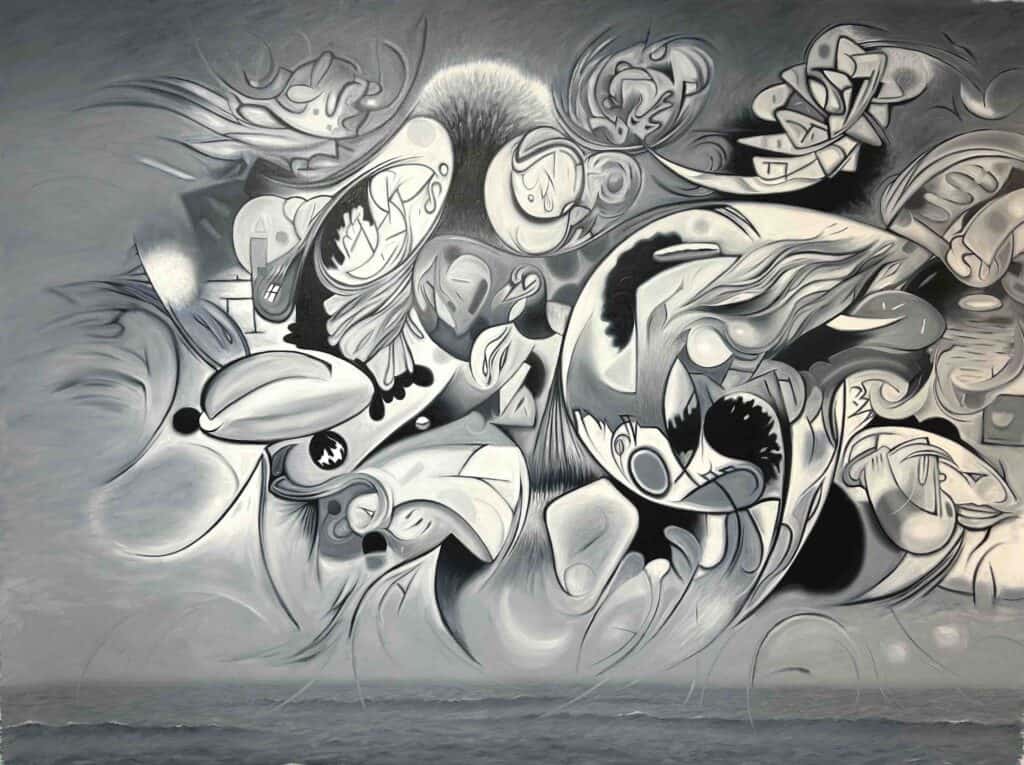
Jean-Christophe Castelli, son of Leo Castelli who gave Richardson his debut show in 1987, brilliantly describes Richardson’s work as having eyes that “point in all different directions—to art of the past (Matta, early Mondrian), psychedelic comics and posters, the duck-rabbit optical illusions of Jasper Johns, B Movies, hot rods, Loony Tunes and Popeye, all dancing around to a dissonant, surf-guitar soundtrack.”
Richardson’s imagery has also moved fluidly between the gallery world and popular culture. An album cover for AC/DC emerged through an art director connection — and a cocktail napkin. “I met the band at a hotel in New York City,” Richardson recalls, “They showed me their idea for the cover, a cocktail napkin with a stick figure on it. I articulated it in pencil with the lettering to be painted or photographed but the band said, “Oh, let’s just use the drawing.” He laughs about the resulting cover for Flick of the Switch, “I probably got $400 for it, and now I see it everywhere and on T-shirts.”
Diane Keaton was also an early fan when he originally designed the titles and graphics for the film “Heaven” which she was directing. He ended up collaborating with her on various design and painting projects saying, “She was so funny and very smart and self-deprecating. She’d come up with great ideas, and I did illustrations for her.”
For Richardson, the art has been about the personal journey of expression instead of the “art scene” per se. Many of his collectors find him by word of mouth or visiting his studio in Montauk. The title of his first show in many years recently in New York City was aptly titled, “It’s been a while.”
Audiences on the East End will have the chance to view Richardson’s work in his exhibit “Everything and Nothing” running June 27 to August 2 at the Arts Center at Duck Creek, a community-center arts programming non-profit located on Historic Duck Creek Farm in Springs, East Hampton.
“This season reflects everything Duck Creek stands for—bringing together artists and audiences in a setting that is both inspiring and accessible,” shares Executive Director Jess Frost. “Our 2026 program is especially dynamic, with a range of exhibitions and performances that celebrate creativity, collaboration, and the unique cultural legacy of the East End.”




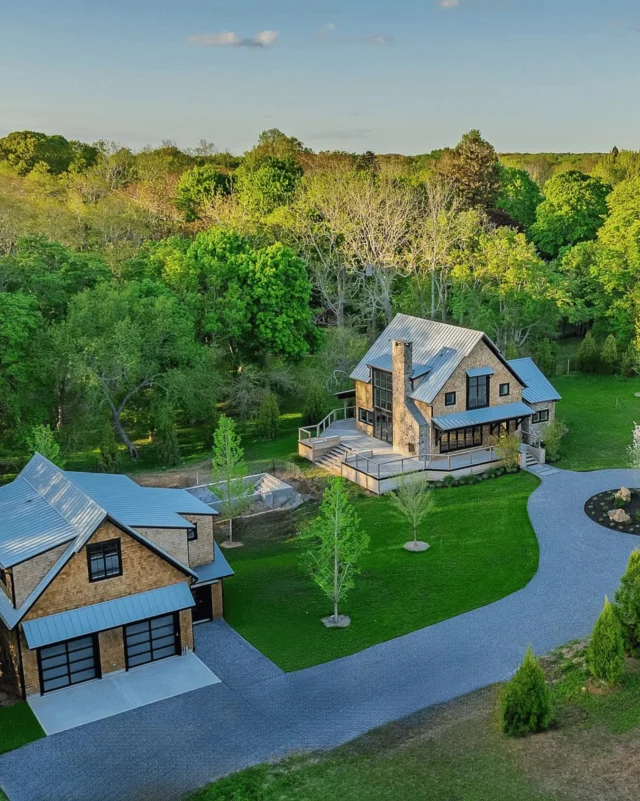
![Indoor/outdoor living has evolved far beyond the patio or poolside seating area 🌿 Today’s most thoughtful homes are designed to blur the boundaries between inside and out, creating spaces that support everything from entertaining and wellness to everyday relaxation. With flexible layouts, durable materials, and a stronger connection to the landscape, the next generation of East End living is focused on how a home feels and functions throughout the year. [link in bio]](https://hamptonsrealestateshowcase.com/wp-content/uploads/sb-instagram-feed-images/710830844_18598759708030135_2167851243877024321_nfull.webp)
![A home should tell the story of the people who live there ✨ Designer @samtannehill of @tannehillinteriors believes the most successful spaces are the ones that feel warm, layered, and deeply personal. Through thoughtful materials, natural color palettes, and an emphasis on how families actually live, her Southampton home reflects a design philosophy rooted in comfort, function, and connection. The result is a timeless interpretation of Hamptons living that feels collected, lived-in, and effortlessly welcoming. [link in bio]](https://hamptonsrealestateshowcase.com/wp-content/uploads/sb-instagram-feed-images/708953286_18598495174030135_5355474848495384064_nfull.webp)