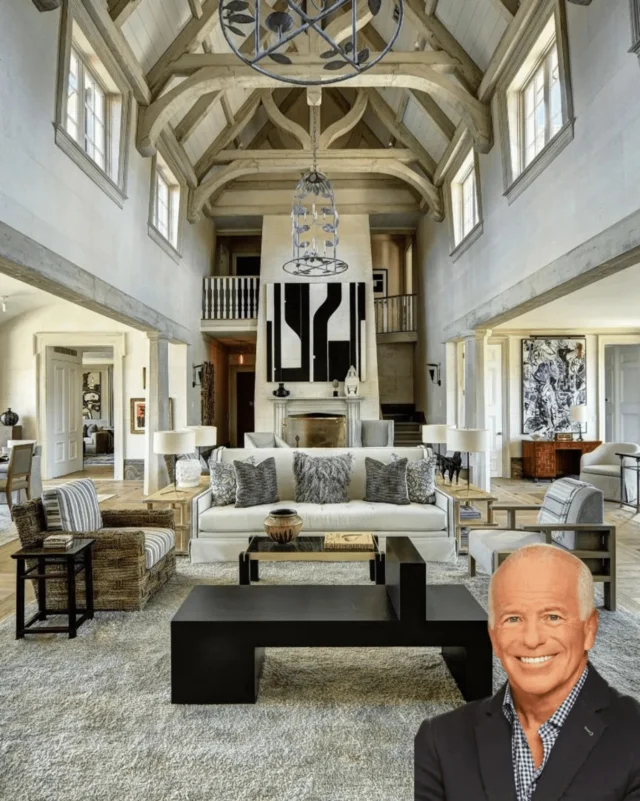
To help showcase readers sort out their Florida-to-Hamptons design translations, we consulted two design pros. Miami native Lori Evans is an award-winning interior designer and co-owner of Evans Construction & Design, a custom home building and design firm based in Florida.
Joelle Uzyel’s French Modern design work can be found in NY and in Florida and has been featured in Architectural Digest and Elle Decor, among other publications.
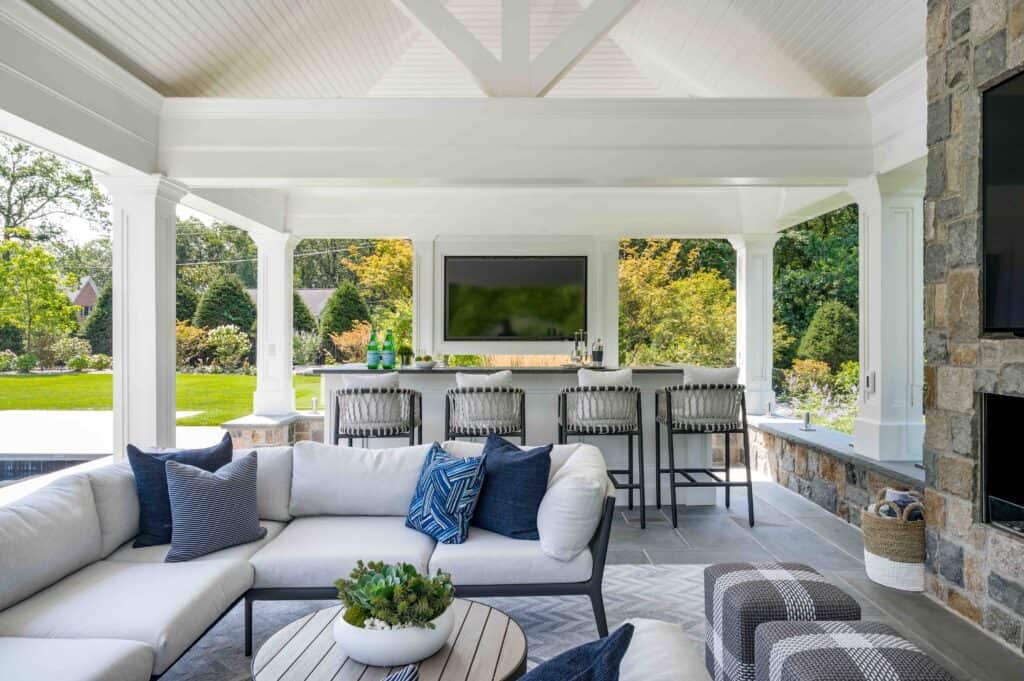
Photo: Tim Hill
Lost in Translation? Here’s a Primer
One challenge in infusing Hamptons interiors with Florida coastal energy is to discard the notion of a hard-and-fast Florida/Hamptons dividing line. Evans says, “There’s not a fixed template for either and the best results honestly come from taking the best elements of both.”
Uzyel also cautions that there may be an inherent structural tension between the two places. “Florida homes are built to open. Hamptons homes are built to contain. The architecture itself has a different relationship to the outside, and if you don’t address that first, no amount of natural fiber or pale stone is going to create what the client is actually after.”
Beyond these guardrails, homeowners in either location can have a lot of fun importing aesthetics from one place to the other. One place to start is with classic hallmarks of Florida design that can be reinterpreted in fresh ways.
Rattan as a Structural Material, not an Accent
In traditional Hamptons design, rattan appears as a supporting player, like a basket or the seat of a side chair. The Florida move is to make that a load-bearing piece of the design statement instead. Choose a full rattan headboard or a credenza with woven rattan doors. The key is commitment to scale. One oversized rattan piece reads as confident, where scattered small pieces read as generic could-be-anywhere coastal.
Uzyel says, “Rattan works when the room is restrained enough to let it read as a material choice rather than a theme.” Evans agrees, saying “It just has to be done thoughtfully and an elevated way. The goal is to take the best of both of these worlds and create something that is timeless, not themed.”
Wicker Seating on a Covered Porch in a Hamptons Palette
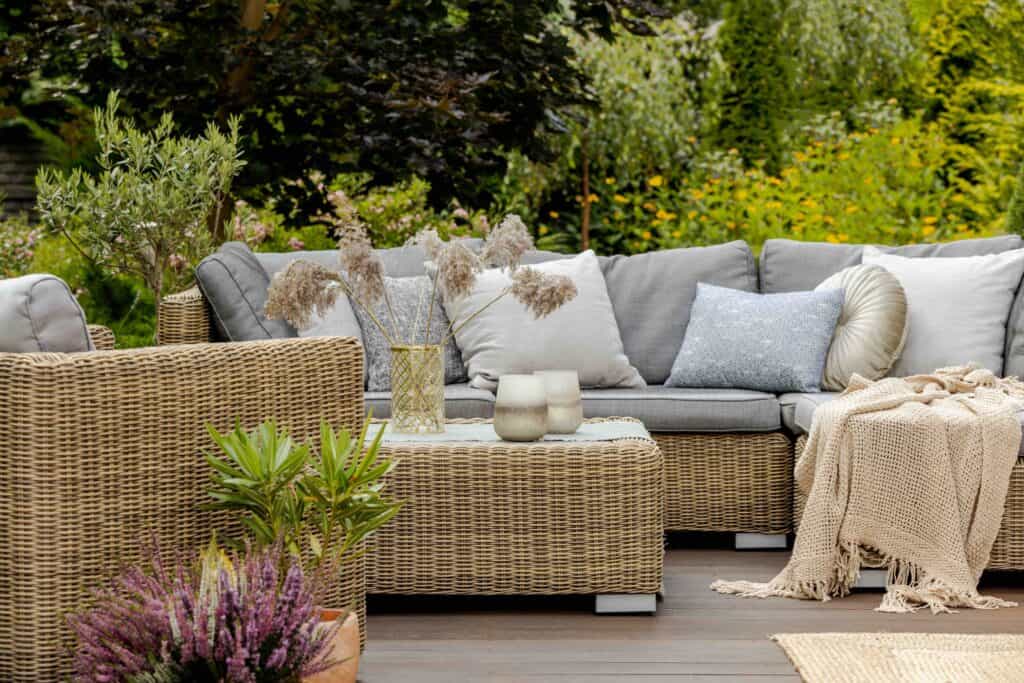
Florida porches are full of deep-cushioned wicker seating in warm, saturated tones. For the Hamptons edit, keep the wicker forms (generous scale, high backs, club-chair proportions) but choose cushions or new coverings in navy, sandy linen, or weathered white. This respects both traditions. The furniture silhouette is pure Florida, while the color story is pure Long Island.
Evans says traditional materials like wicker “need to feel like a layer, not the whole story. I use them in a more tailored way, pairing them with strong architectural elements for a little whimsy and then keeping the palette controlled so it doesn’t start to feel like a beach rental.”
The Al Fresco Dining Room
Florida entertaining culture places the primary dining experience outside, not just as a warm-weather overflow option but as the room the house is designed around. Translating this to the Hamptons means a covered outdoor dining space with a proper table—stone-topped, teak, or concrete—scaled for a real dinner party, with pendant lighting overhead, built-in seating or substantial chairs, and enough enclosure (pergola, hedge, or screen) to feel like a room rather than a patio.
The Hamptons has always had outdoor dining, but it has typically been casual and secondary. The Florida move is to make it the main event so that the table is always set and the interior dining room becomes the rainy-day backup.

Photo: The Evans Edit
Continuous Flooring from Interior to Exterior Terrace
The Florida hallmark of dissolving the inside/outside boundary often begins at the floor. The same material—or a deliberately matched material—running unbroken from the living room through the sliding doors to the terrace helps bridge those two areas for a more cohesive indoor/outdoor lifestyle. Large-format limestone or porcelain can read identically indoors and out. This kind of continuous flooring approach is an architectural commitment, not a styling choice, and it fundamentally changes how the house feels when the doors (or walls) are open.
Furnish your “Outdoor Room” like an Interior Space
Bringing the Florida idea of the lived-in lanai to the Hamptons means outfitting covered terraces and pool houses with the same intentionality as a living room. In other words, instead of simply picking a table and chairs that match, create layered furniture groupings and accent with weather-resistant rugs, pendant lighting, and even framed artwork. The Hamptons has the climate to support this seasonally, which encourages a sharper design aesthetic.
Pay attention to your environment, though. As Evans points out, “Florida light is really brighter and more intense, and Hamptons has a softer more muted coastal feel. I feel like that affects everything about how you handle those spaces.” Uzyel agrees, saying “For transition spaces specifically, I think about what the outside is asking of the inside. In the Hamptons, the outside is considered and landscaped, so the transition can be more transparent. The inside can look directly at the outside without the room losing its composure. The materials also have to respond to two completely different climates.”
Treat Tropical Plant Life as Interior Architecture
Florida interiors use large-scale tropical plants such as birds of paradise, banana leaf, and areca palms at a scale that makes these plants structural room elements, not mere decoration. A 6-foot bird of paradise in a corner commands the same authority as a piece of statement furniture. In a Hamptons context, this reads as lush and unexpected rather than tropical-kitsch, especially against a backdrop of white shiplap and navy upholstery.
Here, too, it’s important to keep in mind the variances in light between the two places. Florida’s intensity makes those plants pop in ways that Hamptons light may not replicate, so it might take plants with a larger “footprint” to achieve the same impact.
The Outdoor Shower as a Designed Object
The outdoor shower is proof that the outside is truly livable. Homes in both Florida and the Hamptons boast outdoor showers, but Florida’s are often more architecturally elaborate, with teak- or ipe wood enclosures, double shower heads, a partial roof or pergola to let the light in. Importing this approach to the Hamptons means elevating what is often an afterthought into a proper designed space with stone floors, good hardware, and privacy planting. It also reinforces the indoor/outdoor dissolve narrative.
Design Notes for the Import Crowd
Don’t be afraid of integrating some aspects of Florida beach design in your Hamptons interiors and exteriors. As Evans says, “When it’s done well it’s not ‘Florida meets the Hamptons,’ it’s just good timeless design. Styles have always evolved by borrowing from different places and over time those influences just become part of it.”




![🎨 Through vibrant fabrics, layered textures, and intricate stitching, artist Nicole A. Vanasse transforms everyday moments into richly detailed works of art. Drawing inspiration from real life while inviting viewers to find their own meaning, her textile compositions celebrate memory, storytelling, and the beauty found in life's smallest details. Each piece is a reminder that art can be as much about the journey of creation as the finished work itself. [link in bio]](https://hamptonsrealestateshowcase.com/wp-content/uploads/sb-instagram-feed-images/763433386_18619953184030135_3337811349419388933_nfull.webp)