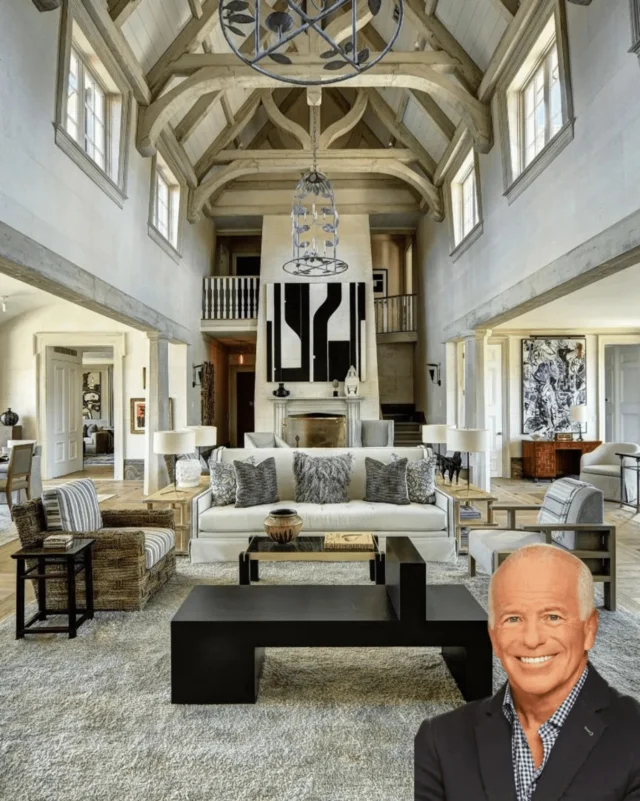
For years, the Hamptons luxury market seemed locked in an arms race of ever-larger glass boxes, infinity pools and wine cellars large enough to survive a minor apocalypse. Bigger was better. Newer was best. Lately, though, buyers appear to be rediscovering something a little harder to manufacture: history.
This summer’s crop of high-profile listings and commercial sales suggests that architectural pedigree, historic provenance and even a little local mythology have become luxury amenities in their own right. While developers can reproduce nearly everything—from imported limestone to antique-looking beams—they still haven’t figured out how to build a house that genuinely hosted Gilded Age society or served as a village landmark for more than a century. Sometimes, it turns out, old really is worth more.
Apple Polishing in Sag Harbor
Perhaps no recent sale better illustrates that than the iconic Apple Bank building at 138 Main Street in Sag Harbor, which just traded for $10.5 million, making it one of the village’s most significant commercial transactions in recent memory.
Fortunately for locals, the familiar columns aren’t going anywhere. Apple Bank negotiated a leaseback as part of the sale and plans to remain in the building while creating a new state-of-the-art branch. Douglas Elliman also continues occupying the second-floor offices, meaning visitors won’t suddenly find a luxury handbag boutique where they used to cash checks. At least not yet.
Originally constructed in the early 1900s as the headquarters of Sag Harbor Savings Bank (where this writer got her student loans), the Classical Revival building remains one of Main Street’s defining architectural landmarks. Chartered in 1860 during the village’s prosperous whaling era, Sag Harbor Savings Bank was acquired by Apple Bank in 1989.
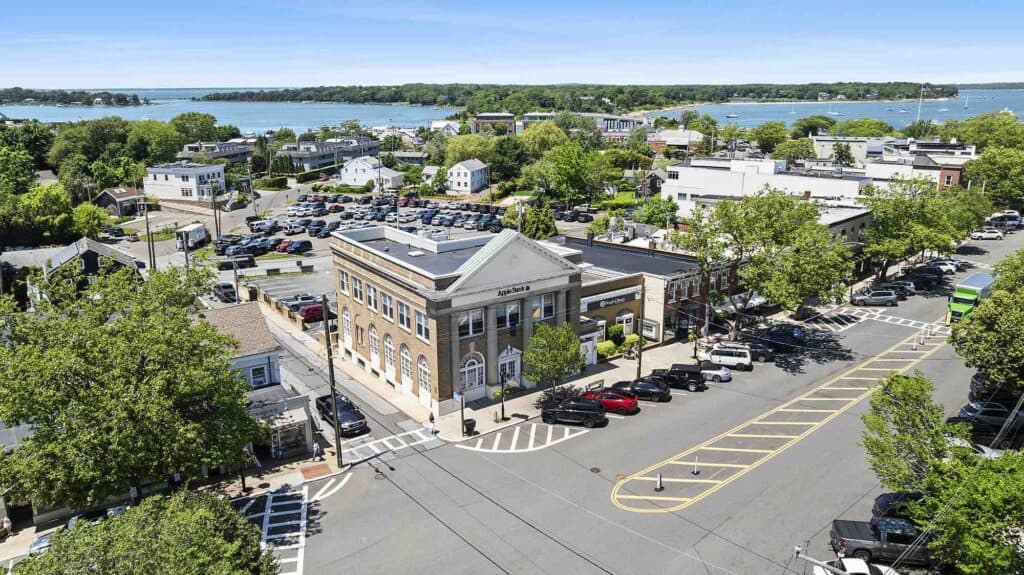
Presented by Michael Murphy and Michael Daly
of Douglas Elliman
The building’s monumental temple façade, complete with four imposing columns, has long served as a landmark for the village. Add in rear parking—a genuine luxury in Sag Harbor—and flexible zoning, and it’s easy to understand why investors remain interested.
Michael Murphy, president and broker of record for Douglas Elliman’s Commercial Division, along with Elliman’s Michael Daly represented the seller. Compass brokers Hal Zwick and Jeffrey Sztorc represented the buyer, Vault Development Properties.
The transaction is another sign that commercial real estate in the Hamptons isn’t simply surviving—it continues attracting sophisticated investors willing to spend heavily on trophy properties with long-term value.
Old: the New New
Residential buyers appear to be thinking similarly. In Southampton Village, Terry Cottage has arrived on the market asking $8.95 million, marketed as a once-in-a-generation opportunity to own one of the village’s most architecturally significant homes. While often attributed to legendary architect Stanford White around the turn of the century, historians now believe the residence actually dates to 1882. Also, it doesn’t look at all like White’s style.
Regardless of exactly whose pencil first sketched it, the home’s Gilded Age pedigree is undeniable. Listed by Michaela Keszler and Paulina Keszler of Sotheby’s International Realty, the nearly 4,800-square-foot residence has undergone a comprehensive restoration that preserves its historic charm while eliminating all of the inconveniences that typically accompany owning a nineteenth-century house.
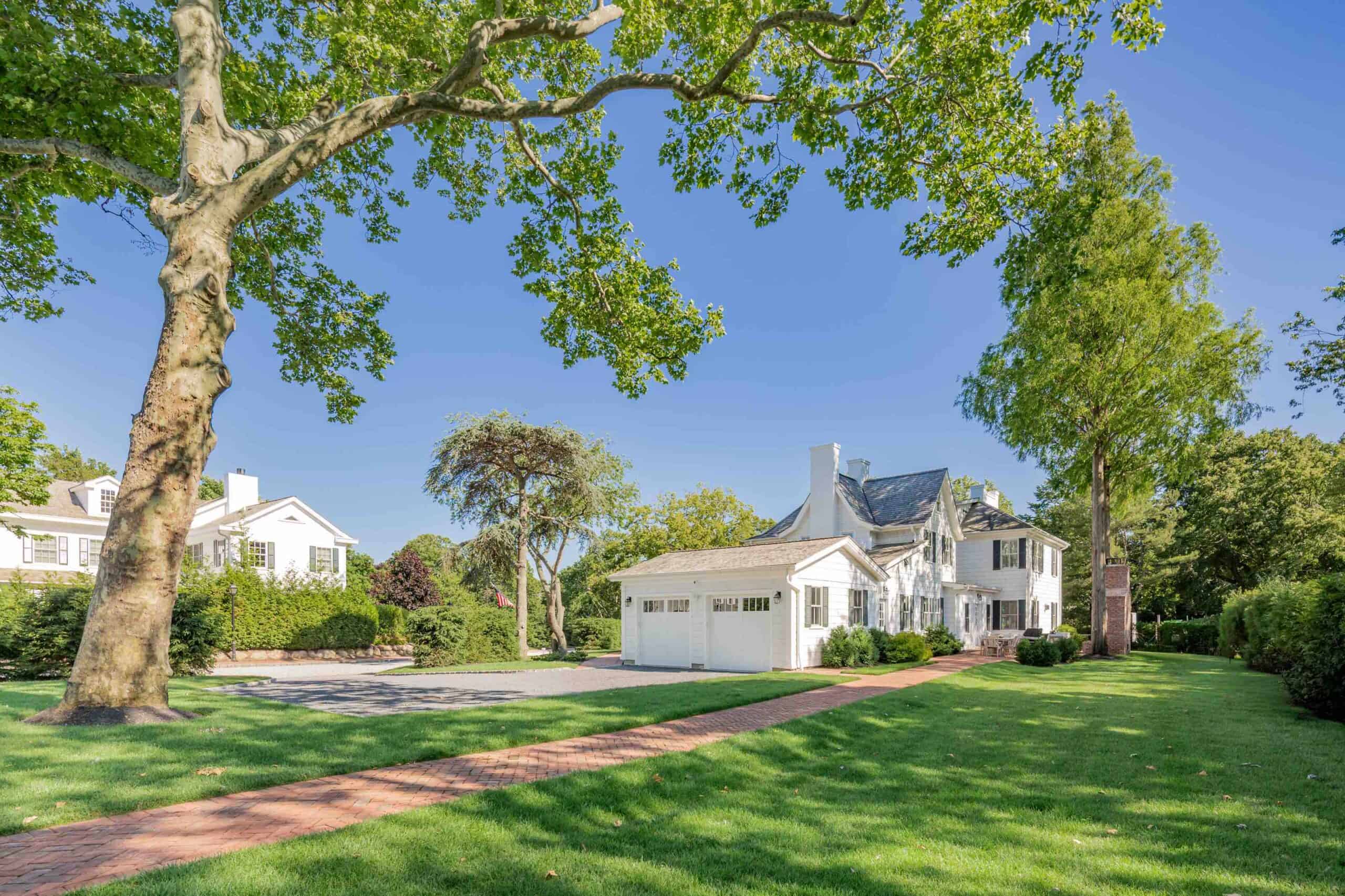
Presented by Michaela Keszler and Paulina Keszler
of Sotheby’s International Realty
Set on nearly an acre at 109 Hill Street, Terry Cottage offers six bedrooms, six full baths, one powder room, a finished lower level, pool and thoroughly modern systems wrapped inside a Federal Revival exterior with distinctive Dutch Colonial detailing.
The property’s recent history is almost as interesting as its original one. Beechwood Organization acquired the surrounding property in 2016, converting the neighboring Latch Inn into luxury residences while preserving Terry Cottage as a standalone home. Village historian Zach Studenroth worked alongside architects McMullan of Fleetwood & McMullan and Jason Thomas Architect to ensure the historic character remained intact.
Buyers love architecturally significant homes. (Stanford White bragging rights come free with purchase!) Even better is one that is move-in ready. More importantly, buyers appreciate avoiding years of permitting, approvals and construction delays.
That’s becoming an increasingly common refrain throughout the East End. Buyers still want character—but preferably with new HVAC.
Lucky Seven
Meanwhile, Shelter Island offers perhaps the most unusual historic listing currently available. Known simply as Seven, the owner-occupied bed-and-breakfast at 7 Stearns Point Road is asking $3.995 million.
Unlike many historic homes that survive only because no one got around to tearing them down, Seven has evolved thoughtfully over the decades. Originally an annex of Oxford Hall Hotel in the early 1900s, the building was relocated in the mid-twentieth century before undergoing a meticulous renovation after owner Beth Swanström purchased it in 2013.
Working alongside noted historic designer David Griffin, Swanström transformed the property into one of Shelter Island’s highest-rated boutique accommodations, consistently earning five-star reviews while preserving its historic atmosphere.
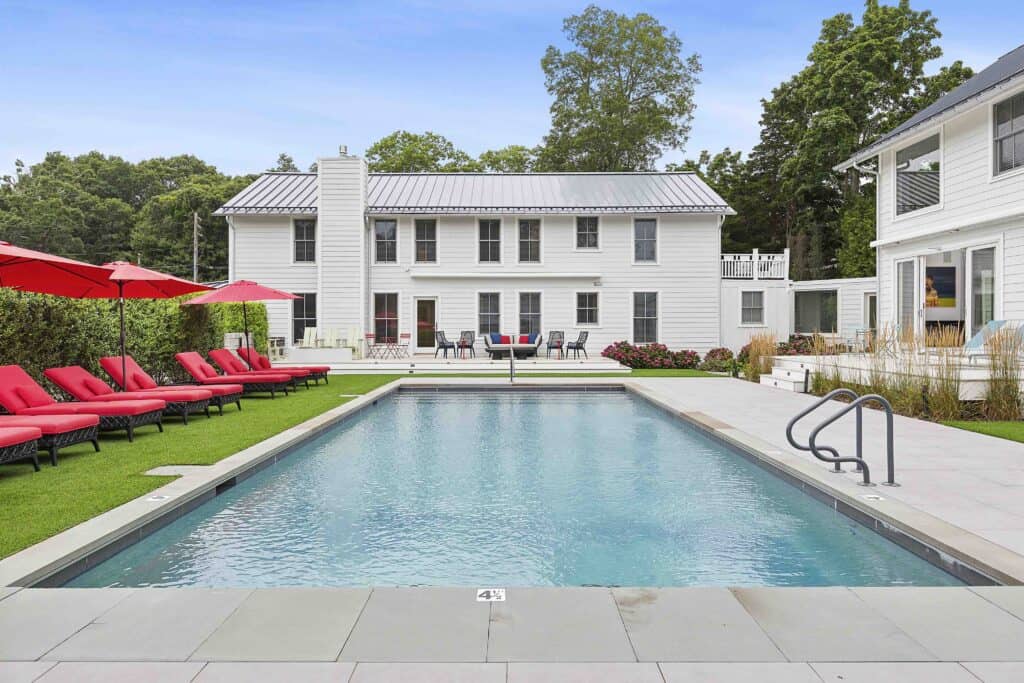
Presented by Natascha Tillmanns
of Sotheby’s International Realty
Today the property encompasses nearly 5,900 square feet divided between the original structure and a contemporary addition completed in 2020. The new wing introduces a wellness room by a heated gunite pool and cabana, while the original building continues providing the intimate charm guests expect from a traditional bed-and-breakfast.
The zoning may be one of the property’s greatest assets. Owner-occupied B&B licenses are extraordinarily difficult to obtain on Shelter Island, creating an opportunity that would be nearly impossible to recreate from scratch.
Listing agent Natascha Tillmanns at Sotheby’s International Realty believes the next owner could be either a multi-generational family seeking a compound or someone looking for a lifestyle business with built-in income. In today’s regulatory environment, that’s almost as valuable as the house itself.
Calvin Klein’s Former Estate on the Market
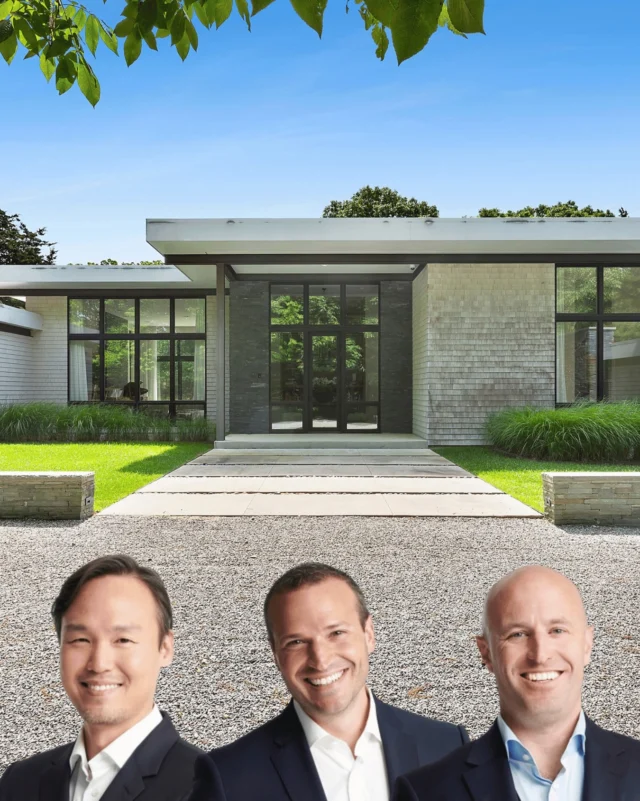
If all this historic appreciation sounds quaint, the upper reaches of the Hamptons market continue reminding everyone that provenance also comes with nine-figure price tags. Fashion designer Calvin Klein’s former East Hampton estate has returned to the market asking an eye-watering $165 million, making it the Hamptons’ most expensive active listing. The listing is shared by Ed Petrie, James Petrie, and Charles Forsman of Compass.
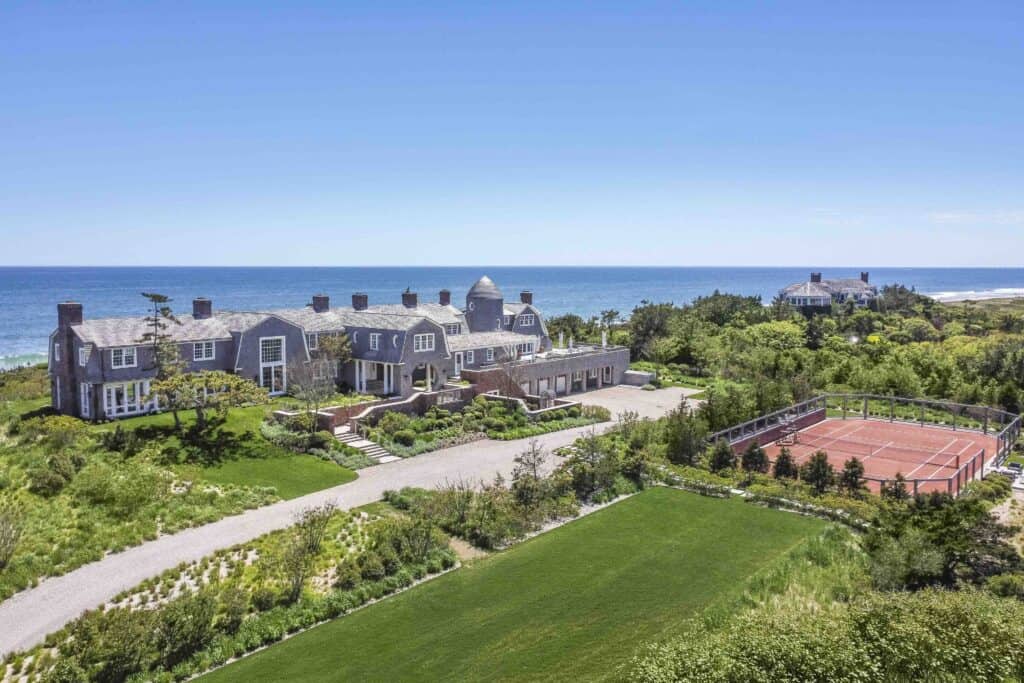
Presented by Ed Petrie, James Petrie, and Charles Forsman of Compass
Photo: Charles Forsman
Nope, this isn’t the modern one on Meadow Lane in Southampton, that sold to billionaire hedge-fund magnate Ken Griffin for $84 million back in 2020. This is the property he shared with then-wife Kelly Klein on West End Road in East Hampton. Klein purchased the property in 1987 for just $3.6 million before commissioning celebrated architect Thierry Despont to modernize the interiors.
The 8.22-acre compound combines approximately 500 feet of Atlantic frontage with Georgica Pond access, a restored 1890s shingle-style mansion, and what is believed to be the last working private boathouse permitted on the pond.
The estate quietly sold off-market for approximately $85 million through Delaware limited liability companies with the wonderfully understated name Traumhaus—German for “dream house.” Following an extensive multi-year renovation, the property returned to market at nearly double that price.
Its history stretches back even further. Originally built for socialite Laura Brevoort Sedgwick and later owned by Pan Am founder Juan Trippe for nearly fifty years, the estate represents several distinct chapters of American wealth, architecture and East End history wrapped into one extraordinary property.
It also demonstrates something increasingly apparent throughout the Hamptons market. Luxury buyers certainly appreciate ocean frontage, tennis courts and chef’s kitchens, but they’re also buying stories.
Whether it’s an old bank that helped finance a whaling village, a Southampton cottage tied to the Gilded Age, a boutique inn impossible to recreate under modern zoning, or a fashion icon’s oceanfront compound, history has become one more scarce commodity commanding premium prices. And unlike marble countertops or home gyms, nobody can order another century of provenance from a contractor.
William Raveis Names New Senior Vice President
William Raveis Real Estate has appointed Lauren Balbuena as Senior Vice President, placing her at the helm of operations, growth, and agent development across New York City, the Hamptons, and the North Fork. “I was drawn to William Raveis because of its long-term vision, commitment to agents, and family-owned culture,” said Balbuena. I’m excited to help expand our presence throughout New York.”
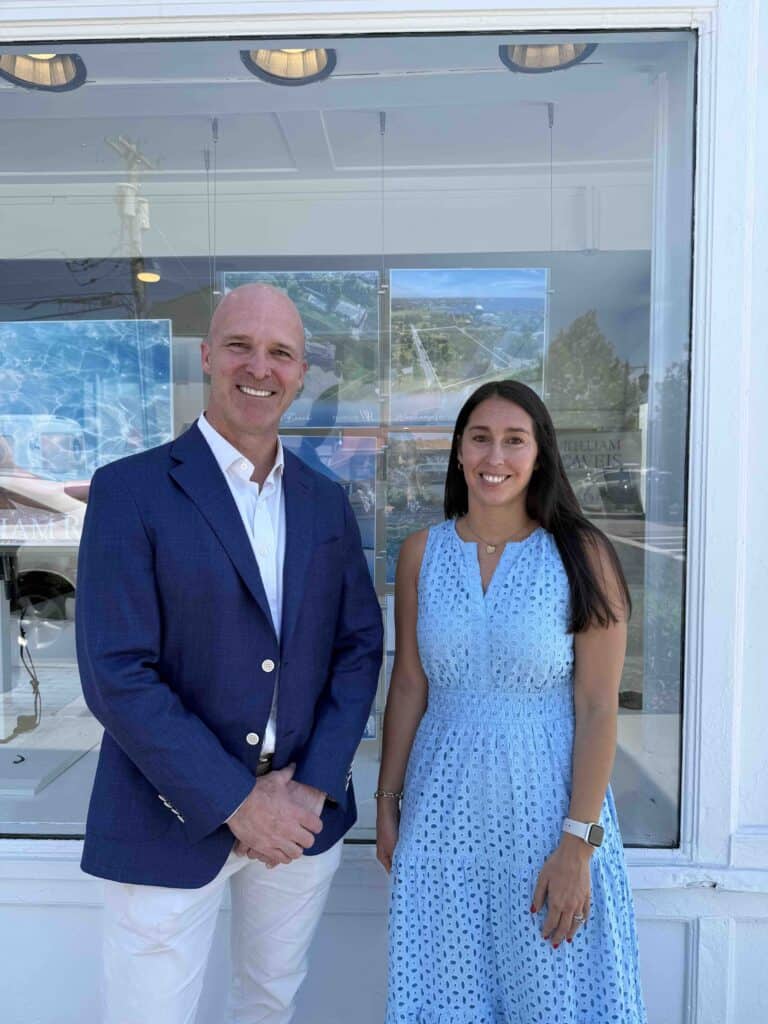
Balbuena brings more than a decade of brokerage experience, most notably leading the successful relaunch of a Manhattan franchise in 2021 that grew by more than 200 agents and became one of the organization’s top-performing offices.
Her appointment reflects William Raveis’ continued commitment to its privately held, family-owned model and its deepening investment in the luxury markets it has served across the Northeast for decades. “Lauren’s track record of building high-performing offices and developing successful agents makes her a natural fit for this role,” said Chris Raveis, President of Residential Sales for William Raveis.
Chris Raveis and Lauren Balbuena








![🎨 Through vibrant fabrics, layered textures, and intricate stitching, artist Nicole A. Vanasse transforms everyday moments into richly detailed works of art. Drawing inspiration from real life while inviting viewers to find their own meaning, her textile compositions celebrate memory, storytelling, and the beauty found in life's smallest details. Each piece is a reminder that art can be as much about the journey of creation as the finished work itself. [link in bio]](https://hamptonsrealestateshowcase.com/wp-content/uploads/sb-instagram-feed-images/763433386_18619953184030135_3337811349419388933_nfull.webp)