Stories of Jackson Pollock trading a painting for groceries or dinner parties of Pollock and Lee Krasner with Elaine and Willem De Kooning abound. Critic Robert Coates came up with the term “Abstract Expressionism” in 1946 although the artists didn’t think of themselves as a defined group. Where they did come together was discovering a landscape as free of constrictions as their work, a place to “loosen up,” an affordable oasis outside the confines of
New York City.
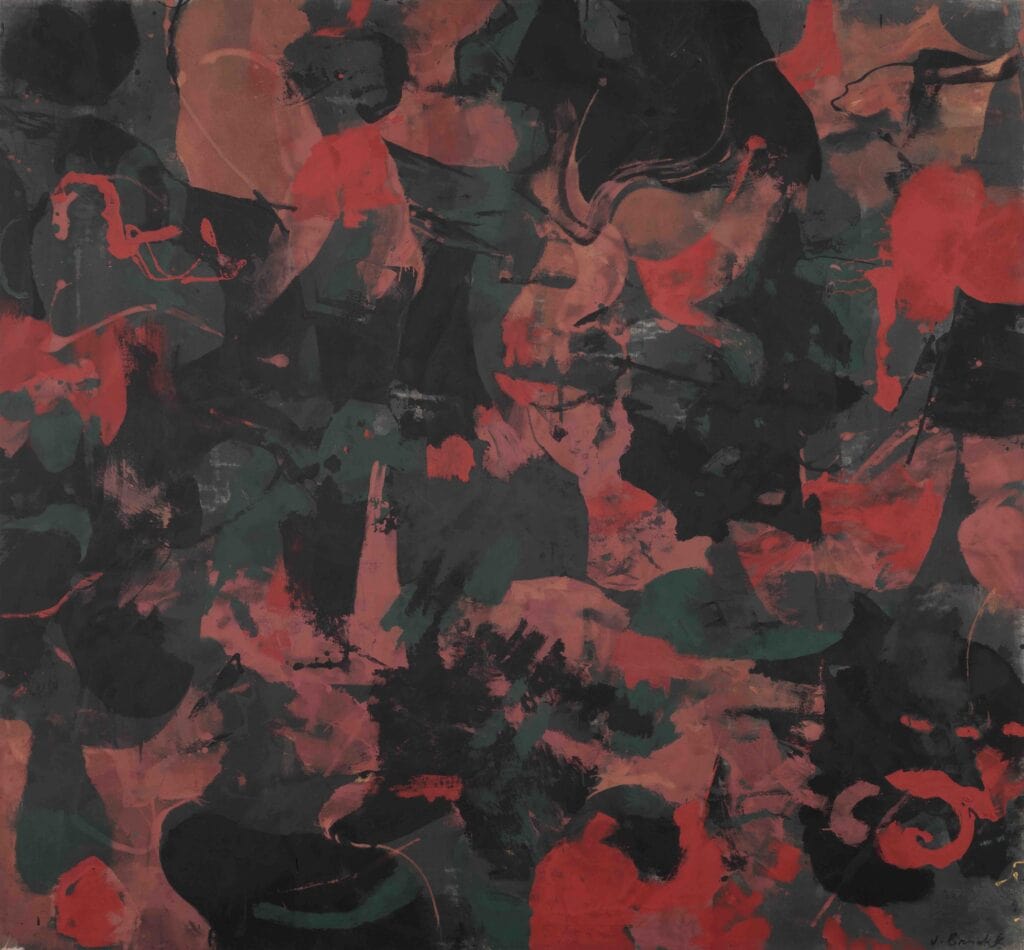
R-1953, 1953
Oil on canvas, 82 ½ x 89
Parrish Art Museum, Water Mill, New York,
Gift of JPMorgan Chase, 2021.2.1
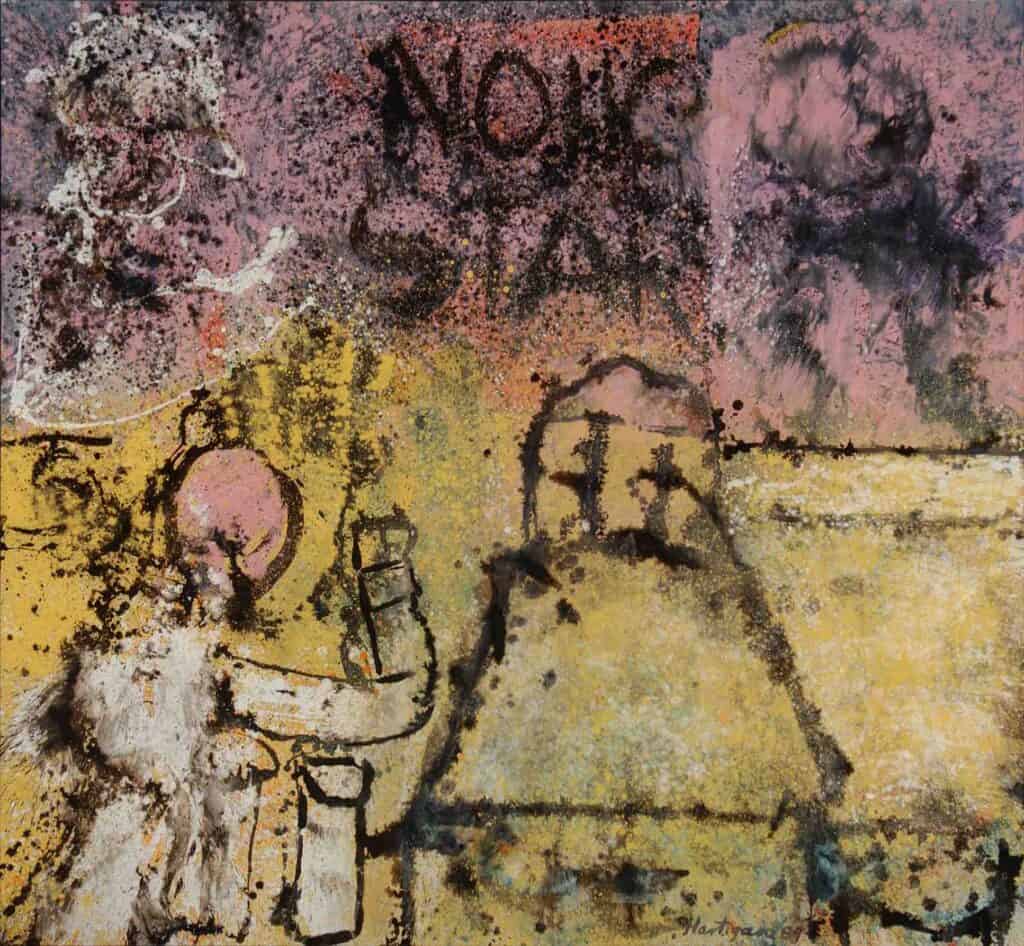
The Noho Star , 1989
An expansive exhibition through February 14, 2027, at The Parrish Art Museum “Abstract Expressionism: The East End, 1940 to Today,” is an incredible retrospective on not only the history of the movement and the artists who lived and worked here but also inclusive of contemporary artists and their inspiration and reactions to the famous founders. If ever there was a time to get off Instagram and see art “In Real Life,” this exhibit is it. The large-scale works allow the viewer to see the color choices and brush strokes up close, embodying the artist’s energy. Parrish Art Museum Associate Curator and Publications Manager Kaitlin Halloran embraced the task of choosing and juxtaposing the different works from different eras.
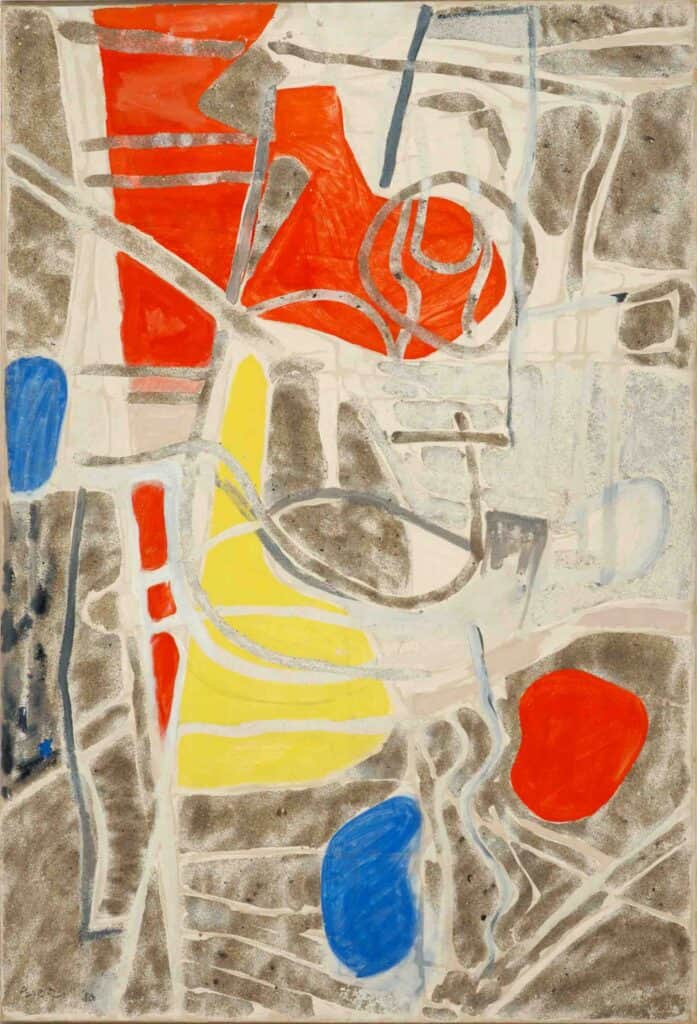
Plan for the White City, 1950
Halloran says, “We thought of the theme given its importance to the East End as a region. We have a lot of work to pull from the permanent collection here and were also lucky to have loans from private collections and places like the Helen Frankenthaler and Joan Mitchell Foundations.” While it was one thing to put it together in a computer layout, Halloran explains it was another to see these amazing works hung in their full glory in the galleries.
The works are arranged in different time periods to see the evolution and growth of the movement. The exhibition begins in the mid-twentieth century, presenting the work of both the first and second-generation Abstract Expressionists of the 1940s–60s, focusing on works made during the years that these artists were living and working on the East End.
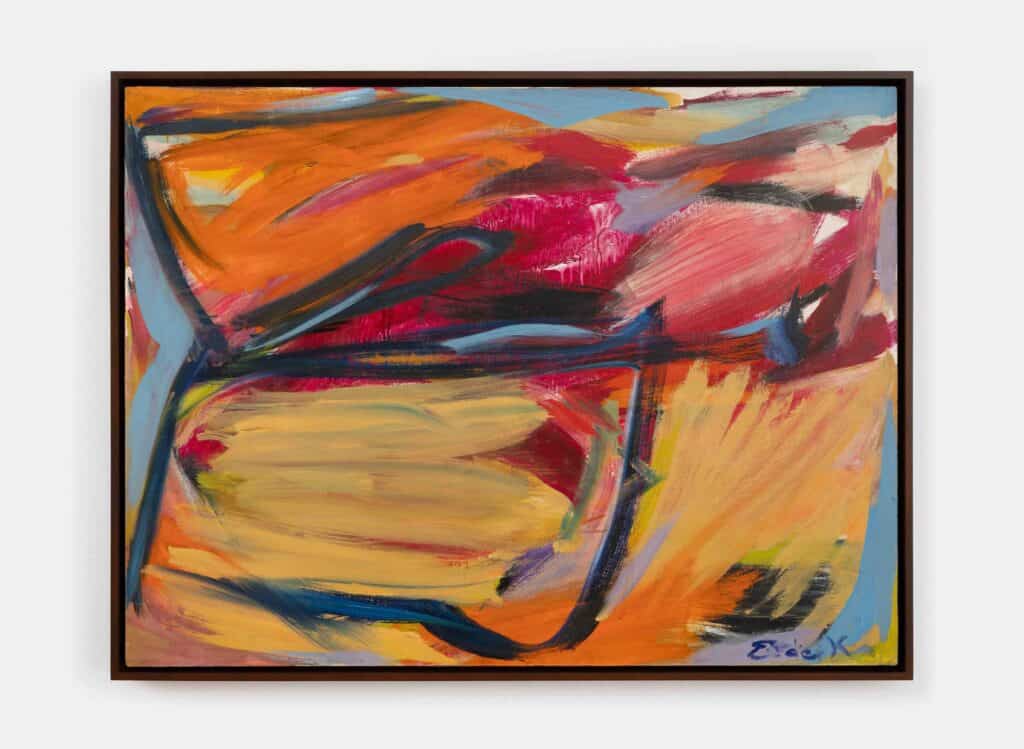
Sunday Afternoon, Juarez, 1958
Oil on Masonite, 36 x 48
Kenneth C. Griffin Collection
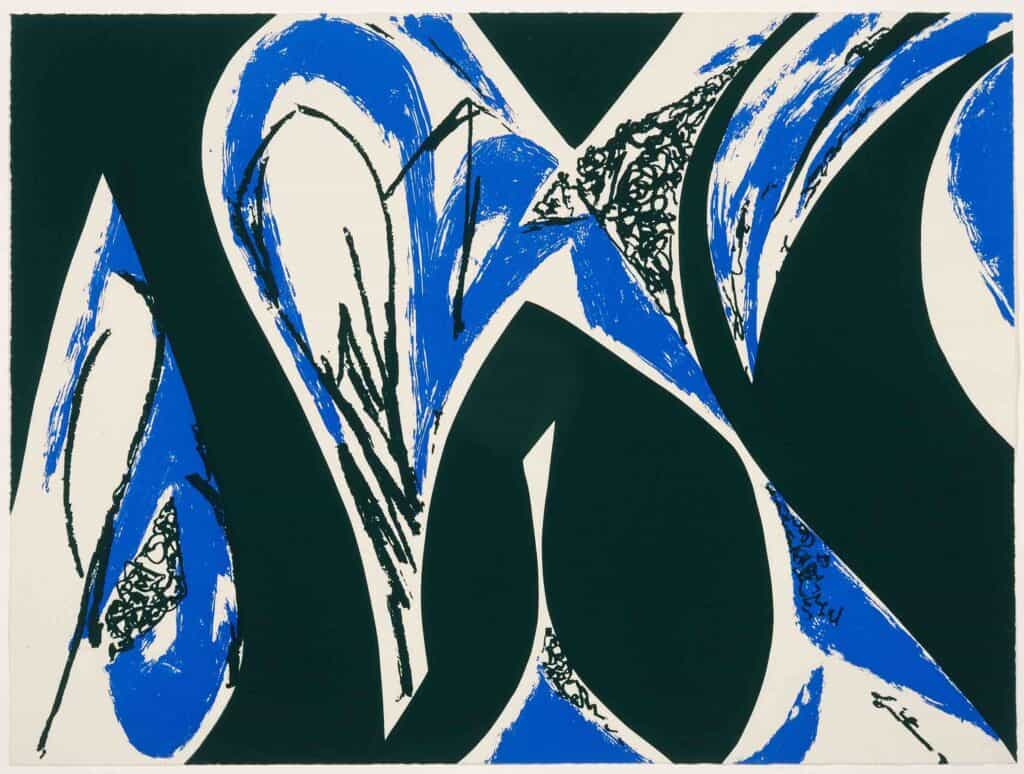
Free Space, 1975
The exhibition does a wonderful job putting the artists in context of their time. Halloran comments, “One of the early examples is Jackson Pollack and Lee Krasner coming out in 1945 with Peggy Guggenheim giving them funds for their place in Springs. And James Brooks and Charlotte Park came out at the recommendation of Jackson and Lee and were in Montauk then moved to Springs where Charlotte said they bought 10 acres for $300 an acre.”
The exhibition continues through the decades. “Hopefully the visitor as they go through the galleries will see the shifting styles,” comments Halloran,
“We are seeing how artists are working abstractly today and if there are links that could be made to the past or changes in techniques or inspiration.” A highlight is a display of photographs of the artists in and around their studios including images by Laurie Lambrecht, Fred W. McDarrah, Hans Namuth and others.
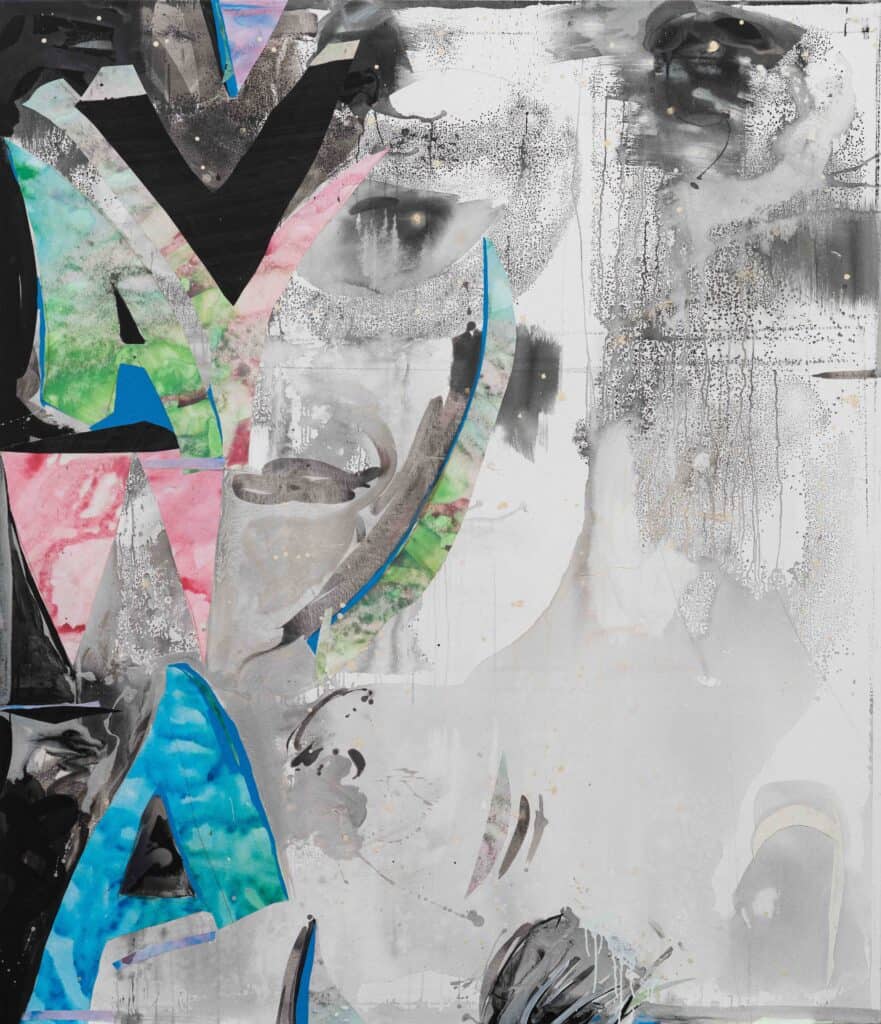
CUTS (AWAY) , 2023
The journey leads visitors from Alfonso Ossorio, Robert Motherwell, Joop Sanders and Manoucher Yektai to incredible contemporary artists who have also built a loyal audience for their vibrant works like Leslee Stradford, Claude Lawrence, Suzanne McClelland and Marina Adams. Their backgrounds are as diverse as the work, from completely self-taught artists to prestigious art schools and museum exhibits.
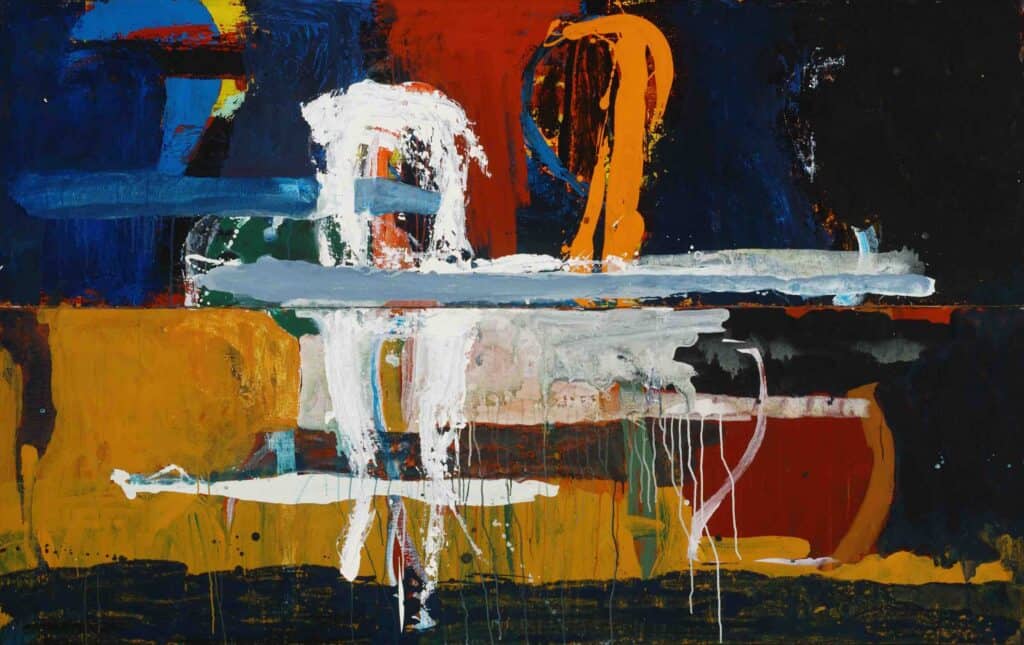
Untitled (From the Beatus Group), 1987
Acrylic on canvas on two panels, 50 x 80
Parrish Art Museum, Water Mill, N.Y.,
Gift of Kay R. Lowe, 2003.2
For Halloran the show both honors the past and brings it front and center in the present. “It’s a real lasting legacy of a movement and style so central here. For people coming to the show, they have the references of the different years and media. They have a new experience of the works to form their own connection.”