Guild Hall will be exhibiting the Student Art Festival: Rauschenberg 100, on view from November 15th through January 4th.
The festival celebrates the centennial of Robert Rauschenberg’s birth as part of an international initiative organized by the Robert Rauschenberg Foundation. A collaboration between eight East End public schools and ten regional artists, the exhibition explores what Rauschenberg described as the “gap between art and life,” embracing experimentation and chance through a wide range of materials and creative approaches.
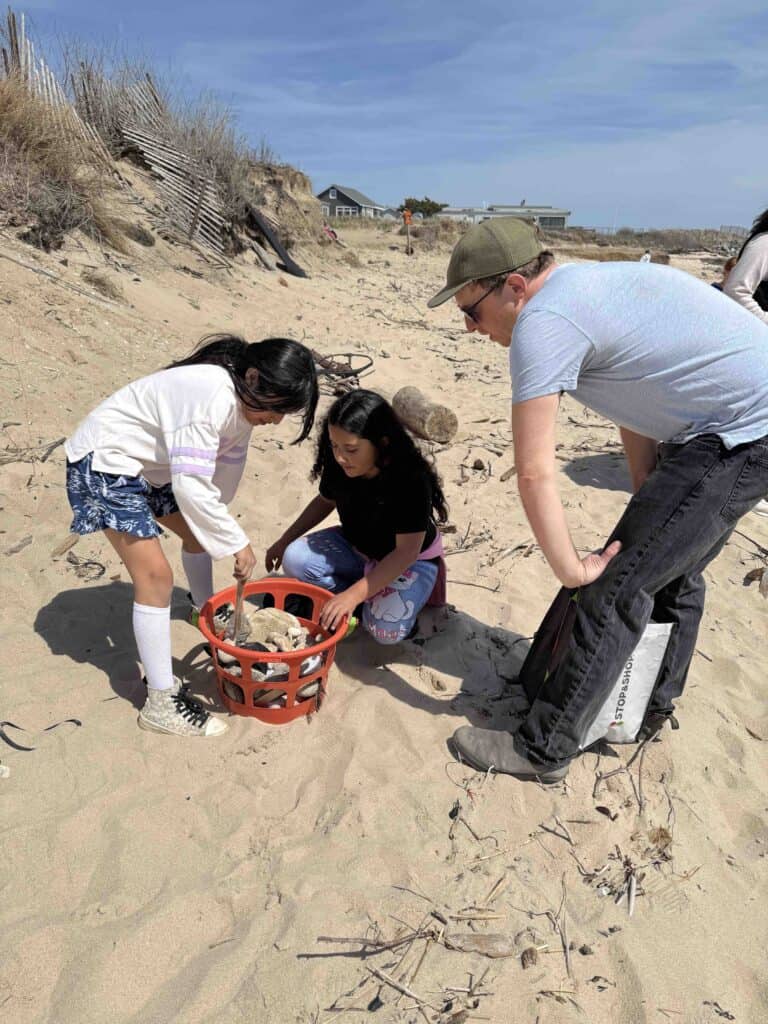
Photo: Kayla Matters
Hundreds of student artworks will appear alongside Rauschenberg works from Guild Hall’s permanent collection as well as special photos, curated by Museum Director & Curator of Visual Arts, Melanie Crader and organized by Theater Director & Curator of Performing Arts, Anthony Madonna and Claire Hunter, Museum Coordinator & Curatorial Associate. The exhibition is also co-curated by the Guild Hall Teen Arts Council, under the guidance of Kayla Matters, Programs Manager, Learning + New Works.
Melanie Crader comments, “We looked at the concept of the show from an educational standpoint. Rauschenberg is an artist that every artist likes to teach. You remember his impact and innovation.”
In a beautiful community effort, East End professional artists have worked with teachers and students from kindergarten to grade 12. The kinetic effort is palpable in the collaboration which includes hands-on spring and fall mentor sessions as well as studio visits. Kayla Matters comments, “The schools enjoy the fact that it is an extended process so the students have the chance to build the relationship with the artist and focus on the process of making their art.”
It has been an abundance of riches with the guest artists: Linda K Alpern; Scott Bluedorn; Peter Dayton; Eva Faye; Margaret Garrett; Candace Hill–Montgomery; Laurie Lambrecht; Bastienne Schmidt; Kevin Teare; and Evan Yee. Matters comments, “The artists have been excited by what the kids are making and are inspired by the emerging talent.”
Artist Bastienne Schmidt worked with third and fourth graders and noted the age group “has
an openness to ideas and process that is very appealing.” She added, “[Rauschenberg] was always open and interested in taking in new materials and unexpected forms and objects into his artwork. The kids loved the freedom of process.” For example, artist Scott Bluedorn who incorporates found objects into his works took his students to the beach. They did a beach clean-up then reused those materials to create their art.
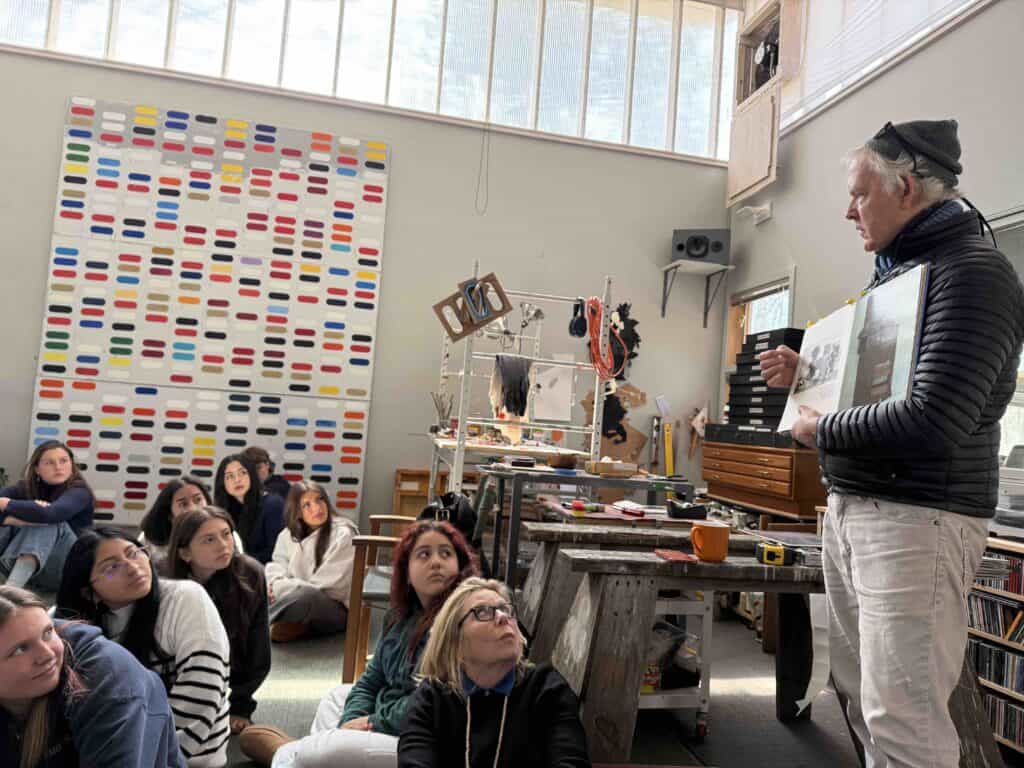
Photo: Kayla Matters
One of the greatest present-day challenges is to encourage youth to get off their phones and go “offline.” “The students are definitely very engaged in finding their voice,” says Matters, “The artists also encourage the students to explore their own interests and subject matter.” This is a valuable lesson to learn self-expression and dialogue IRL (In Real Life.) Catherine Brigham, the art teacher at Shelter Island School, reflects, “It gives students an ownership of the work and having it displayed in a place like Guild Hall gives them a great sense of pride.”
It has also been a valuable lesson for the Teen Arts Council, a group of local high school students who meet weekly throughout the school year to learn about curation, art criticism, and museum practices as a paid internship. Melanie Crader comments, “We had sessions with them on how exhibition design works and how your think critically about the artwork and the viewer and how you create a story line.”
This story line here is the power of community. Crader says, “It’s great to see a full circle moment from kids to professional artists to teachers to parents all connecting. It’s very exciting.”
The museum exhibition is free to the public and a great family activity over the holidays.








![🎨 Through vibrant fabrics, layered textures, and intricate stitching, artist Nicole A. Vanasse transforms everyday moments into richly detailed works of art. Drawing inspiration from real life while inviting viewers to find their own meaning, her textile compositions celebrate memory, storytelling, and the beauty found in life's smallest details. Each piece is a reminder that art can be as much about the journey of creation as the finished work itself. [link in bio]](https://hamptonsrealestateshowcase.com/wp-content/uploads/sb-instagram-feed-images/763433386_18619953184030135_3337811349419388933_nfull.webp)