Sean Scully’s Montauk Inspiration
In any artist’s life there are pivotal moments, when a new perspective or creative idea takes shape and emerges into physical form. For Sean Scully, that epiphany came during the summer of 1982 when he was at a residency at The Edward F. Albee Foundation in Montauk. The requirement was that one had to be “talented and in poverty,” and Scully fit the bill. Working in “The Barn” presented an opportunity to have a month of uninterrupted time to focus on art, something in our present digital age which seems an unusual blessing. And for Scully, who had spent most of his life in Dublin, London and New York, a rare immersion in natural surroundings. “Coming from crowded Manhattan, it was almost a religious experience to be on the beach. I took my bike there every day and brought all those colors from nature back to my work.”
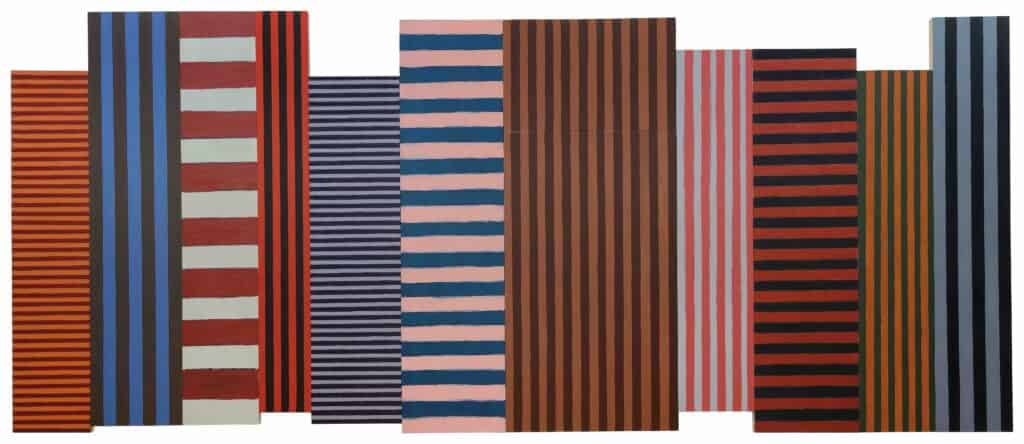
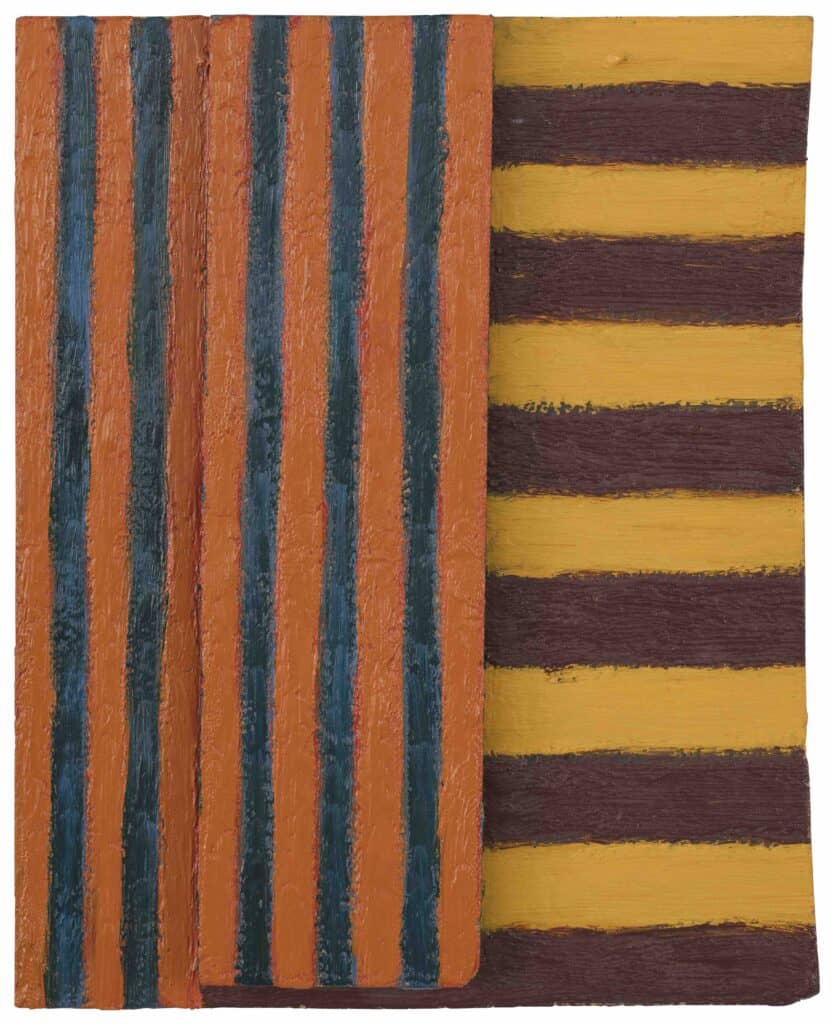
He states, “My experience on Long Island and the other islands around it brought me to think about the relationship between paintings and objects and the air around them. It is the same as with an island and a huge body of water. I saw paintings as islands, as they were isolated and surrounded by air instead of water.” In his recent exhibition at the Parrish Art Museum these large-scale geometric works with horizontal and vertical bands of color seem to emerge in three dimensions, floating above the walls’ surface as if rafts on the ocean.
The artist has a gleam in his eye and a wit which comes from appreciating a long and colorful life across different continents. Scully says, “I tell it like it is,” adding with a laugh, “In America, they don’t like it but they forgive me. In England they don’t like it AND they don’t forgive me.” Born in Dublin in 1945, Scully was the first child of parents who were homeless and on the run following his father’s desertion from the British army. They were given shelter by Travelers, often referred to as gypsies, and indeed Scully’s life is one of a traveler both on physical and artistic journeys. At an early age he knew he wanted to be an artist and attended art school as a teen, focusing on figurative art. Needing to support himself, he held numerous jobs from a plasterer’s assistant to baling and stacking cardboard boxes at Woolworths, something he later said influenced his abstract sculptures.
Scully came to the States with an art fellowship to Harvard in 1972 and moved through the New York art scene, concluding that abstract expressionism was “pretentious” and minimalism “a puritanical cleansing.” Scully considers himself an outsider, “My work is not based on me adoring the art world. It’s based on me adoring people, humanity.” His goal, he says, was to “put back emotion, narrative, relationship and metaphor which was stripped out.” Scully concentrates on the material weight of the paint and the energy which runs off the painting. “I paint rhythm with the stripes which are thin or wide or horizontal or vertical.” It is no wonder that musicians especially respond to his work.
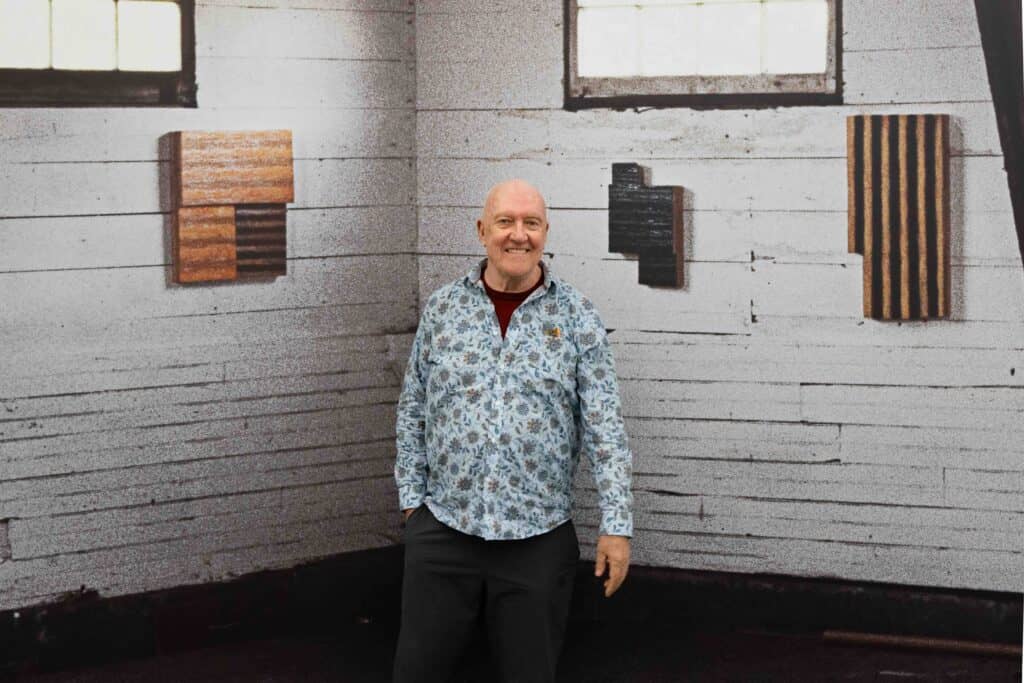
Photo: Jenny Gorman
Scully is philosophical about painting, “Art is primitive, it’s not like technology. It’s exactly the same as it was in Lascaux [cave paintings from 17,000 BC], a brush on the wall.” Indeed, his work has a grounded, tactile and enduring quality which has stood the test of time. So, what does he see as the best bet for the future of painting?
“I attribute its unprecedented revival to inclusion-ism,” Scully states, “It’s when you let everyone into the party.” Which no doubt would be a blast if he was throwing it.
Photos courtesy of the Parrish Art Museum




![Parisian history meets bold, expressive design in this Belle Époque apartment transformed by British designer Mark Howorth. Rich color, layered pattern, luxurious materials, and playful details bring new personality to the historic interiors, while restored architectural elements honor the character of the original building. The result is a home that feels distinctly Parisian without being bound by tradition, balancing old-world elegance with contemporary comfort and a sense of individuality. [link in bio]](https://hamptonsrealestateshowcase.com/wp-content/uploads/sb-instagram-feed-images/815038029_18636432205030135_1617405309612089952_nfull.webp)